Rubber trees not only create jobs and stable incomes for workers, but also play a vital role in infrastructure development and strengthening national defense and security. In the basalt-rich Central Highlands, rubber has produced billionaires and unlocked the region’s full potential.
After traveling more than 50 kilometers of mountainous roads with steep, winding slopes, we arrived at the “headquarters” of Mr. Dương Văn Đức in Gòong village, Ia Púch commune. For many locals, Mr. Đức is a model of perseverance, determination, and vision—both in life and in rubber cultivation.
More than 20 years ago, during a visit to his former battlefield, this war veteran recognized the advantages of the land. He returned to his hometown, sold all his assets, and moved to Ia Púch to start a new life. Initially, his family bought 5 hectares to grow cassava, but when the crop proved unsuitable, he switched to rubber.
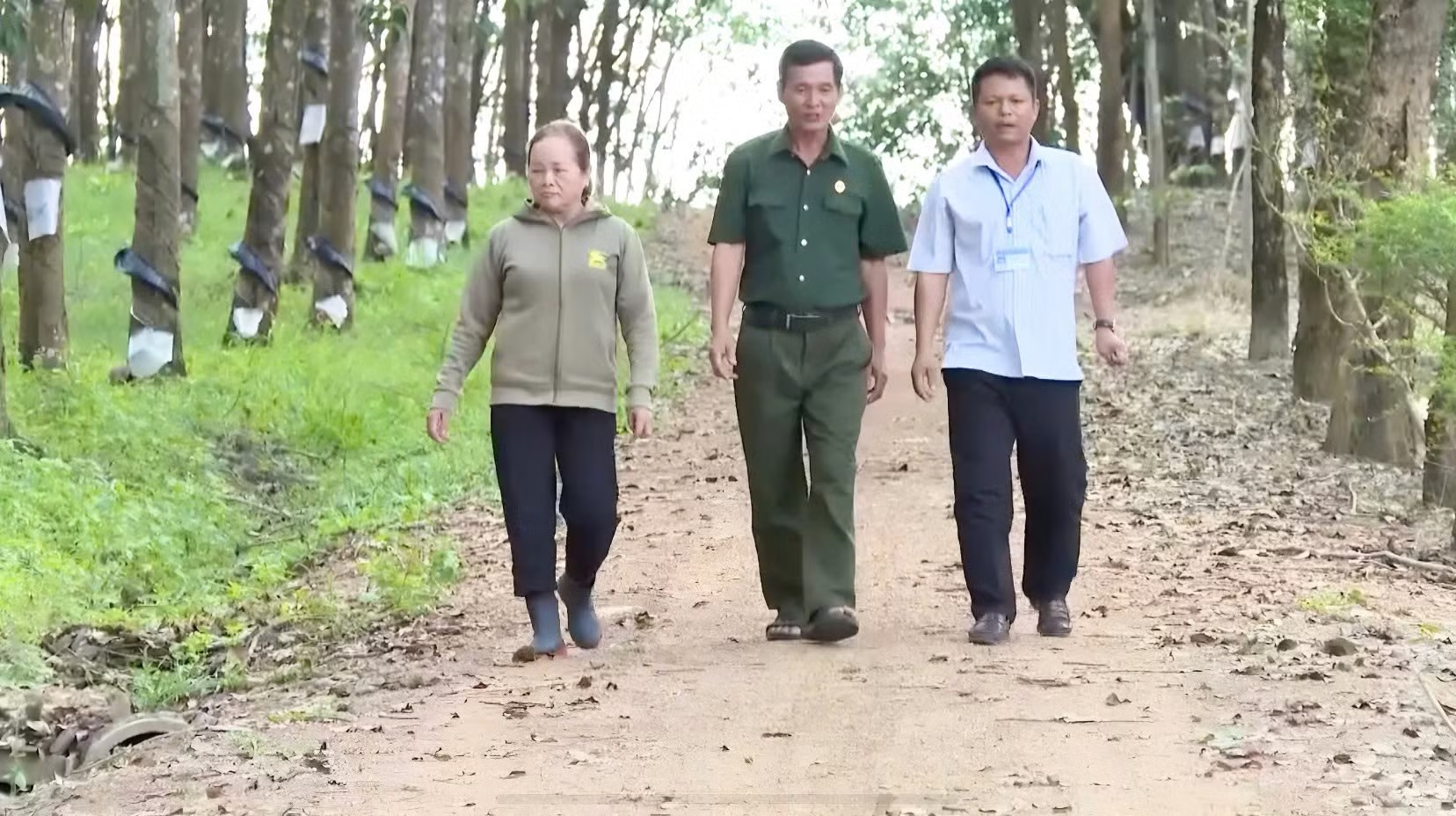
Standing on the mountainside, pointing toward the vast expanse of rubber trees, Mr. Đức shared: His family’s rubber forest now covers 11 hectares out of a total landholding of more than 15 hectares. For nearly 15 years, despite harsh weather, all the rubber trees have thrived, with lush green leaves and strong canopies, yielding abundant latex. With the income from rubber, he has purchased more land to expand into fruit orchards, fish ponds, and poultry farming.
The story of Rơ Mah M’rao (Poong village, Ia Dơk commune)—one of the Jrai billionaires in the border region—being the first in his village to buy a safe to store money over a decade ago is well known among locals. He owns 20 hectares of smallholder rubber and 3 hectares of coffee in production.
Recalling his father, Rơ Lan Theo shared: “My father started planting rubber more than 25 years ago. Back then, many villagers were hesitant because rubber takes seven years before it can be harvested. But seeing the state-owned rubber companies in the area, he recognized the crop’s potential. During 2015–2019, when rubber prices plummeted and many people cut down their trees to plant other crops, our family remained confident in rubber—and that’s why we have the success we enjoy today.”
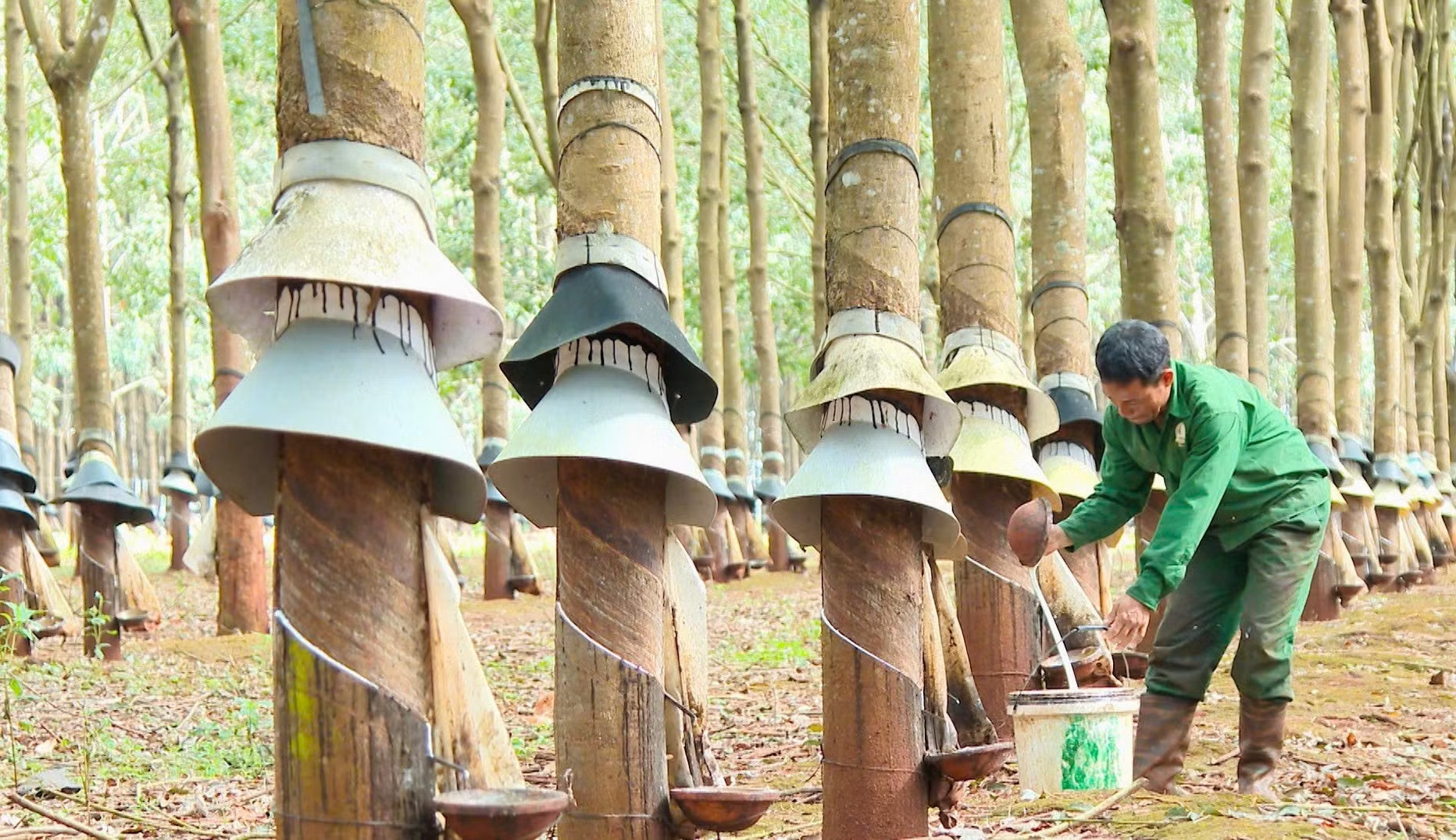
Further north, in the border area of Ia Krái—where ethnic minorities make up more than 80% of the population—rubber has become a symbol of transformation. Not only has it helped eradicate hunger and reduce poverty, but rubber has also enabled many families to build spacious, solid homes, dramatically changing the rural landscape.
On the land of hero A Sanh—the legendary ferryman of the Pô Cô River—rubber has brought about remarkable change. Puih Jế (Nú village, Ia Krái commune) shared: “Rubber not only creates jobs for villagers but also helps many people become prosperous. My family now has over 15 hectares of smallholder rubber and 3 hectares of coffee. After expenses, our annual income is nearly 1 billion VND.”
According to local authorities, in the western border region of Gia Lai province, 15% of households earn over 1 billion VND per year from rubber. The success of these farmers owes much to the rubber companies operating in Gia Lai.
Trần Thái Sơn, General Director of Chư Prông Rubber Company Limited, affirmed: “When the Vietnam Rubber Group (VRG) decided to bring rubber to Gia Lai, our units quickly stabilized operations and recruited workers, especially local labor.”
Currently, Gia Lai province has about 86,780 hectares of rubber, mainly concentrated in the western communes. Of this, around 63,500 hectares are in the productive stage, with an average yield of 1.52 tons per hectare and an annual dry latex output of about 95,395 tons. Rubber enterprises in the province provide jobs for nearly 100,000 workers.
If you ever travel along the western border of Gia Lai province, you’ll see endless stretches of green. At dawn, streams of motorbikes loaded with latex head to collection centers. The flow of white latex has transformed the lives of many local residents, most of whom are ethnic minorities.
During a field trip to learn about rubber, we visited the family of village elder Rơ Mah Ế (Kroi village, Ia Krêl commune) just as he returned from his rubber plantation. He told us: “Over 40 years ago, people in this border region were very poor—only a handful of households had enough to eat. There was plenty of land, but it was covered in wild grass because people didn’t know how to make the most of it for family economic development.
Life would have remained difficult if not for rubber. That was when the companies of Corps 15 began planting rubber. They not only encouraged people to switch crops and livestock, but also recruited local youth as workers, helping families improve their livelihoods, stabilize their lives, and contribute to maintaining security and order in the border region.”
According to agricultural experts, rubber trees grow rapidly and can be tapped for latex after about 6–7 years. The tapping period lasts over 20 years. After a cycle of 25–30 years, the trunk and roots can be harvested for high-quality, high-value timber products.
In addition, rubber companies in Gia Lai are ramping up investment in industrial clusters. Đặng Công Thoại, Chairman of the Members’ Council of Mang Yang Rubber Company Limited, said: “Currently, the company has registered to invest in three industrial clusters in Đak Đoa. The Đak Đoa cluster in Kdang commune covers 68 hectares, with an expected investment of 348 billion VND. The other two clusters, Đak Đoa No. 3 and 4, are expected to receive 360 billion VND in investment.”
The goal of these industrial clusters is to create a complete local ecosystem for rubber production and processing, attracting satellite businesses. This will increase the added value of rubber products, create jobs, boost the local economy, leverage existing infrastructure (electricity, water, roads), enhance competitiveness, and allow for better control of the supply chain from raw materials to finished products, while optimizing land and resource use.
Rubber is a hardy, adaptable crop that thrives even on poor, depleted soils and in areas where other crops yield little economic value. Beyond making use of marginal land, the process of planting, caring for, and harvesting rubber brings many benefits to local communities—providing employment in planting, tending, harvesting, and processing rubber products.
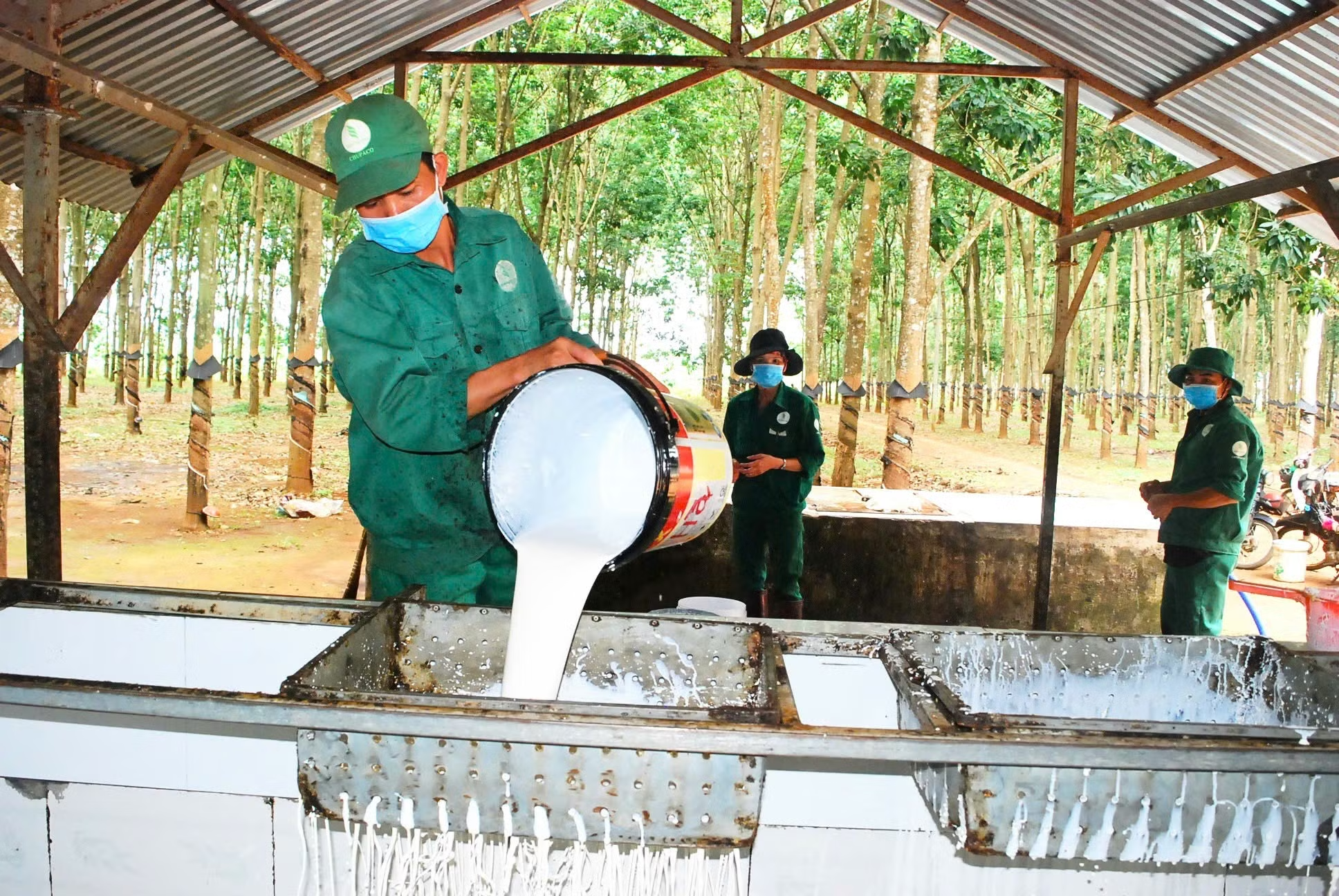
Rubber has helped many farmers become modern, disciplined workers with stable incomes. The quality of life in rubber-growing areas has improved significantly, thanks to the many activities supporting the development of the rubber industry.
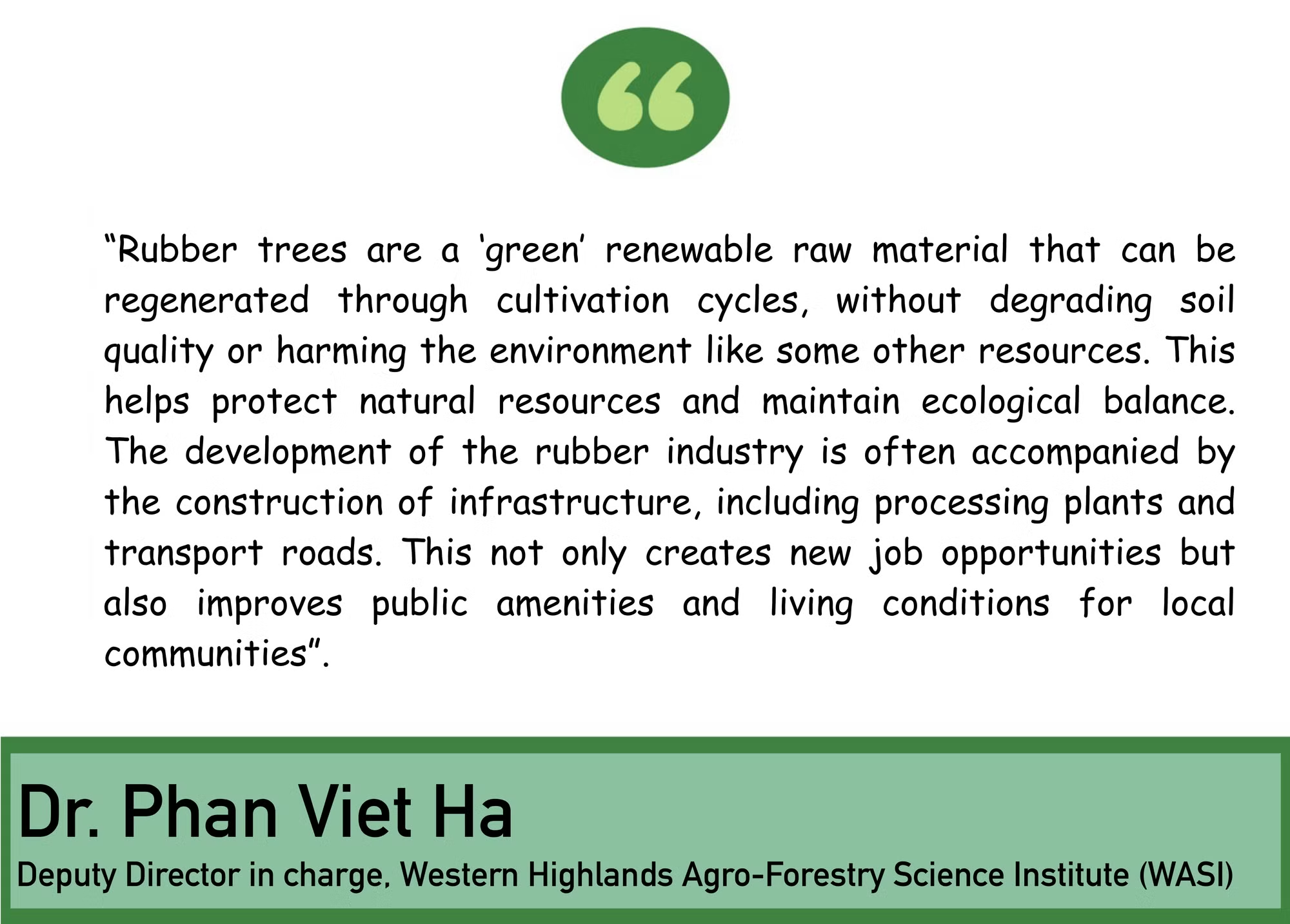
Dr. Phan Việt Hà, Acting Deputy Director of the Western Highlands Agriculture and Forestry Science Institute (WASI), noted: “Rubber trees absorb carbon and retain it in the soil, helping to combat climate change. They help maintain soil moisture, prevent water loss, and reduce the risk of landslides. This benefits both the environment and local communities.”
The white latex painstakingly collected from rubber trees takes seven years from planting to first harvest—a product of the land, water, climate, and the industrious spirit of workers. Rubber has sustained and enriched many families.
The green of rubber trees stretches like a ribbon across the Central Highlands, forming prosperous communities with electricity, roads, schools, and clinics—clear evidence of why rubber is an irreplaceable crop in the region.