
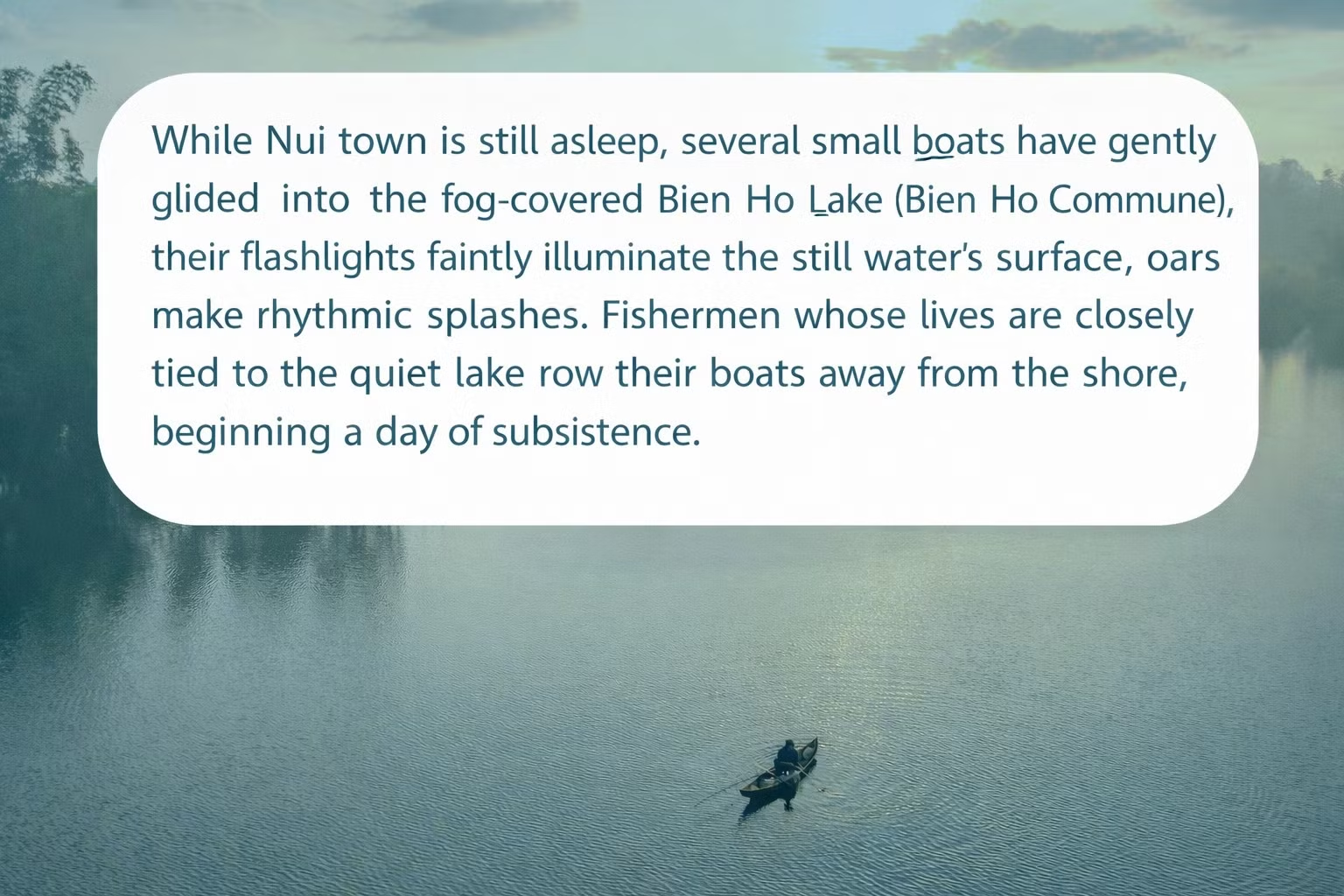
Fishermen who have spent their lives on the tranquil lake quietly push off from the shore, embarking on another day of earning a living.
The family of Mr. Lý Duyên (born 1960, from Têng 2 village, Biển Hồ commune) left their hometown in Sóc Trăng and moved to the Central Highlands of Gia Lai to build a new life in Biển Hồ commune more than 50 years ago.
Every day at 2 a.m., while the mist is still thick and the highland cold seeps through every layer of clothing, Mr. Duyên sets out from the dock to begin his day’s work. By around 5 a.m., he hauls in his nets and returns, his smile brighter when the boat’s hold is filled with fish, shrimp, and tiny prawns to sell at the nearby market to familiar buyers. On average, each trip earns him several hundred thousand dong.
Accompanying Mr. Duyên on his decades-long journey of making a living on Biển Hồ is his wife, Mrs. Nguyễn Thị Thành (born 1960), originally from the fishing village of Cát Tiến (formerly Phù Cát district, Bình Định province; now Cát Tiến commune, Gia Lai province). Although she grew up in a family deeply connected to the sea in Cát Tiến, familiar with mending and weaving fishing nets, Mrs. Thành still found herself bewildered in the early days of working alongside her husband on the waters of Biển Hồ.
“Fishing nets used on the lake are different from those at sea—they have smaller, lighter mesh and must be cast close to the water’s surface with great skill. A single misstep can cost you the entire catch. Gradually, I adapted to the lakeside rhythm, overcoming life’s ups and downs with my husband. Together, we worked hard casting and mending nets to raise our children,” Mrs. Thành shared.
The eldest son of Mr. and Mrs. Duyên, Lý Hoài Thư (born 1982, Têng 2 village), now works as an office employee in Pleiku ward. Yet whenever he has free time, he joins his father fishing on Biển Hồ. “Since childhood, I’ve been familiar with the smell of fresh fish and the sound of water lapping against the boat. Those trips with my father taught me perseverance, attention to detail, and the hardships of making a living on the water. Even though I now have a stable job, I still want to maintain a connection to our family’s traditional fishing trade, as I deeply value my parents’ experience and way of life. Biển Hồ is also where my family’s memories are kept,” Thư said.
Biển Hồ (T’Nưng Lake) is not only a famous scenic spot in the highland city but was once a vital source of livelihood for many lakeside households. Covering nearly 230 hectares and situated at an altitude of about 800 meters above sea level, the lake is deep, with fresh, clear water year-round and a rich aquatic ecosystem.
The abundant aquatic resources of Biển Hồ have sustained generations of fishermen, especially among ethnic minority households living around the lake. According to many fishermen, the period from after Lunar New Year to around March and April is when Biển Hồ yields the most fish and shrimp. During these days, the nets are noticeably heavier than usual.
However, over time, Biển Hồ’s aquatic resources have been significantly impacted and have declined. More than a decade ago, hundreds of households made a living from fishing in Biển Hồ, but today, most have switched to other occupations. Only a handful remain, forming a unique and vibrant multi-ethnic fishing community on the Central Highlands.
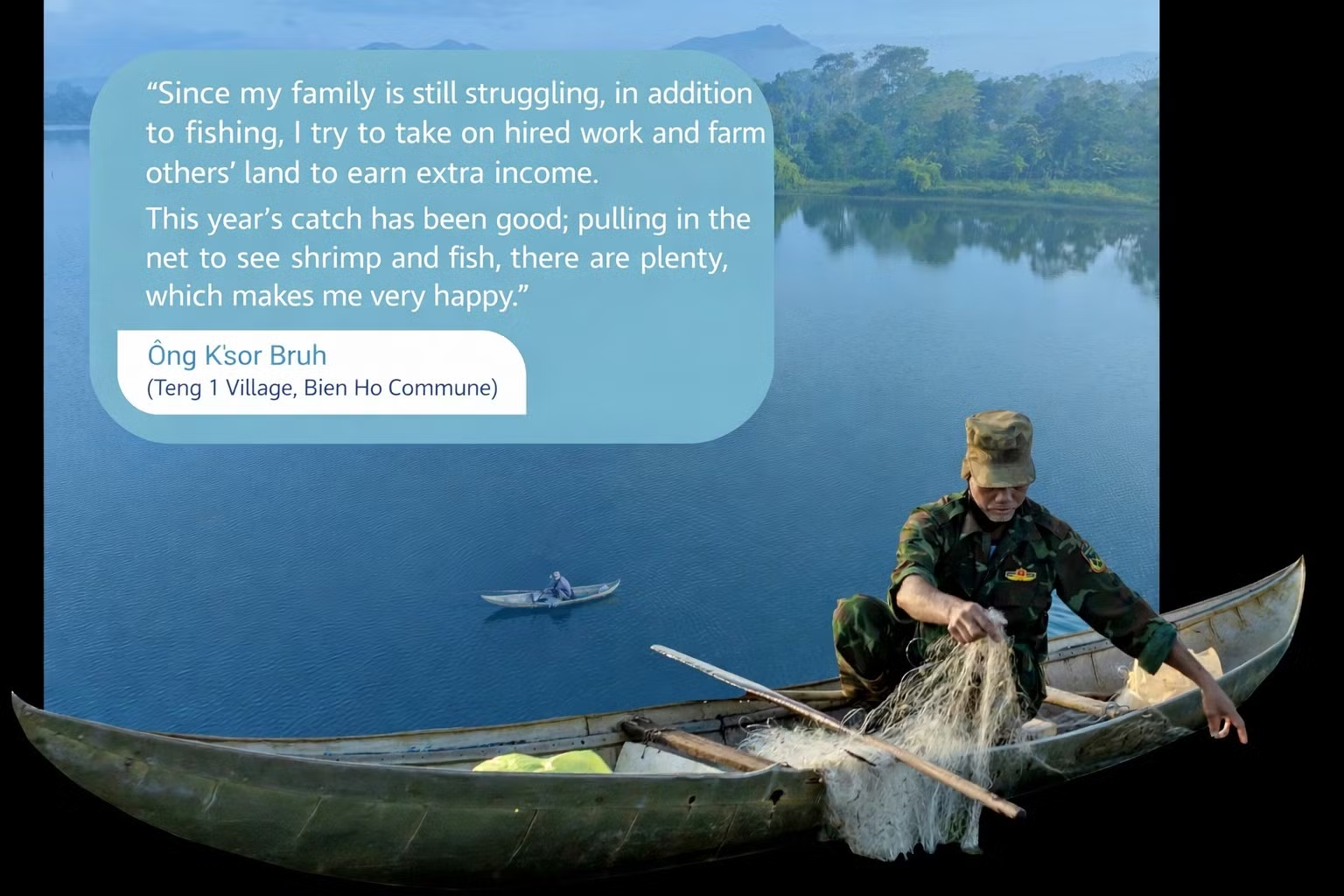
Born and raised in Têng 1 village (Biển Hồ commune), Mr. Ksor Brưh (born 1975) spent his youth working on upland fields and taking odd jobs around the village to make ends meet. Over 20 years ago, he decided to switch to fishing on Biển Hồ.
From his early days, still unfamiliar with boats, nets, and the water, he gradually became attached to the lake, which has since supported his family. Each day, from around 4–5 p.m., Mr. Ksor Brưh rows his boat out to the lake to cast his nets, returning to collect them between 3 and 5 a.m.
Mrs. Siu H’Ly (born 1972, from Yar village, Biển Hồ commune) also spent many years working odd jobs around the highland city, mainly as a construction helper and in seasonal work. Nearly 25 years ago, after getting married, she joined her husband in the fishing trade on Biển Hồ. Gradually adapting to many nights braving the cold mist on the lake, she and her husband rowed their boat, cast nets, collected fish, and brought them to market.
In recent years, as fish and shrimp stocks in Biển Hồ have sometimes declined, local fishermen have become more conscious of preserving aquatic resources for the long term. Ms. Siu H’Dăng (born 1985, Kó village), a fish vendor at Biển Hồ market, shared: “Aquatic resources in Biển Hồ depend a lot on the weather and seasons.
Currently, carp, perch, goby, and silver carp sell for about 60,000–120,000 VND per kilogram, while shrimp and tiny prawns fetch 120,000–200,000 VND per kilogram. Besides being sold at the market, some of the lake’s fish, shrimp, and prawns are bought by restaurants and eateries to serve diners. I’ve also heard that many tourists love the naturally sweet taste of Biển Hồ prawns, which is different from those elsewhere...”
According to Mr. Phạm Văn Trung, Deputy Head of the Economic Department (People’s Committee of Biển Hồ commune), there are currently about 20 households around Biển Hồ still engaged in fishing, mainly older residents and members of the Jrai ethnic group, concentrated in Têng 1 and Têng 2 villages. They typically use small boats, heading out at midnight and returning at dawn, employing traditional fishing techniques.
Fishing on Biển Hồ can be considered a cultural treasure. Amidst the pace of modern life, these residents quietly persist with their traditional trade, thereby preserving local cultural identity, maintaining community memory, and showcasing a part of the Central Highlands’ soul...