From these humble rural flower beds, the spirit of Tet is cherished and spread in the most simple and heartfelt way.
Located in an area directly affected by natural disasters, the days leading up to Tet still see a bustling atmosphere in Binh Lam Flower Village (Tuy Phuoc Dong Commune). Although a significant portion of the flower fields suffered from storms and rain, the diligence and timely technical adjustments of local growers have helped many gardens recover, ensuring a timely supply for the Tet market.
On February 5, the People's Committee of Tuy Phuoc Dong Commune organized the Binh Ngo 2026 Tet Flower Market at Binh Lam Flower Village. The market showcased a variety of flowers and ornamental plants grown by local villagers, including large chrysanthemums, crystal chrysanthemums, pompom chrysanthemums, roses, bellflowers, sunflowers, camellias, and various mini bonsai, attracting crowds of residents and tourists for sightseeing and shopping. More than just a trading venue, the market also helps promote the image of the traditional flower village at the start of spring.

According to Mr. Ton Ky Hai, Vice Chairman of the People's Committee of Tuy Phuoc Dong Commune, in recent years, the cultivation of flowers and ornamental plants—especially in Binh Lam Flower Village—has gradually developed and become a positive driver in the rural economic structure. Currently, about 150-200 households grow flowers annually, producing 45,000-55,000 pots of various flowers and ornamental plants, generating revenues of 7-8 billion VND.
"Organizing the spring flower market not only meets the shopping needs during Tet but also serves as an opportunity to promote the homeland, its people, and the products of the traditional craft village," Mr. Hai emphasized.
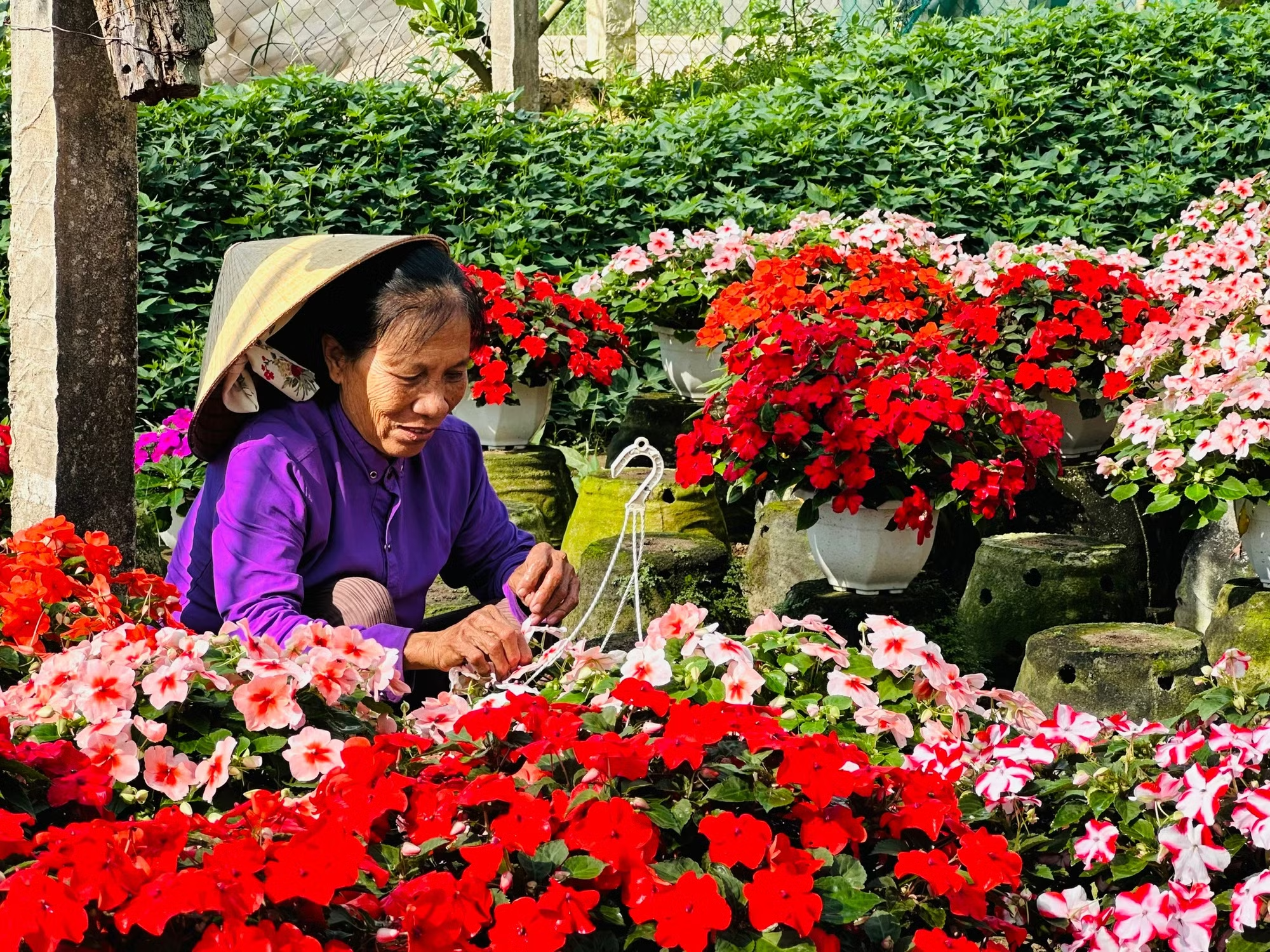
These days, the flower garden of Mrs. Tran Thi Minh Hung (Binh Lam hamlet) is bustling with activity. In addition to traders coming to purchase flowers, many visitors from near and far come to tour and experience the flower-growing model. This year, varieties such as pompom chrysanthemums, petunias, and firecrackers in her garden have all thrived, with traders placing early orders for the Tet market.
Binh Lam is not alone; the province is home to many long-established flower-growing areas such as An Phu (An Phu Ward), Gia An Nam (Hoai Nhon Bac Ward), Kien Long (Binh An Commune), Ha Thanh (Quy Nhon Ward), and Nhon An (An Nhon Dong Ward). Each flower village specializes in different varieties, collectively adding vibrant colors to spring and preserving the traditional beauty of Tet.

As one of the large-scale flower growers in Gia An Nam neighborhood (Hoai Nhon Bac Ward), Nguyen Minh Phuc shared that this year his family planted about 1,000 pots of crystal chrysanthemums, 1,500 pots of pompom chrysanthemums, and many other varieties such as asters, dahlias, firecrackers, carnations, and marigolds. Although initially affected by Typhoon No. 13, thanks to the application of advanced techniques and improving weather, the flowers have grown well, with even buds and vibrant colors.
"To date, most of the flowers have been pre-ordered by traders and are being gradually transported. Our family feels more at ease after the initial period of concern," Phuc said.
According to Mr. Tran Minh Lam, Vice Chairman of the People's Committee of Hoai Nhon Bac Ward, the area and output of Tet flowers this year have remained stable. Many households have proactively diversified their flower varieties, while the local government has supported the beautification of flower-lined streets, adding highlights to the Tet atmosphere.
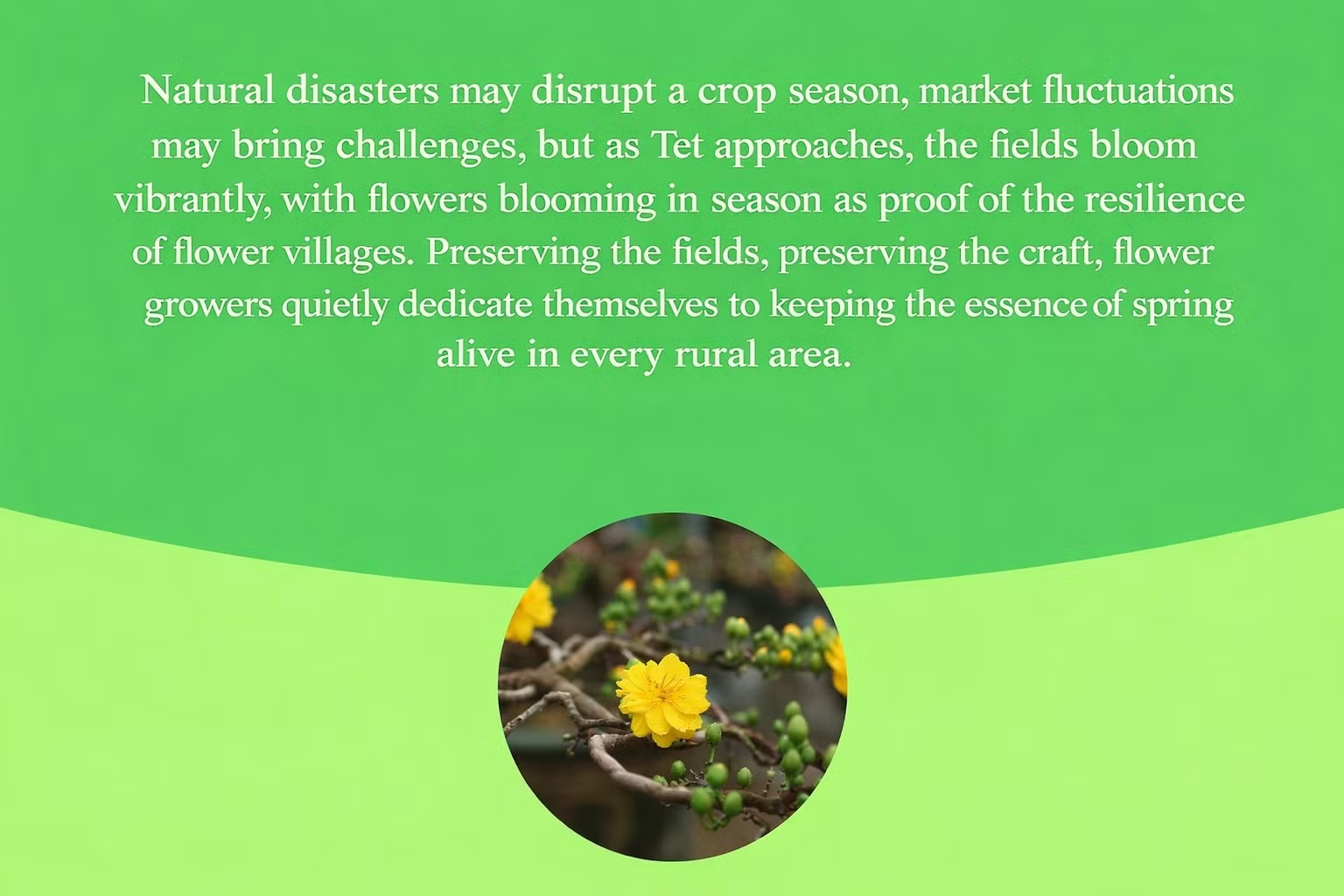
Despite having just endured storms and floods that caused many apricot trees to bloom early, in the apricot capital of Nhon An, local gardeners have persevered in caring for their trees so that the blossoms are ready for Tet. Nguyen Thanh Chuc shared, "This year, apricot trees have been heavily affected by natural disasters, but everyone is trying to maintain their gardens and care for the trees to have flowers for Tet. Traders have started coming to view and purchase, though the market is not as lively as in previous years."
After the storms, the fields and gardens are gradually turning green again, and the flowers are blooming in time for the season. It is the deep connection to the land and the craft that has helped these flower villages overcome a difficult year, preserving the vibrant colors of spring for the countryside as Tet approaches.
Amid a Tet flower market still facing many fluctuations, chrysanthemums continue to enjoy steady demand. After months of careful tending, monitoring buds, and timing the blooms, chrysanthemum gardens are now entering the sales phase with a relatively proactive mindset. In many flower villages, large chrysanthemums, crystal chrysanthemums, and pompom chrysanthemums have attracted early interest from traders, with most of the output secured before Tet, providing a rare bright spot after a year of challenging weather.
By the 20th day of the lunar month, more than 500 pots of chrysanthemums in Tran Van Duc's garden (Kien Long hamlet, Binh An commune) had been completely purchased by traders. Although Typhoon No. 13 caused some damage, proactive measures ensured his flowers bloomed beautifully.
"I agreed with traders on a price of 280,000-300,000 VND per pot for 50 cm diameter chrysanthemums, and 400,000-450,000 VND for 70 cm pots. I thought this year’s flower crop would be tough, but it turned out well. Everyone in the commune had a good harvest, and I personally made over 100 million VND in profit," Duc said cheerfully.
According to Mr. Mai Xuan Hau, Chairman of the People's Committee of Binh An Commune, chrysanthemums in Binh Thanh have sold very well this year, mainly through wholesale. Most gardens have been pre-ordered and collected by traders, with many nearly selling out their entire output. Average prices range from 160,000 to 300,000 VND per pot, depending on size and quality. After deducting costs, profits are about 80,000-120,000 VND per pot. As a result, the average income per flower-growing household is 50-60 million VND per crop, with large-scale producers earning up to 150 million VND.
Currently, over 30 hectares of gladiolus in An Phu and Pleiku wards are entering peak harvest. In the old Tra Da fields, the harvest is in full swing to meet Tet market demand.
While cutting flowers for traders, Nguyen Dung (Group 5, Pleiku Ward) shared that his family grows nearly 1 hectare of gladiolus scattered throughout the area. Four contiguous plots of gladiolus have already been sold to traders for 250 million VND. After deducting investment and labor costs, his family still made over 100 million VND in profit.
In contrast to the vibrant chrysanthemum market, the apricot blossom market is more subdued this year. Although many apricot gardens have reached the desired shape and bloom, demand has not been as strong as in previous years. In traditional apricot-growing areas, traders mainly visit to survey, with actual purchases being cautious, resulting in a quieter market as Tet approaches.
Stricter Planning Needed for Apricot Cultivation
About a decade ago, some artisans warned of the consequences of unplanned, uncoordinated mass apricot planting. Today, those concerns have become reality, as evidenced by the current difficulties in selling apricot trees.
According to Phan Tri Tuan, owner of Tuan Ngoc Apricot Garden (Thanh Liem neighborhood, An Nhon Dong Ward), sustainable development of the apricot industry requires clear planning. Artisans and growers must collaborate, sharing experience and cultivation techniques to produce beautiful apricot pots that bloom at the right time and to share market access. This would help avoid the current situation—oversupply, traders freely forcing prices down, and growers selling at any price just to recoup their investment.
Statistics from the People's Committee of An Nhon Dong Ward show that the ward has about 96 hectares of apricot land with over 800,640 pots. As of February 9, local households had sold about 26,700 pots, generating nearly 13.4 billion VND in revenue—a significant decrease compared to the same period last year.
Meanwhile, in An Nhon Bac Ward, there are about 164 hectares of apricot land with over 3 million trees. This Tet, residents plan to bring about 1.2 million commercial trees to market, but only about 120,000-130,000 are expected to be sold, a 25% drop from last year.
Given this reality, many gardeners say they are resigned to waiting for the market to improve. Nguy Nhu Anh (An Nhon Ward) said that although apricot prices have dropped by about 20% this year to stimulate demand, sales remain sluggish.
"Prices have had to drop, while storms have caused significant damage and care costs have risen. Most people are now hoping for a last-minute surge in demand as Tet nears, hoping to recoup some of their expenses," Anh shared.
Not only Mr. Anh, but many other apricot growers in the area share the same anxiety as the market remains lackluster.
According to Phan Van Sau, owner of Sau Hong Apricot Garden (An Nhon Dong Ward), with decades of experience in the trade, he has built a wide network of customers across regions. However, this Tet season, most regular buyers have been slow to make contact, and transactions are sluggish.
"With only a few days left until Tet, only a handful of customers have come to the garden, buying just over 100 apricot pots for shipment, even though this year's flowers are considered more beautiful than last year. Beautiful apricots, but slow sales," Sau said.
Explaining the reason, Mr. Sau said that the unchecked expansion of apricot cultivation over a long period, without planning or coordination in sales, has led to oversupply.
"For the apricot industry to develop sustainably, local authorities must closely monitor everything from acreage and market forecasts to consumer preferences. Only with proper planning and coordination can growers feel secure in their long-term commitment to the craft," Sau expressed.