Growers report an abundance of yellow apricot trees lining National Highway 1 and local roads, but few traders. In past years, trucks from northern provinces crowded into the villages by mid-month. This season, even on the 19th day of the lunar calendar, the roads remain largely empty.
At Binh An residential group in An Nhon Bac, most apricot fields have yet to receive a single wholesale truck. Only one vehicle, bearing Hung Yen plates, was spotted as workers quietly loaded pots belonging to grower Nguyen Quoc Sy. After natural disasters late in 2025, Sy said only about 300 of his more than 2,000 trees met sale standards this year.
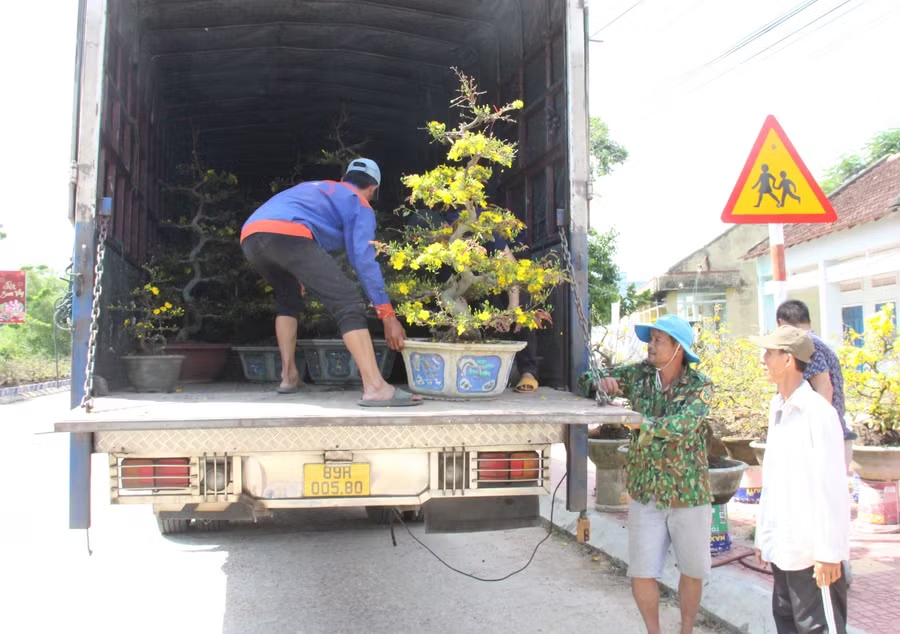
His five-petal, dragon-shaped apricot trees, aged four to 14 years, are fetching sharply reduced prices: 450,000–650,000 VND (about USD 18–26) for younger trees and 5-6 million VND (about USD 200-240) for older ones. Shipping them to Hanoi adds another 500,000 - 1 million VND (USD 20–40) per tree in transport and rental fees. “If I don’t take them north myself, I don’t know who I could sell them to”, he said.
The Hao Duc apricot village in An Nhon Dong faces similar stagnation. Despite hundreds of trees lining the roadsides, sales remain sparse. Of the 500 trees prepared for Tet, veteran grower Cao Van Minh had sold only 10 by the 18th day of the lunar month, mainly five-year-old trees priced around 250,000 VND (about USD 10). He has sent dozens of pots to Phan Thiet in hopes of finding more buyers.
“This is the worst Tet season I’ve seen in more than 20 years”, Minh said. “Costs keep rising, but prices keep falling. Apricot trees are no longer the stable income they once were”.
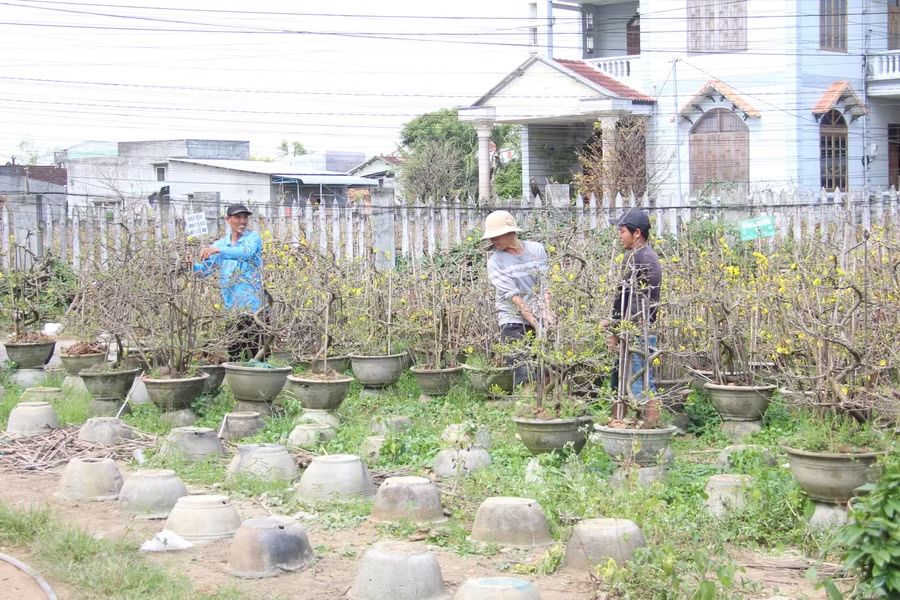
Local authorities confirm the downturn. An Nhon Bac ward has 164 hectares of apricot cultivation with more than 3 million trees. Of the 1.2 million expected to enter the Tet market, only 120,000–130,000 are projected to sell, down 25% from last year. Estimated revenue is 30 billion VND (about USD 1.2 million), described as low for the area’s scale.
In An Nhon Dong, where 131 hectares are under cultivation, growers have sold only 16,500 pots, generating just over 8.2 billion VND (about USD 330,000) by the 19th day of the lunar month. Officials attribute the sluggish market to the compound effects of 2025 natural disasters and reduced household incomes amid ongoing disease outbreaks, including African swine fever.
“This year, blossoms are beautiful, but the market is extremely slow,” said ward vice chairman Phan Long Hung. “Prices are low, and buyers are focusing mainly on mini or small trees aged three to five years”.