The shift reflects a growing preference for baskets featuring OCOP-certified goods and regional specialties instead of imported confectionery and foreign liquors that previously dominated the market.
Producers, cooperatives, and retailers report meticulous planning in product selection and packaging to increase gift value while ensuring stable outlets for agricultural products.
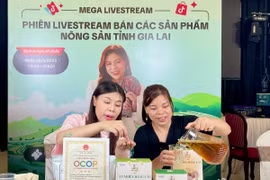
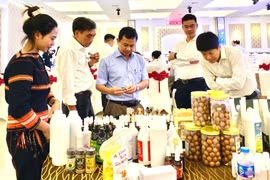
At LiLa Herbal Co., Ltd. in An Binh Ward, gift sets combining herbal health-care items with local specialties were among the first to enter the market. Director Nguyen Thi Thu Trang said the sets are curated to balance herbal teas, nutritious seeds, dried fruits, cordyceps, refined bird’s nest, and herbal liquors, prioritizing OCOP products with clear origins.
Ms. Trang added that Tet gift boxes have become a long-term brand-building tool. By reaching new customer groups, businesses can expand their markets beyond the holiday season.
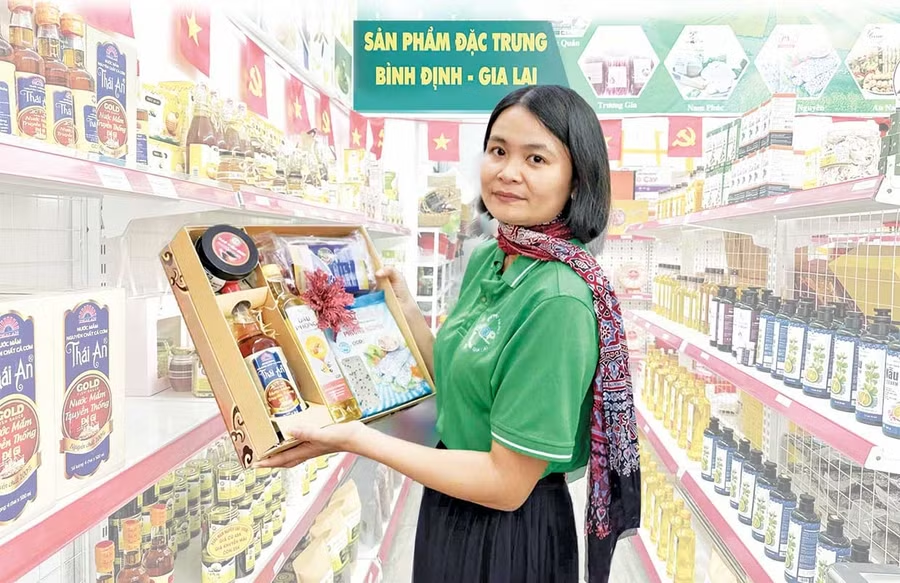
A similar approach is being taken by Nam Phuc Tea Facility in Ia Pia Commune, which focuses on local specialties such as cereal powder, cashews, macadamia nuts, dried chicken, dried beef, and coffee.
To ensure stable prices, the facility placed advance orders with local producers. It is offering about 500 gift baskets priced from VND 500,000 to 1.5 million (approximately USD 20 to USD 60) to serve different customer segments.
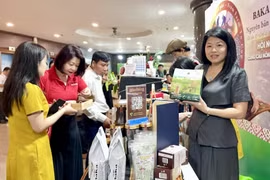
Retailers also report increasingly vibrant demand as Tet approaches. At the provincial store for agricultural products, specialty foods, and OCOP goods in Quy Nhon Ward, preparations are underway to assemble OCOP-focused gift baskets in partnership with distributors.

Store manager Truong Thi Xuan Hoa said the aim is to raise order value, promote local brands, and secure stable markets for producers. Current designs range from VND 300,000 to 2 million per basket (USD 12 to USD 80), featuring items such as An Lao honey, rice paper, dried beef, coffee, macadamia and cashew nuts, ginger tea, roselle, dried bamboo shoots, cordyceps, sweet potato wine, and De Gi fish sauce.
The province now has 1,018 OCOP products, including 884 rated three stars, 127 rated four stars, and seven rated five stars. Officials say the diversity, improved quality, and upgraded packaging of these products enable them to meet Tet gifting needs while conveying cultural stories and regional identity.
Consumers are reinforcing this trend. Tran Van Khanh of Dien Hong Ward said he shifted from pre-packaged gift baskets to OCOP-based selections in recent years, noting the higher quality and meaningful value of local specialties.
According to Nguyen Thi Bich Thu, Director of the Center for Industrial Promotion and Trade Promotion, OCOP items such as coffee, honey, macadamia nuts, cashews, dried fruits, cereal cakes, dried beef, herbal teas, fish sauce, processed seafood, and herbal products have established market presence and are well-suited for Tet gifting.
Their inclusion in Tet baskets, she said, boosts producer revenue, elevates the value of local specialties, supports livelihoods, and strengthens consumer trust in Vietnamese products.