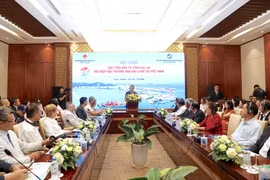
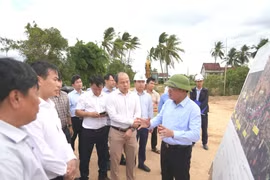
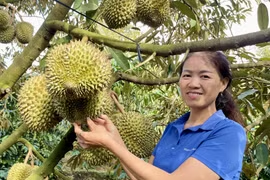
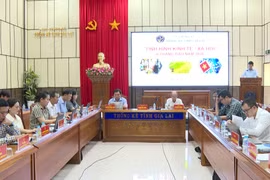
The congress underscored the association’s role as the province implements key Party and State policies on agriculture, farmers and rural development in the new era, while laying the groundwork for stronger farmer-led growth.
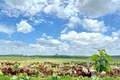
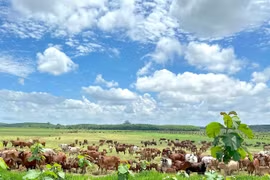
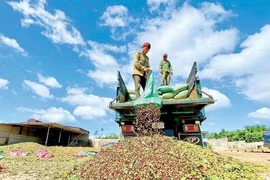
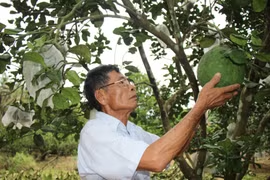
Agriculture, forestry and fisheries continue to serve as the backbone of Gia Lai’s economy, with the sector recording an average annual growth rate of 3.75%.
By 2025, it is expected to contribute 28.84% of the province’s gross regional domestic product (GRDP).
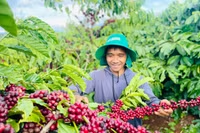
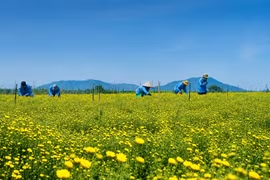
Production is increasingly shifting towards greener, more ecological practices, with greater application of science and technology, climate-change adaptation and sustainability.
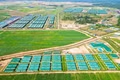
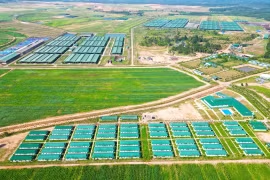
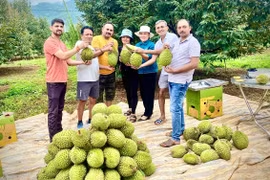
Structural reforms in the sector have strengthened links between production and markets, fostering concentrated commodity zones, value-chain models and safe, organic and VietGAP-compliant production.
Each year, farmers’ associations at various levels support more than 200 models applying technical innovations and production–consumption linkages, helping to raise incomes for members.
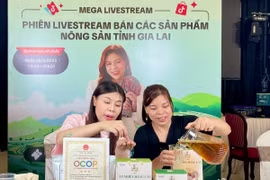
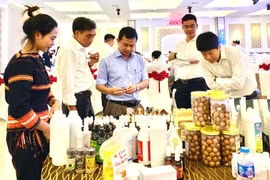
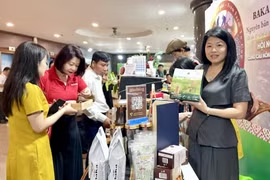
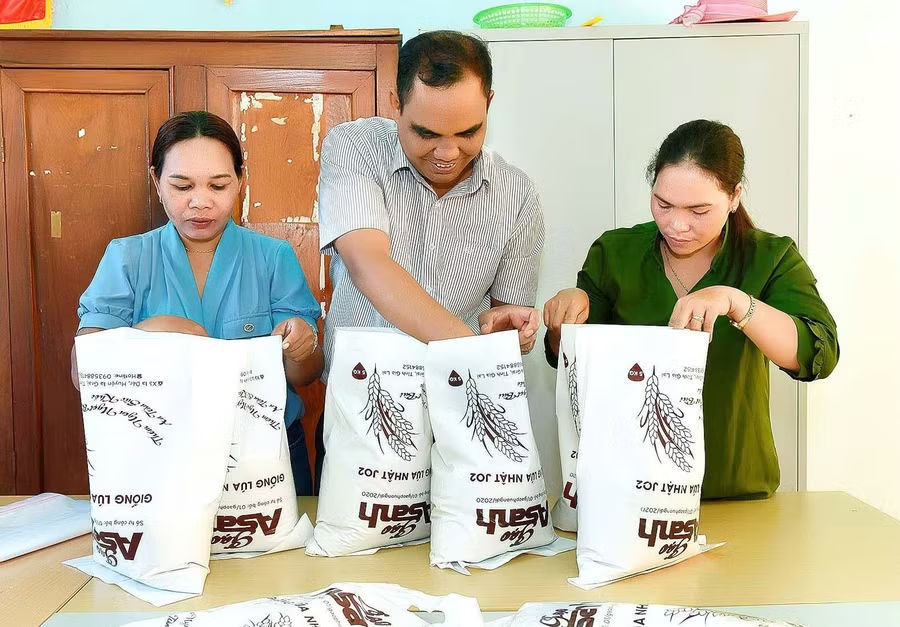
The One Commune One Product (OCOP) programme has emerged as a cornerstone of rural economic development. Gia Lai currently has 981 OCOP products, including 851 rated three stars, 123 rated four stars and seven achieving five-star status.
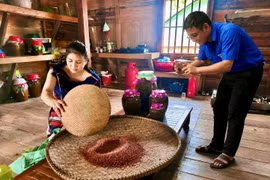
These products are enhancing the value of local agricultural goods, building brands and expanding market access within and beyond the province. A Sanh Rice, a three-star OCOP product, is opening new opportunities for the Jrai people’s rice brand to reach wider markets.
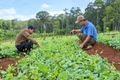
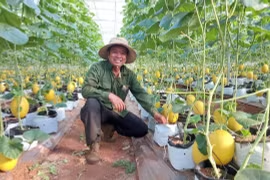
Farmer-led production and business emulation movements have expanded, generating innovative and effective models. The garden–pond–livestock (VAC) model run by Phạm Anh Thạch in Hòa Hội commune, which maximises agricultural by-products and efficient production, delivers annual profits of more than 1 billion VND (about USD 40,000).
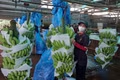
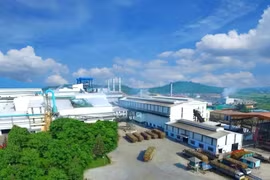
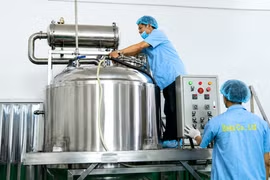
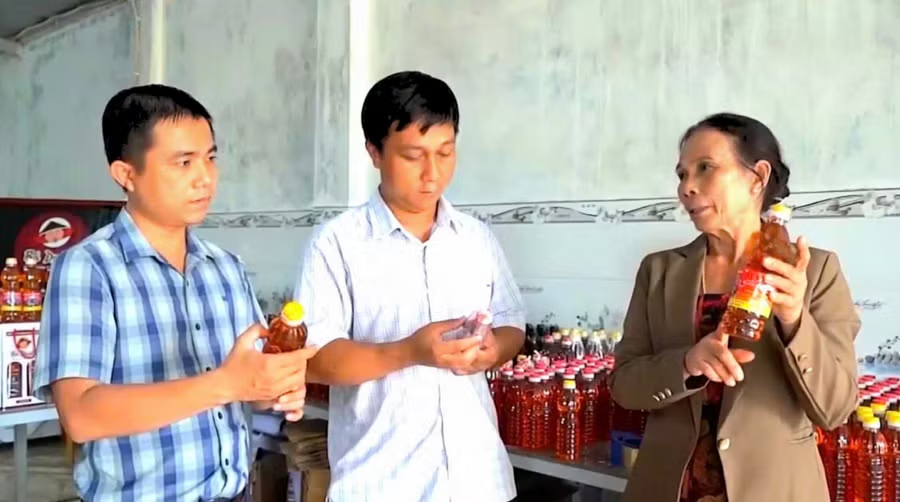
In the processing sector, Trần Thị Duyên has developed a traditional fish sauce facility focused on quality and packaging, supplying supermarket chains and earning over 1 billion VND (about USD 40,000) a year; she was recognised as an “outstanding Vietnamese farmer 2025.” In Kbang commune, Dương Đình Kiệt’s macadamia cultivation and processing model is creating new value for local farm products.
Solidarity initiatives to support mutual prosperity and sustainable poverty reduction remain central to the association’s work.
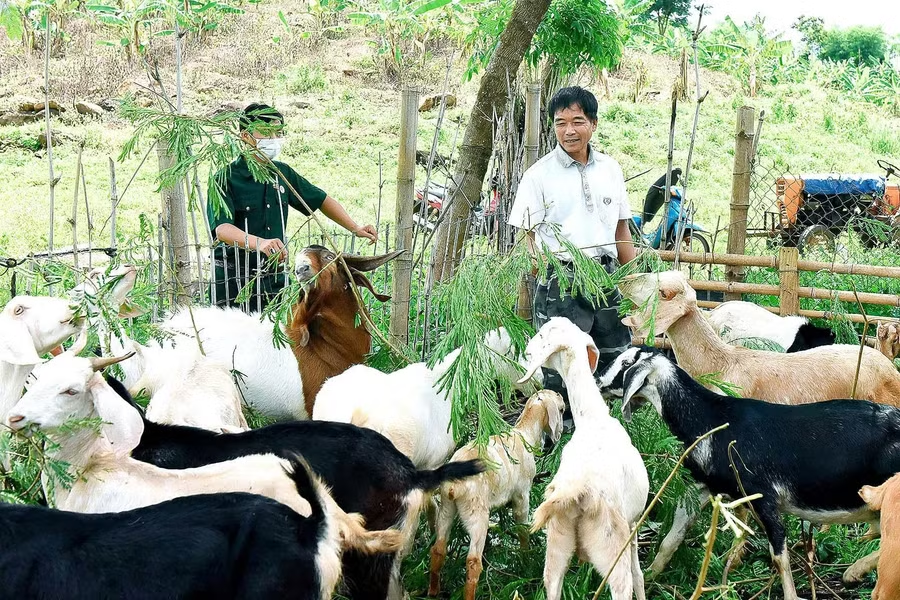
Through assistance in capital, seeds, technology, training and market linkages, large-scale and technology-driven production models have been established, creating jobs and improving livelihoods.
Rural landscapes are becoming more vibrant, with farmers’ material and spiritual lives steadily improving, reinforcing the foundation for green and sustainable agriculture.
Alongside production, the Gia Lai Farmers’ Association has prioritised building a clean, strong organisation aligned with grassroots needs. From 2023 to 2025, the association admitted 24,642 new members, bringing total membership to 363,974.
On average, 46 professional branches and 320 professional groups are formed each year; to date, the province has 231 branches with 4,518 members and 973 groups with 10,891 members.
Since the start of the term, the provincial association has allocated more than 250 million VND (about USD 10,000) to support the establishment of 30 professional branches and groups under the “five self, five together” principle, and organised seven training courses for 350 key officials and members.
More than 211,760 member households register annually for emulation titles, with 70,497 households recognised for outstanding production and business achievements. A total of 1,086 exemplary members have been admitted to the Party, bringing the number of Party members active in the association to 16,250.
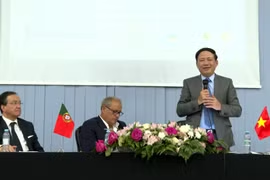
Speaking at the congress, association chairwoman Rơ Chăm H’Hồng said the event marked a significant milestone, ushering in a new stage of development for the organisation and reaffirming its pivotal role in uniting and mobilising farmers to contribute to Gia Lai’s sustainable development.
In the coming term, she said, the association will continue to innovate its operations, place farmers at the centre of development efforts, and promote sustainable, linked production to build ecological agriculture, modern rural areas and a more prosperous farming community.