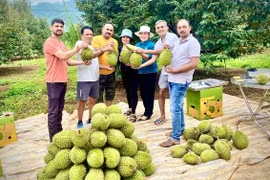
After years observing deteriorating health and degraded land, he launched the initiative in 2017 to help growers transition toward practices that work with nature rather than against it.
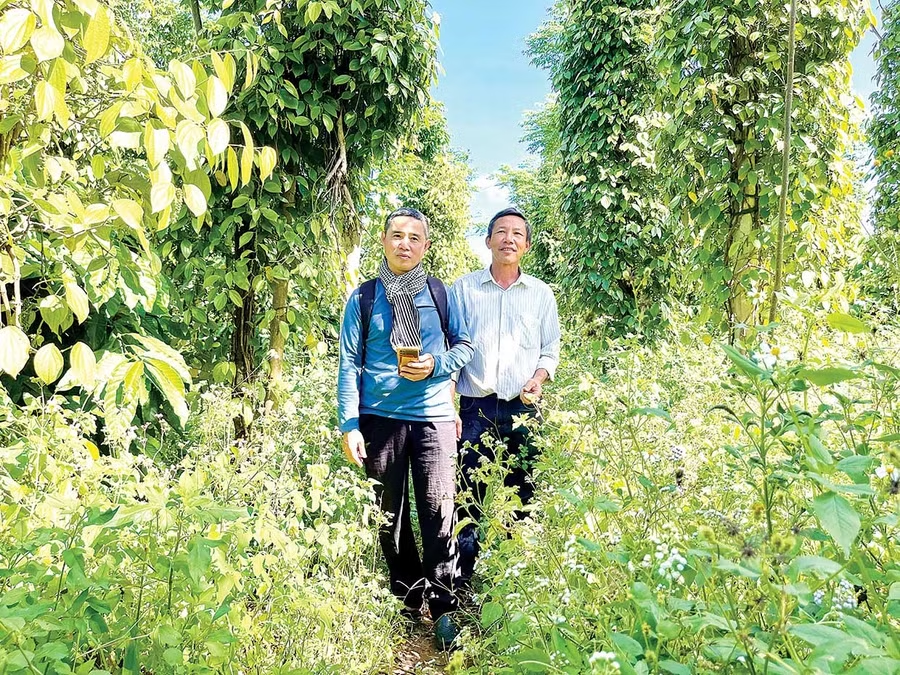
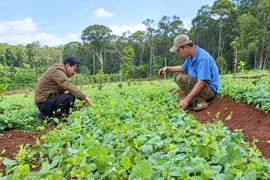
The project has taken root particularly in Gia Lai, where it has guided farmers through multi-year shifts to organic cultivation. Despite early skepticism, often triggered by gardens left intentionally overgrown with grass, Ngọc argues that allowing vegetation to flourish protects underground ecosystems that generate natural nutrients. “Grass is like a roof”, he explained, describing how thriving microorganisms and insects help soil “heal itself”.
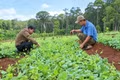
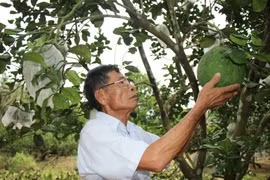
Farmers participating in the program report notable improvements. Nguyễn Thành Châu, who manages an 18-hectare pepper garden with existing US and European organic certification, joined after realizing his soil remained weak. More than a year later, his land is covered with healthy grass, microbial activity has strengthened and pepper plants are growing more steadily.
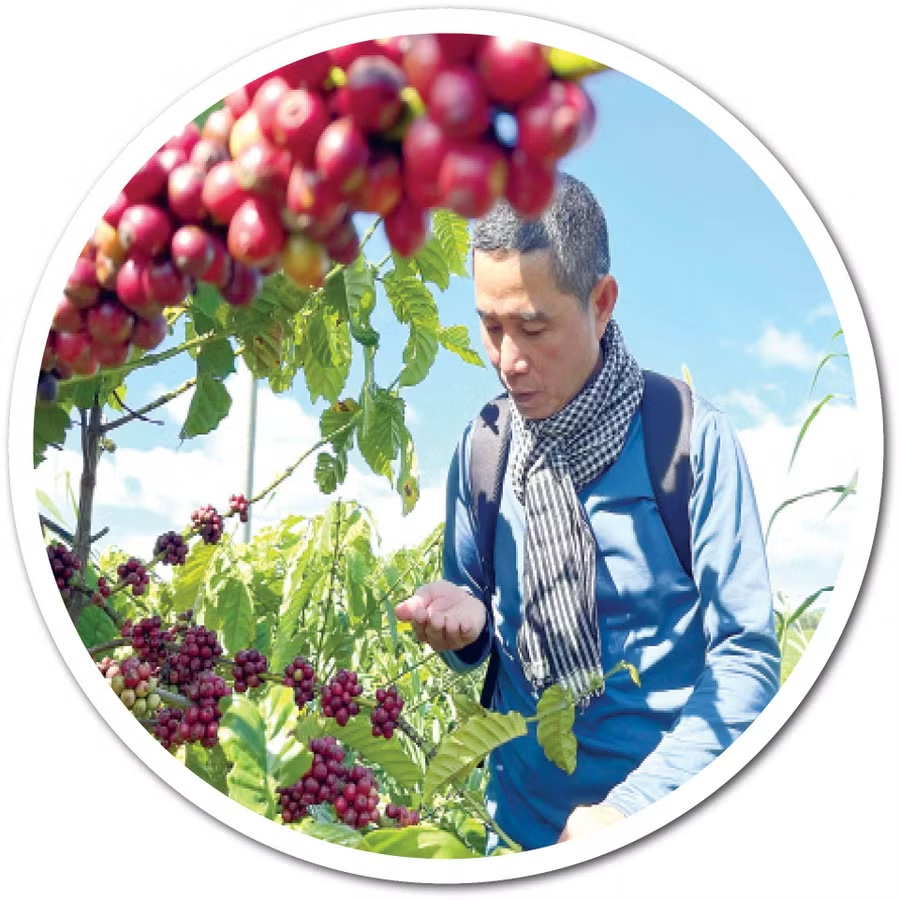
Similar results have encouraged others to follow. Cao Hoàng Vũ said income initially declined during his two-year transition, but reduced labor and fewer input requirements later boosted efficiency. He now applies organic products only two to three times annually, cutting costs while improving crop outcomes. His group’s products have earned high marks from buyers for both quality and ethical farming practices.
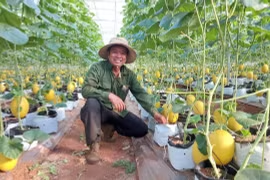
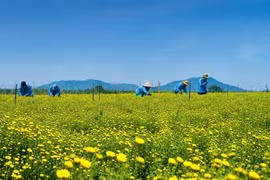
The project’s scope extends beyond pepper to coffee, passion fruit, melon, durian and medicinal herbs, anchored in the principle that “healthy soil produces thriving plants.” In Ia Phí commune, Đào Bá Tuyến recalled nearly losing his coffee crop during the initial “release” phase, when plants suffered nutrient stress. Over time, yields rebounded and surpassed expectations, reaching more than five tons of beans per hectare. Stronger soil also enabled him to intercrop durian and introduce greenhouse melons to diversify income and reduce risk.
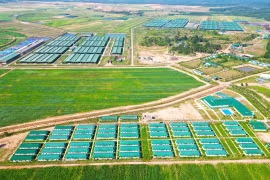
Local authorities have backed the initiative. Nguyễn Công Sơn supported field-by-field engagement with farmers, while Biện Văn Hảo said years of chemical overuse had weakened soil, raised production costs and increased environmental threats. Successful models for coffee and melon have encouraged government advocacy for wider adoption.
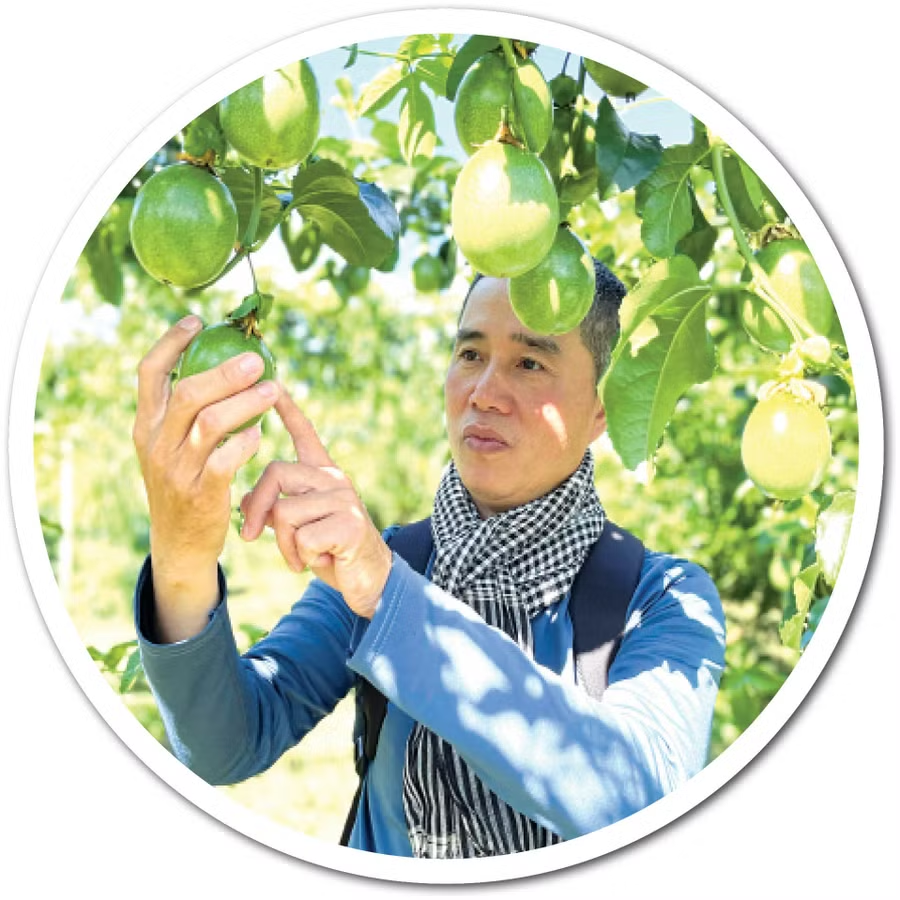
Economic gains are already visible. Prices for pepper have risen by 30-35%, melon by about 30%, while coffee beans are heavier and more uniform, properties favored in high-quality processing. Beyond pricing, healthier soil allows multiple crops to coexist, supporting one another through nutrients, microorganisms and natural pest control, strengthening long-term sustainability.
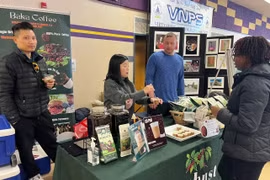
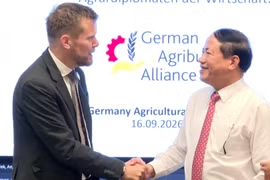
The project’s philosophy was highlighted at the Vietnam-Germany International Conference on Organic Farming and Sustainable Production in November 2025 at Can Tho University of Agriculture, where Farmer Warriors presented its soil-restoration framework grounded in the principle of “returning soil to its natural state”. Ngọc said growing scientific and international backing underscores Vietnam’s capacity to pursue sustainable agriculture by prioritizing soil health.
Ngọc, who works with local authorities to encourage farmers to view soil as a living organism, believes restored ecosystems give growers greater control over production and open the path to a “green future”. While acknowledging the transition is long and difficult, he maintains it is the only viable route for agriculture to advance sustainably: slowing down, protecting the environment and supporting the farmers he considers today’s true “warriors”.