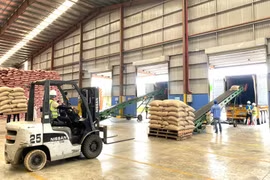
Effective from July 1, 2025, to December 31, 2026, the policy marks a significant shift compared with earlier tax relief measures, with a longer implementation period and expanded coverage across multiple sectors.
Newly eligible categories include information technology products and services, transportation and logistics, and a wider range of traded goods and services.

In parallel, the government has introduced temporary tax relief measures for fuel to address rising costs. From March 26 to April 15, 2026, environmental protection tax on gasoline (excluding ethanol), diesel and jet fuel has been reduced to zero, while the special consumption tax on gasoline has also been cut to 0%. These fuels are exempt from VAT declaration and payment, although input VAT remains deductible.
Provincial tax authorities have moved quickly to implement the policy, reviewing eligible businesses and sectors and providing guidance to ensure compliance. A digital lookup tool has been deployed to help companies identify whether their goods and services qualify for the VAT reduction based on standardized product classification codes.
Retailers are already reporting tangible impacts. At Co.opmart Quy Nhơn, around 150 out of more than 200 product groups, equivalent to roughly 20,000 items, are now subject to the reduced 8% VAT rate. The supermarket has combined the tax cut with promotional campaigns and discounts, helping stimulate consumer spending.
Shoppers say the policy is easing household financial pressure. “The VAT reduction helps my family save on monthly expenses, especially as prices are rising while incomes remain unchanged,” said a regular customer in Quy Nhơn.
Fuel distributors have also adopted the measures. Petrolimex Gia Lai has implemented the policy across its network of franchisees, distributors and retail stations, alongside investments in upgraded infrastructure, automated systems and service improvements aimed at increasing transparency and efficiency.
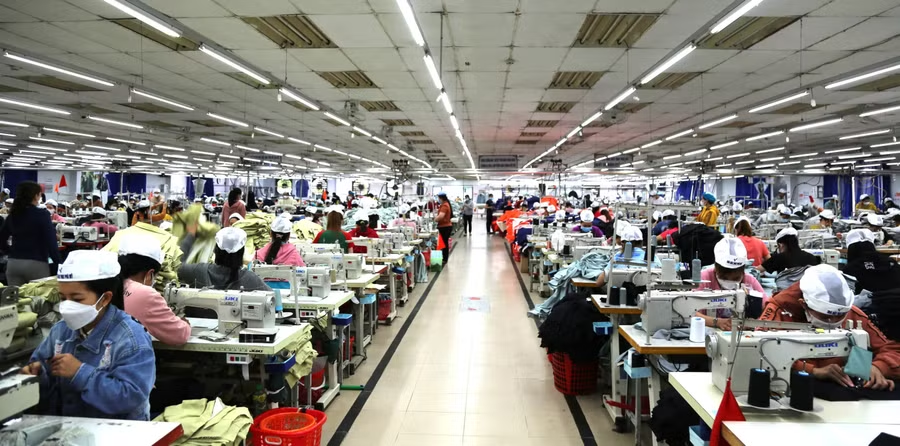
Manufacturers highlight additional benefits through reduced input costs. In the garment sector, where raw materials account for a significant share of production expenses, the VAT cut is helping firms improve competitiveness, according to industry representatives.
Authorities expect the combined tax measures to support economic activity by lowering costs, boosting consumption and strengthening business resilience across sectors.