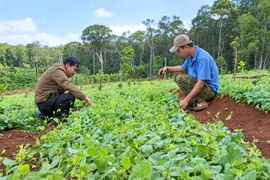
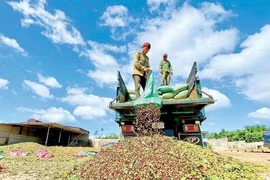
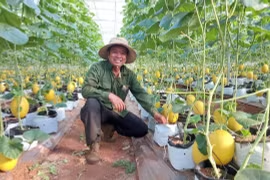
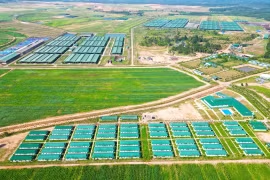
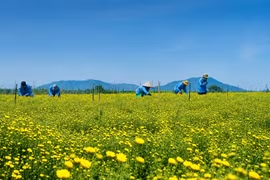
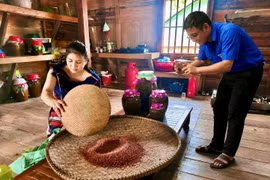
Trọng Đức has expanded its cocoa area in Pờ Tó to 30 hectares, achieving yields of 15-20 tonnes of fresh pods per hectare. With cocoa purchased at about 15,000 VND (≈ USD 0.60) per kilogram, each hectare now generates more than 200 million VND (≈ USD 8,000), several times the income from sugarcane or cassava, long considered the commune’s only viable crops.
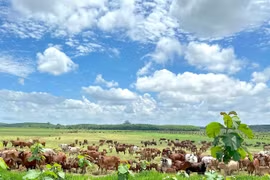
The breakthrough marks a dramatic shift for Pờ Tó, an area widely known as “hốc Pờ Tó” for its harsh climate, infertile soil, and chronically low agricultural productivity.
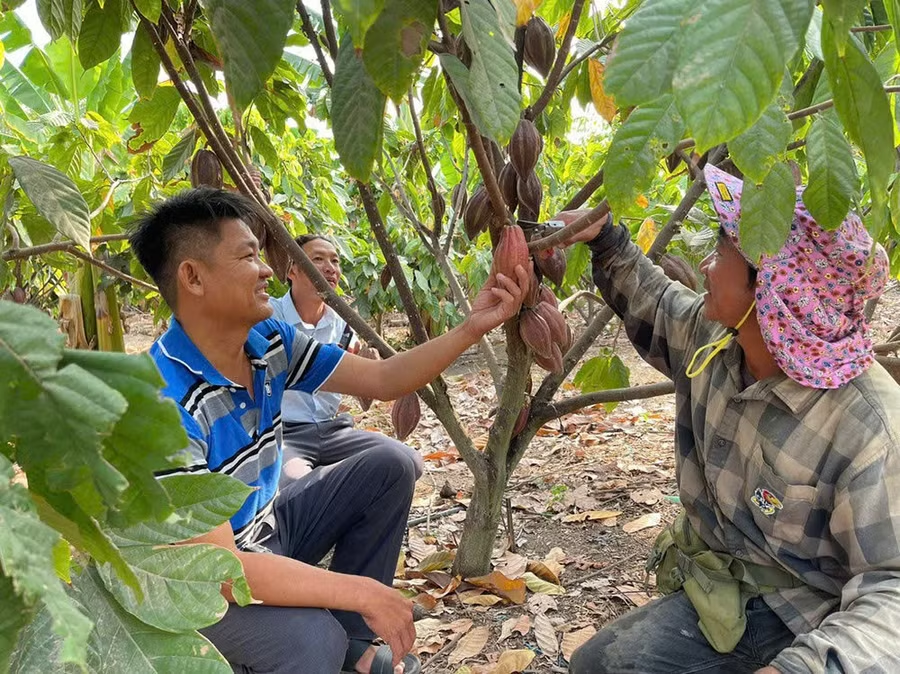
According to General Director Đặng Tường Khanh, Trọng Đức identified Pờ Tó’s wide, flat terrain and its large day-night temperature swings as advantages for cocoa flavor development. What had once been considered agricultural weaknesses have instead produced beans suitable for deep processing and export.
The company has adopted a sustainable model that intercrops cocoa with fruit trees for wind protection and soil improvement. Drip irrigation, organic fertilizers, and biological plant-protection methods are being introduced to reduce costs and strengthen environmental resilience.
Area manager Võ Văn Quý said cocoa has proven “easygoing”, with few pests and strong compatibility with local soil conditions. The intercropping approach is also helping the region build a climate-resilient agricultural ecosystem.
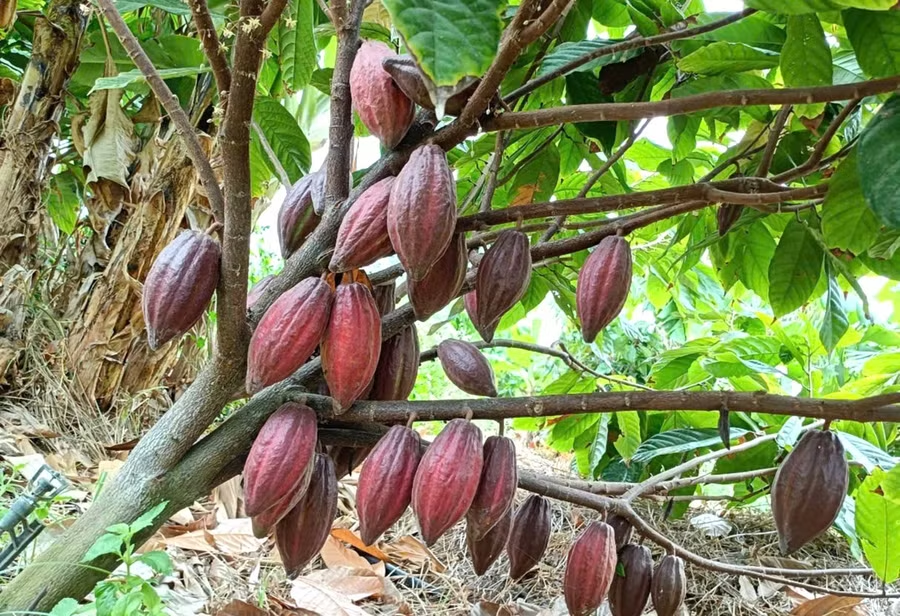
International interest is accelerating momentum. Senior Executive Director Minoru Kikkawa of Bourbon Corporation said global disruptions in South American cocoa supply had prompted the company to seek new, stable sources. After multiple surveys, Bourbon assessed Gia Lai as highly promising thanks to its soil quality and consistent bean characteristics.
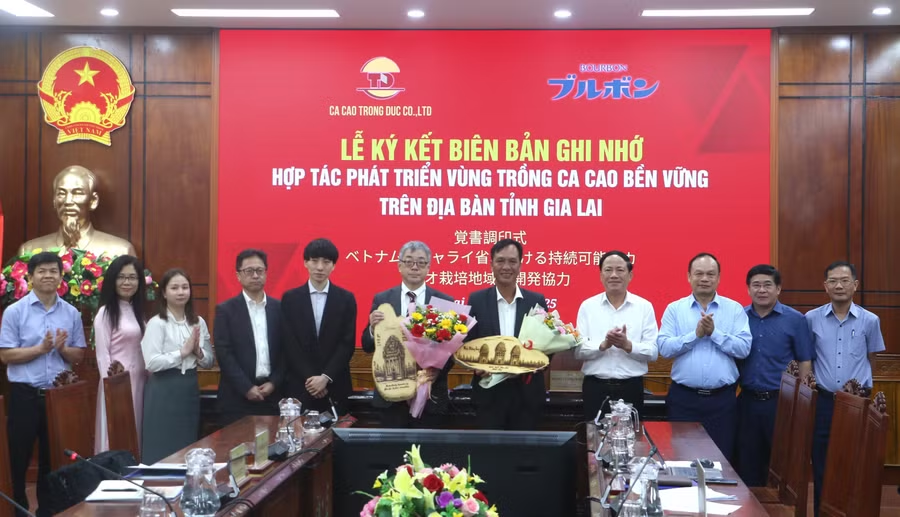
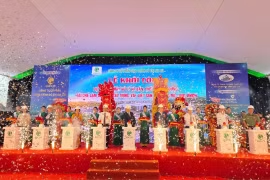
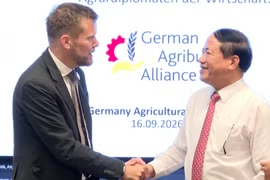
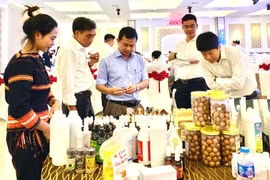
Bourbon and Trọng Đức have now signed a seven-year cooperation agreement to expand the raw-material zone in Gia Lai. The partnership includes product purchasing commitments, technology transfer, and quality-improvement support aimed at integrating the province’s cocoa more firmly into global supply chains.
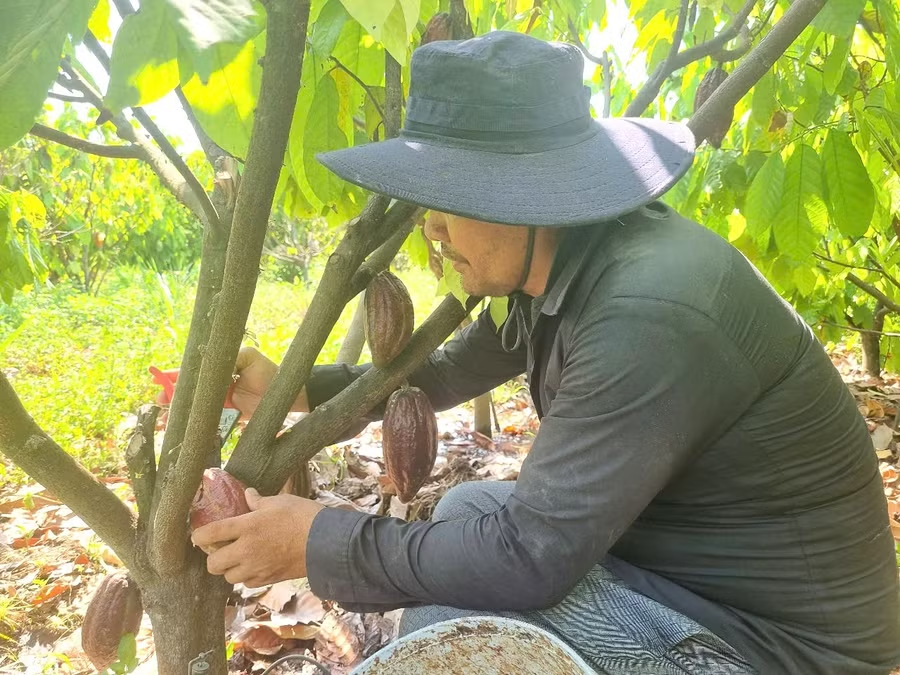
Building on Pờ Tó’s 30-hectare pilot, the two companies plan to enlarge the growing area to about 200 hectares. The project is expected to involve 2,050-4,100 farming households, distribute more than 41,000 seedlings initially, and train growers in standardized cultivation and harvesting. Cooperatives, planting-area codes, and digital production management will be developed to ensure traceability, an essential requirement for export markets.
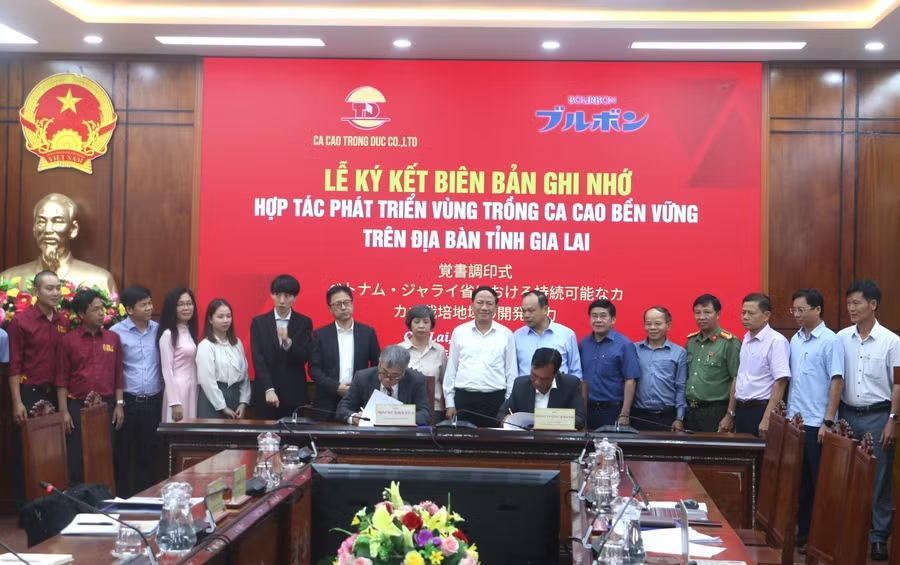
Khanh said Trọng Đức’s nearly two decades of experience in farmer – cooperative - enterprise linkages will guide the expansion. “Our model puts farmers at the center and the market as the orientation”, he noted, adding that the partnership with Bourbon will help build a sustainable cocoa zone connected directly to international buyers.
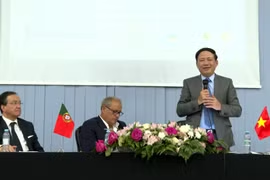
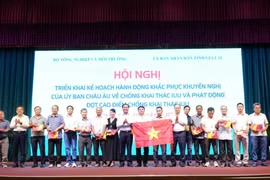
At a meeting with Trọng Đức Cocoa Co., Ltd. and Bourbon Corporation at the end of 2025, Chairman of the Gia Lai Provincial People’s Committee Phạm Anh Tuấn emphasized: Gia Lai supports the development of a cocoa raw material zone in the province to meet the basic supply needs of enterprises. However, companies must commit to long-term product purchasing for farmers. At the same time, they should promote the application of science and technology, guide farmers in cultivation and care to ensure productivity and quality, and link these efforts to planting area codes to build a branded cocoa raw material zone for Gia Lai on the world stage.