The provincial Department of Industry and Trade is prioritising measures to help businesses, cooperatives and OCOP producers adapt to shifting market dynamics, broaden distribution channels and strengthen competitiveness in an increasingly digital economy.

However, businesses face mounting challenges as e-commerce evolves. Requirements now extend beyond basic digital adoption to include tax compliance in online environments, electronic invoicing, cross-border trade capabilities and adherence to emerging standards such as green logistics and sustainable supply chains.
These demands have exposed structural bottlenecks. Many small and medium-sized enterprises (SMEs) struggle to access suitable policies and support mechanisms, highlighting the need for clearer regulations and a more transparent legal framework.
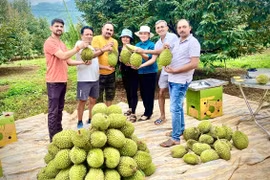
From a business perspective, opportunities are significant but competition is intensifying. Hồ Thị Hoài Thu, CEO of Green Tropical Import-Export Processing Joint Stock Company, said e-commerce has enabled processed agricultural products such as freeze-dried durian and green banana powder to reach new markets, though rivalry on digital platforms is growing fiercer.
Support initiatives, including livestream sales and trade promotion programmes, have delivered tangible results, businesses say. Firms are calling for these efforts to be expanded, particularly to support exports, alongside targeted policies from e-commerce platforms to promote regional agricultural products.
In the food sector, companies also view digital platforms as essential for market access. Phan Tấn Châu of Kaizen Food Processing Joint Stock Company said tools such as fanpages, TikTok, YouTube and Facebook have become indispensable for building consumer awareness and trust.
Industry participants increasingly see e-commerce not as an optional channel but as a necessity. Yet experts stress that effective utilisation requires coordinated support across policy, infrastructure and long-term development programmes.
At the same time, sustainability is becoming a defining trend. Businesses are under pressure to adopt environmentally friendly packaging, optimise operations and reduce emissions in logistics-factors that are quickly becoming benchmarks of competitiveness.
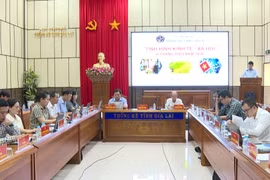
At a regional conference held in late March, international platforms outlined solutions to help local firms expand globally. Representatives highlighted integrated digital services covering training, customer support and store management, alongside increasingly efficient global logistics systems.
Logistics-=particularly green logistics-has emerged as a critical factor in cross-border e-commerce success. Industry experts warned that without effective control over transportation costs and delivery times, businesses will struggle to compete in international markets where customer experience is paramount.
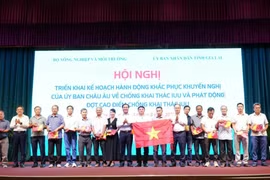
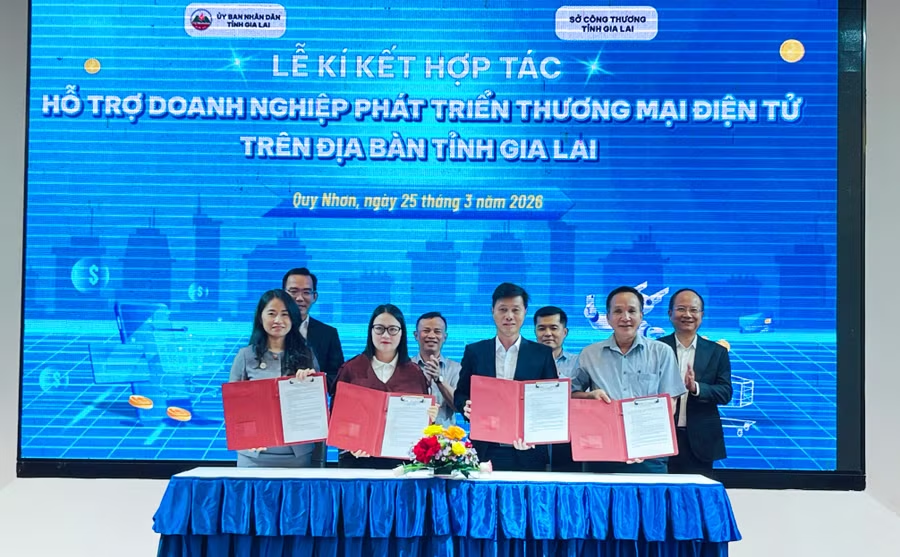
The conference also saw local enterprises and cooperatives sign cooperation agreements with e-commerce platforms and technology partners, marking a step towards expanding market access for OCOP products and regional specialties.
Nguyễn Đình Kha, Deputy Director of the Department of Industry and Trade, said e-commerce is entering a new phase focused not only on sales growth but on sustainability. He emphasised the need for businesses to optimise logistics, adopt eco-friendly materials and build green supply chains to compete globally.