Reporters from Gia Lai Newspaper and Radio & Television spoke with Mr. Nguyễn Đình Kha, Deputy Director of the Department of Industry and Trade, about preparations for the launch of E10 RON 95-III biofuel and public concerns surrounding fuel quality, safety, and supply.
* How has the province prepared for the simultaneous rollout of E10 biofuel sales at petrol retail outlets from June 1 to ensure stable supply and meet market demand?
Deputy Director of the Department of Industry and Trade NGUYỄN ĐÌNH KHA. Photo: NVCC
- In line with directives from the Government, the Ministry of Industry and Trade, and the Provincial People’s Committee on the transition roadmap for E10 biofuel, the Department of Industry and Trade has implemented a range of measures to ensure a smooth rollout, avoid market disruptions, and fully meet consumer demand.
The province currently consumes around 2,000-2,200 cubic metres of fuel per day through a distribution network that includes 10 key traders, 11 distributors, and 733 petrol retail outlets.
Following the announcement of the policy, the Department worked with major fuel companies and distributors to develop supply plans aimed at ensuring adequate E10 fuel availability and preventing shortages or interruptions during the transition period.
Businesses have also been instructed to inspect and upgrade storage tanks, fuel pumps, and pipelines to ensure compliance with E10 technical requirements.
At the same time, the Department has strengthened inspections and monitoring of fuel trading activities to quickly identify and address violations related to product quality, origin, and price listings.
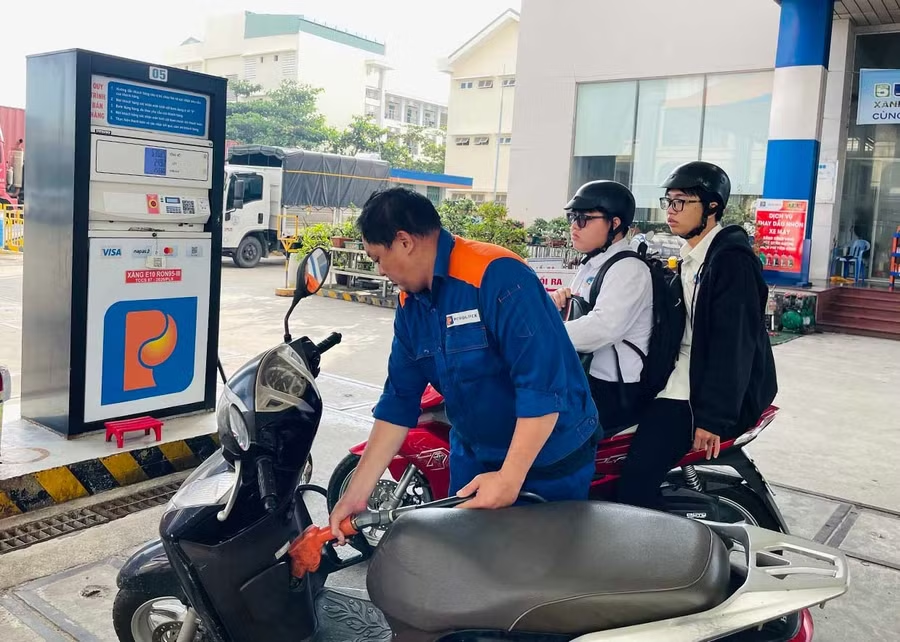
Residents refueling with E10 petrol at a station in Quy Nhơn Ward. Photo: Hải Yến
* Many consumers remain concerned about the quality and safety of E10 petrol. What are the advantages and safety assurances associated with this fuel?
- According to Mr. Kha, such concerns are understandable whenever a new fuel type is introduced. However, E10 petrol has already been used in many countries for years and is considered safe for vehicle engines when meeting technical standards.
Vietnam previously introduced E5 biofuel, allowing consumers to gradually become familiar with biofuel use. Although E10 contains a higher ethanol ratio, it still complies with technical standards and is compatible with many existing engine types.
Mr. Kha said consumers can feel reassured when using E10 petrol because it is environmentally friendly and helps reduce harmful emissions, air pollution, and greenhouse gas emissions. He described the adoption of E10 as part of Vietnam’s broader transition toward green energy.
Regulatory agencies will continue strengthening inspections and oversight throughout the import, blending, and distribution process to ensure fuel quality before products reach the market.
* What benefits could the implementation of E10 petrol bring to the province’s green and sustainable development goals?
- Mr. Kha said the development and use of biofuels are increasingly important amid global challenges related to energy security and environmental protection.
He noted that wider use of E10 petrol could help gradually reduce dependence on imported petroleum and improve the country’s energy supply autonomy.
For the province, the rollout of E10 also creates opportunities to develop biofuel raw material supply chains for ethanol production. This could help increase agricultural product value, create jobs, and support local economic growth in a greener and more sustainable direction.
Environmental benefits include lower harmful emissions, reduced air pollution, and cuts in greenhouse gas emissions, aligning with the province’s green growth strategy and Vietnam’s net-zero emissions commitments.
Mr. Kha said the transition to E10 petrol represents more than a simple fuel change, describing it as part of a broader shift toward a sustainable and environmentally friendly development model.
“With comprehensive preparation by regulatory agencies, businesses, and support from the public, the province expects to successfully implement this roadmap and contribute to building a modern, green economy alongside the rest of the country,” he said.
Industrial promotion programs are accelerating technology upgrades among rural businesses, cooperatives and production facilities, helping them improve product quality, strengthen brands and increase the value of locally made goods.
Gia Lai has sharply reduced administrative processing times for businesses, cutting company registration to a matter of hours and halving the time required for land allocation and leasing, as authorities seek to lower costs, accelerate investment projects and strengthen private sector growth.
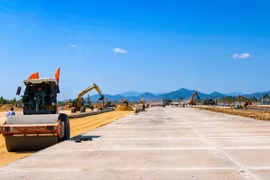
The construction of Runway No. 2 and associated airfield facilities at Phu Cat Airport has entered its final stage, with contractors working around the clock to complete the project on schedule while maintaining stringent quality standards ahead of commissioning.
Gia Lai province is restructuring its agricultural sector by replacing fragmented local branding with regional-scale agricultural brands linked to specialized production areas and integrated value chains, aiming to improve competitiveness, attract investment and expand export opportunities.
Agricultural producers in Gia Lai are strengthening quality, traceability and supply chain management as they seek greater access to Vietnam’s modern retail networks, where requirements on consistency and long-term supply remain major barriers despite the province’s strong agricultural base.
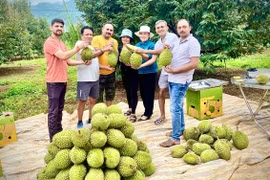
After leaving his position as director of an agricultural enterprise in Ho Chi Minh City, Nguyễn Chất Sâm returned to Ia Ly commune to pursue organic farming, transforming degraded former rubber plantations into a 15-hectare durian farm that now generates about US$267,000 in annual profit.
Gia Lai is reshaping its foreign direct investment (FDI) strategy by prioritising high-tech, environmentally friendly projects with strong spillover effects over investment volume, as the province seeks to improve growth quality and strengthen its role in global supply chains.
Gia Lai authorities have ordered faster construction and site clearance across several major transport projects, setting firm deadlines for an expressway, a new airport runway and a coastal road as the province seeks to strengthen regional connectivity and support economic development.
Gia Lai is stepping up the use of artificial intelligence and digital technologies to promote destinations, preserve cultural heritage and improve visitor experiences, as authorities seek to strengthen the competitiveness of the local tourism industry.
Construction of a key coastal road linking National Highway 1D and the new National Highway 19 is gathering pace after overcoming geological, material and construction challenges, with authorities targeting completion and operation by the end of 2026.
Gia Lai Province has unveiled a new strategy to expand its international communications efforts, aiming to strengthen its global profile through professional, modern and internationally aligned media outreach while promoting investment, tourism and international cooperation.
Gia Lai authorities have approved the investment policy and selected the investor for the Plei Thơ Ga 2 Floating Solar Power Plant, a 20 MW renewable energy project that will incorporate a battery energy storage system at Plei Thơ Ga Lake in Chư Pưh commune.
Gia Lai province has expanded low-emission rice cultivation to nearly 1,700 hectares, exceeding its 2026 target and strengthening its preparations to participate in domestic and international carbon credit markets through reduced greenhouse gas emissions.
Lê Tấn Hòa, a lecturer at the Faculty of Electronics and Informatics of Quy Nhon College of Technology and Engineering, has spent nearly 17 years developing practical training models and educational equipment designed to better prepare vocational students for real-world industrial environments.
Rooftop solar power is gaining momentum across wards of Quy Nhơn, East Quy Nhơn, North Quy Nhơn, South Quy Nhơn and West Quy Nhơn in Gia Lai, as more households and businesses invest in self-produced electricity to reduce energy costs and improve power reliability.
Gia Lai has introduced a new policy framework aimed at accelerating science, technology and innovation by addressing practical obstacles faced by businesses, particularly cooperatives and small and medium-sized enterprises (SMEs), under Resolution No. 10/2026/NQ-HĐND.
Authorities and Youth Union organizations in Gia Lai are stepping up efforts to support ethnic minority in starting businesses and developing sustainable livelihoods, helping young people access trainin and preferential loans to improve incomes and contribute to local economic growth.
Decree No. 180/2026/NĐ-CP on forest carbon sequestration and storage services is being viewed as a major milestone for the development of Vietnam’s forest carbon market.
The province is intensifying efforts to achieve its 2026 Gross Regional Domestic Product (GRDP) growth target of 10.2%, with local authorities accelerating investment projects, expanding production and strengthening key economic sectors during the first five months of the year.
Gia Lai’s producers under Vietnam’s One Commune One Product (OCOP) Programme are preparing to meet stricter national standards following the introduction of a new evaluation and ranking framework that places greater emphasis on branding, market development and product sustainability.
An Toan commune in Gia Lai province is increasingly leveraging its extensive forest resources to promote socio-economic development, raise household incomes and advance sustainable poverty reduction efforts.
Hundreds of offshore fishing vessels have returned to Tam Quan Fishing Port in early June with holds full of fish and squid, delivering a boost to local fishermen as seafood catches remain strong and prices show signs of improvement.
After years of delays caused by infrastructure bottlenecks and land clearance disputes, Hoa Hoi Industrial Park is showing significant progress, with phase 1 infrastructure largely completed, new investors entering the project, and preparations underway for phase 2 expansion.
As copyright infringement and illegal digital content distribution become increasingly sophisticated, Vietnamese authorities are stepping up efforts to strengthen intellectual property (IP) protection in the digital era.