The strategy marks a shift away from small-scale branding based on administrative boundaries toward consolidated production areas with standardized farming practices and unified branding. Provincial leaders say the new approach will enable agricultural products to reach sufficient scale to compete more effectively in domestic and international markets.
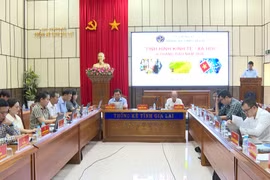
Speaking at a June 27, 2026, working session on socio-economic development and planning with leaders of Hoài Ân, Ân Tường, Kim Sơn, Vạn Đức and Ân Hảo communes, Chairman of the Provincial People's Committee Phạm Anh Tuấn said the current model, in which neighboring communes independently build brands for similar products on only a few dozen hectares each, limits competitiveness. He called for a rapid change in the province's approach to agricultural brand development.
According to the Department of Agriculture and Environment, the province currently has 226 production linkage chains associated with product consumption, covering more than 253,103 hectares, with the participation of 101 cooperatives, 72 cooperative groups, 47 farmers’ associations, 1 association group, and 77 enterprises.
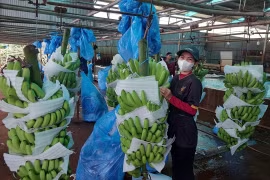
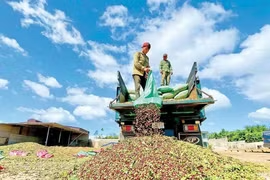
These chains focus on key sectors: rubber (78,130 ha), sugarcane (48,850 ha), coffee (45,530 ha), cassava (35,270 ha), cashew (19,640 ha), banana (4,560 ha), passion fruit (4,550 ha), durian (4,190 ha), and pepper (2,610 ha), contributing to improved production efficiency, stable market access, and sustainable development of agricultural value chains.
Under the new strategy, the Department of Agriculture and Environment will advise the province on unified management and development of agricultural brands.
Director Cao Thanh Thương said all products, brands, geographical indications and raw material regions will be reviewed to establish branding strategies based on key product groups and ecological zones, while integrating quality standards, planting area codes, packing facility codes and traceability systems.
Communes, cooperatives and businesses meeting the required standards will jointly develop and use common regional brands while maintaining product origin identification through geographical indications or collective trademarks.
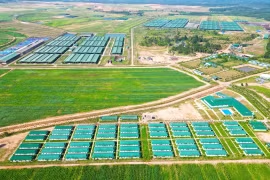
The province will prioritize the development of large-scale production regions based on comparative advantages, ecological conditions, market demand and crop development plans.
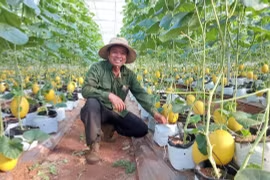
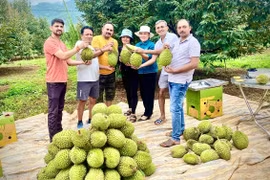
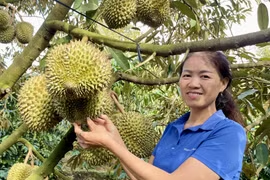
Under Decision No. 1877/QĐ-UBND, issued on April 28, 2026, covering the 2026-2030 period with an outlook to 2035, Gia Lai will initially focus on coffee, durian and passion fruit, sectors that already have concentrated production areas, established business partnerships and relatively stable export markets.
The province also plans to strengthen and expand value-chain linkages for pepper, cashew, rubber, sugarcane, cassava and banana where conditions allow. Selected production areas must meet requirements for concentrated cultivation, participation by businesses or cooperatives, standardized quality management, planting area codes, traceability and stable markets, particularly for exports.
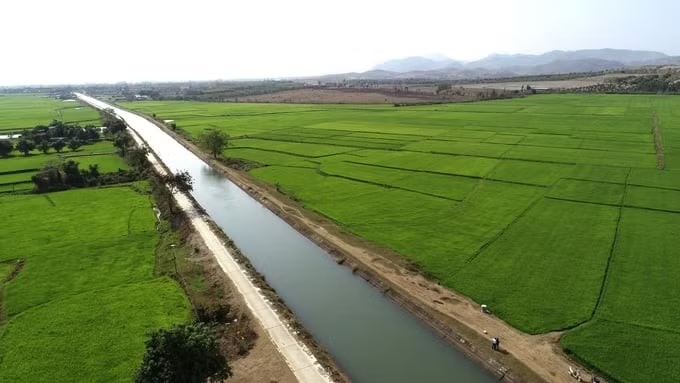
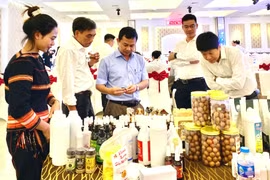
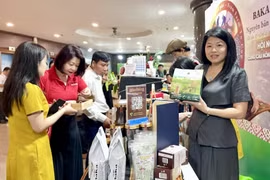
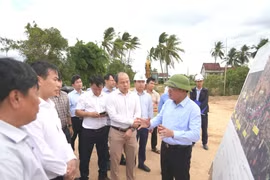
Hoài Ân commune has been designated as the central hub of the province's agricultural value chain. Vice Chairman of the Hoài Ân Commune People's Committee Huỳnh Văn Duy said the commune now has 26 three-star OCOP products from 11 entities and eight shared collective brands, including Gò Loi tea, Hoài Ân pomelo, Hoài Ân pork and Hoài Ân organic rice.
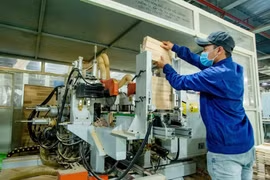
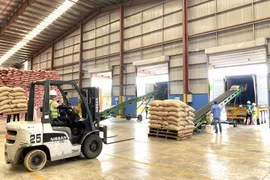
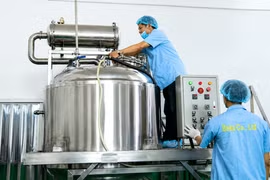
The commune is being developed under a model described as "one center, five specialized zones, one value chain," serving as the area's management, processing and agricultural trading hub. Planned investments include cold storage facilities, preliminary processing and packaging plants, and a logistics center connected to National Highway 1 and Quy Nhơn Port.
Neighboring communes will focus on their individual strengths while contributing to the shared value chain. Vạn Đức will specialize in high-quality rice and low-emission agriculture, Ân Hảo in coconuts and mulberry linked to processing, Ân Tường in hill chicken farming and fruit cultivation, and Kim Sơn in export-oriented organic agriculture.
Ân Hảo Commune People's Committee Chairman Võ Duy Tín said expanding production through cooperative groups and cooperatives would reduce production costs through bulk purchasing, greater mechanization, automated irrigation and shared certification expenses for VietGAP, GlobalGAP and organic standards, as well as for obtaining planting area codes.
He said larger production areas would also make it easier to establish geographical indications or collective trademarks and enable farmers to secure purchasing contracts with businesses before harvest, reducing the risk of oversupply depressing prices.
Chư A Thai commune also plans to join the regional branding model. Commune People's Committee Chairman Phạm Văn Lượng said Phú Thiện rice is currently cultivated on about 145 hectares by more than 300 households through the Chư A Thai Agricultural Cooperative, but production remains fragmented and linked sales total only about 70 to 80 tonnes per crop, largely through traders, limiting added value.
The commune intends to move away from developing an individual brand and instead participate in a common regional brand while coordinating with neighboring communes to create a larger raw material area with standardized crop varieties, planting schedules and production processes.
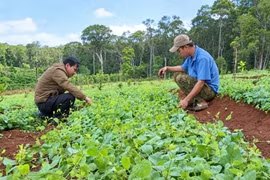
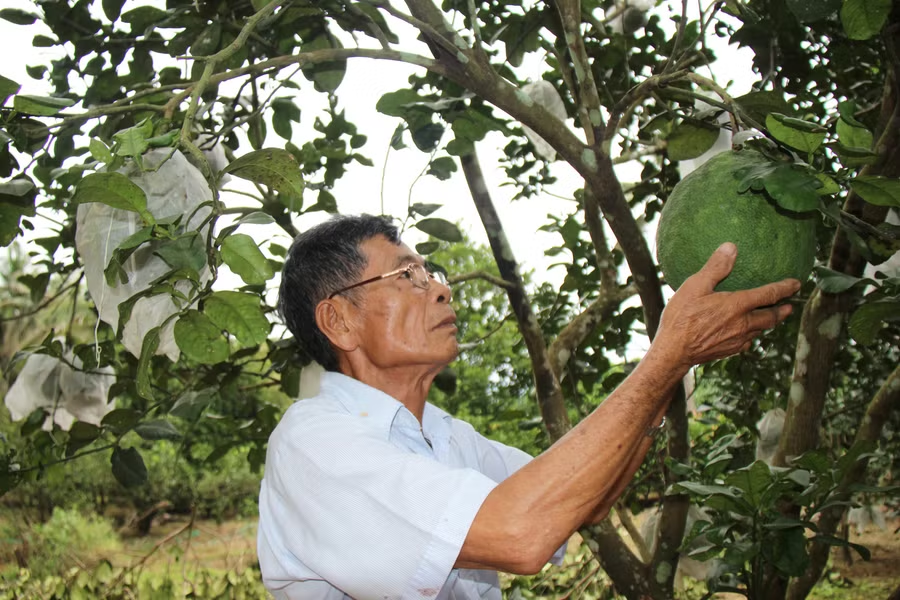
Farmers say the policy could provide more stable market access. Đặng Văn Cấp, a grower of green-skinned pomelo in Thạch Long hamlet, Hoài Ân commune, said the fruit has long been recognized for its quality but is mainly sold through traders, with prices fluctuating because different growing areas market it under different names.
He said a unified regional brand supported by standardized production processes and quality standards would generate sufficient output for businesses to sign long-term purchasing contracts, providing growers with greater confidence in market access.
According to Cao Thanh Thương, once production areas are consolidated, cultivation processes standardized and strong common brands established for key agricultural sectors, farmers, cooperatives and businesses across the province will operate within integrated value chains rather than as isolated producers.