Rather than simply growing and selling raw materials, they are developing finished products, building brands and using digital channels to explain where products come from and why they are valuable.
On Gia Lai’s red basalt soil, familiar ingredients such as medicinal plants, fruits, macadamia nuts and durians are becoming the starting point for a different approach to agriculture.
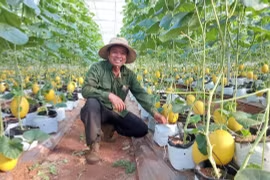
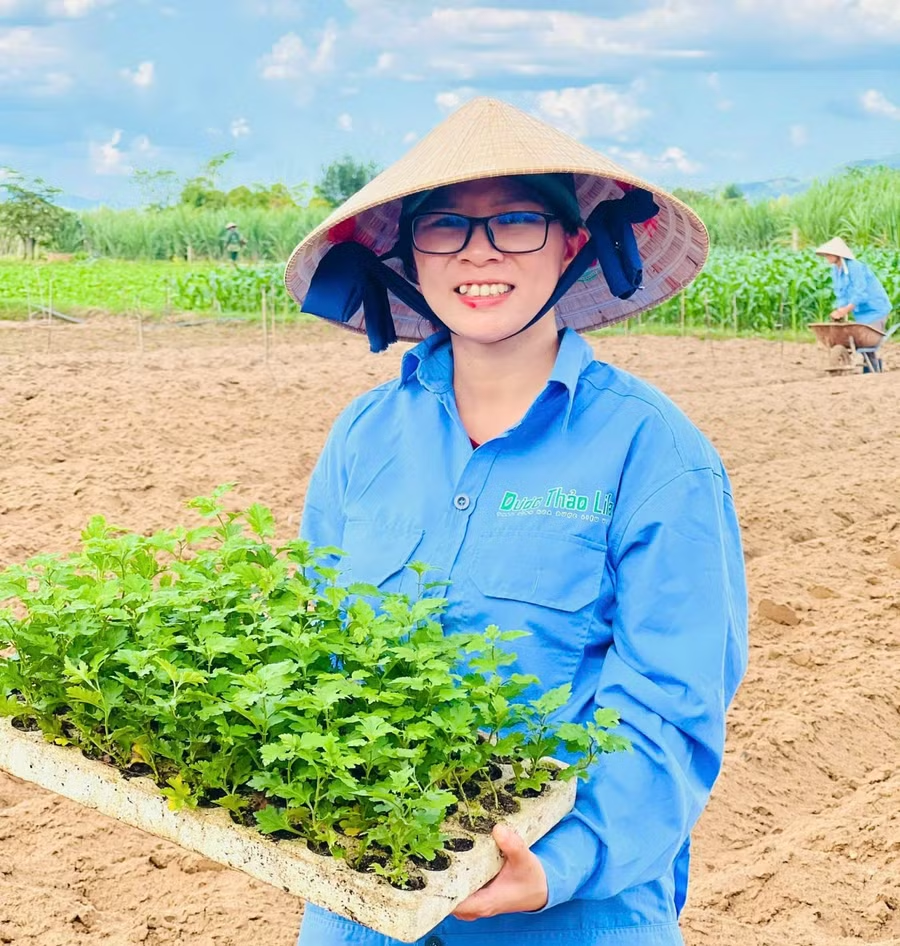
For Nguyễn Thị Thu Trang, director of LiLa Herbal Co., Ltd. in An Bình Ward, the journey has been marked by both setbacks and persistence.
Trang, born in 1990, spent a decade working in biotechnology before leaving Ho Chi Minh City nine years ago to return to Gia Lai. Armed with a master’s degree in Biology, she wanted to develop clean and healthy herbal products using raw materials from her hometown.
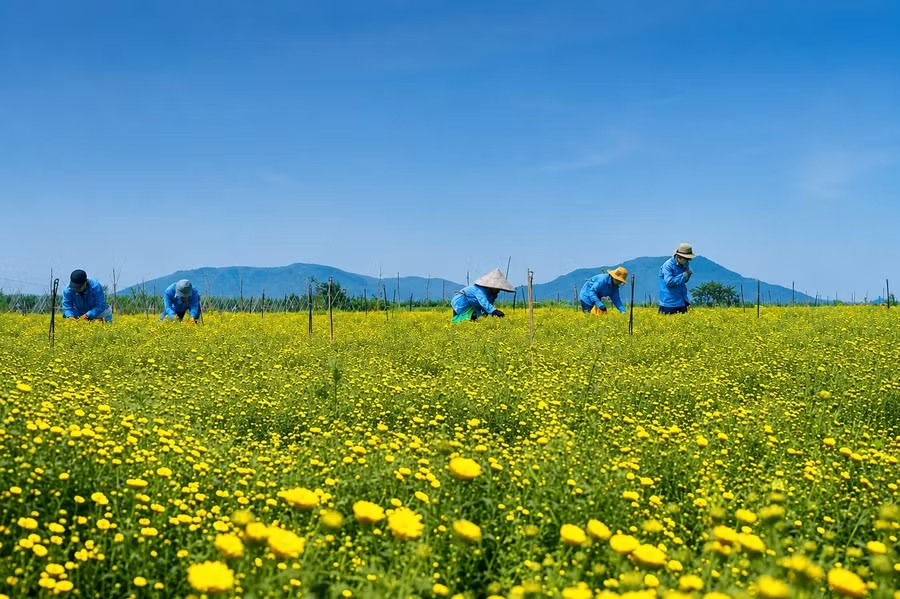
The plan initially failed twice. During her first three years, she lost her garden and capital and returned to Ho Chi Minh City to work and repay debts.
“Those repeated setbacks made me consider giving up. But instead of stopping, I resolved once again to return home and start over, to live my passion. Every time I walk into the garden and see the green shoots growing day by day, I am reminded of why I began,” Trang said.
She returned to rebuild the business in 2020, this time focusing on more than growing medicinal plants and selling them as raw materials. Drawing on her professional background, she sought greater control over production and processing.
Years of experience convinced her that medicinal plants gain greater value when combined with knowledge, technology, appropriate production processes and development into finished products.
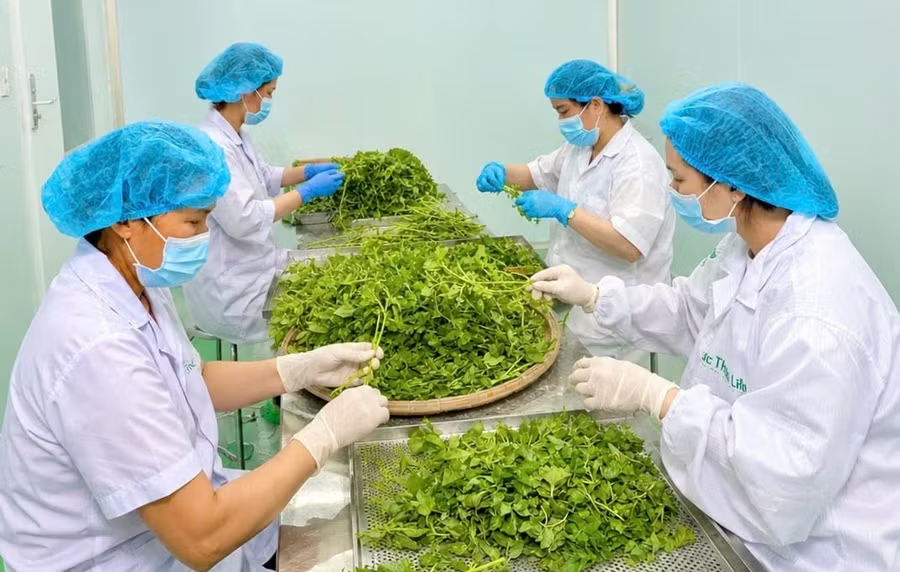
Starting with a small workshop, Trang established LiLa Herbal Co., Ltd. and gradually built a production facility meeting ISO 22000:2018 standards. The company has since developed 10 OCOP products.
For Trang, the effort represents a shift away from simply “growing and selling” local agricultural products.
“The hardest part is not making a good product, but helping the market understand why it is valuable,” she said.
For Nguyễn Thị Hà, born in 1987 in Ia Pia Commune, the challenge was less about creating products than making consumers understand and trust them.
After years working as a literature teacher at a high school in Đồng Nai Province, now Đồng Nai City, Hà returned to Gia Lai and began a new career using ingredients from her family’s garden
She started with soursop, turning the familiar fruit into tea before expanding into products such as cereals, cashews and macadamia nuts. But initially, most of her products were sold only to regular customers.
The difficulty in finding wider markets showed her that agricultural products must not only be well made but also known, understood and trusted.
Hà said she benefited from meeting members of the Gia Lai Provincial Agricultural Startup Club. Their stories of both success and failure gave her a clearer view of entrepreneurship: producing a good product is only part of the job. Producers also need to understand their customers, identify what makes their products different and communicate that value effectively
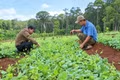
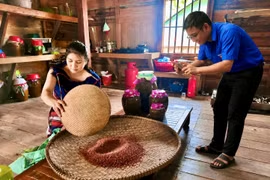
She began creating content from the everyday work of her family and local farmers, including videos about the soil, crop care and farmers working in the fields.
“I want viewers not only to see a finished product, but also to understand that behind each product is an entire journey,” Hà said.
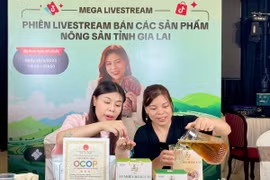
Everyday content, livestreams and product presentations on e-commerce platforms have since become new ways for her to reach buyers. They also allow her to listen to the market and better understand consumer needs.
Other young entrepreneurs returning to Gia Lai are taking different approaches to the same challenge.
Lê Thị Lan, born in 1990 and director of Nalee Joint Stock Company in Biển Hồ Commune, has focused on processing. Before returning to Gia Lai, she worked for a clean food business in Ho Chi Minh City, gaining experience in production and consumer markets.
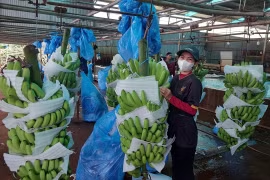
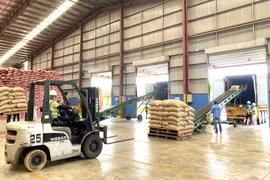
Seasonal gluts and fluctuating prices for fresh produce led her to look at ways to process locally available ingredients such as jackfruit and bananas. More recently, after taking part in a “rescue” sale of sweet potatoes, she began considering products made from that crop as well.
“A fresh jackfruit, banana, or sweet potato at peak harvest always depends on traders, but when processed and packaged as a finished product, the value of agricultural goods increases significantly. That’s why I always approach the problem from the processing angle”, Lan said.
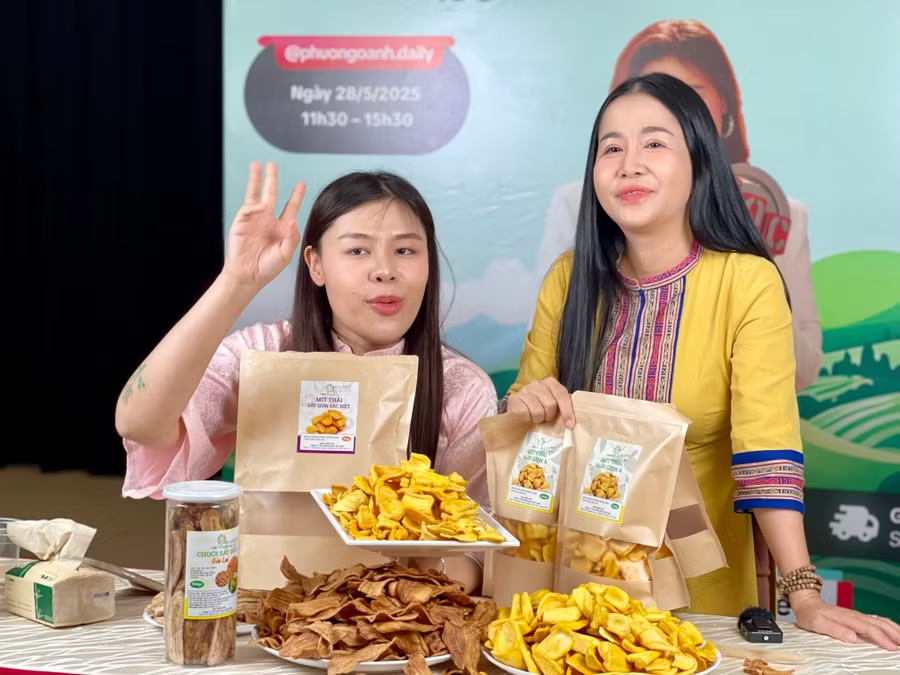
For Trang, processing and product development go hand in hand with telling the story behind medicinal plants, the farmers who grow them and her own entrepreneurial journey.
That information can help customers see more than a product on a shelf by showing its origin and the values behind it.
“A medicinal plant can be grown in many places, but the way farmers care for it, the stories they tell, and the trust they build with customers can make all the difference”, she said.
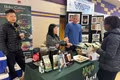
Hồ Thị Hoài Thu, born in 1994 and sales director of Green Tropical Import-Export Processing Joint Stock Company in Chư Sê Commune, is using another asset: her Chinese-language skills.
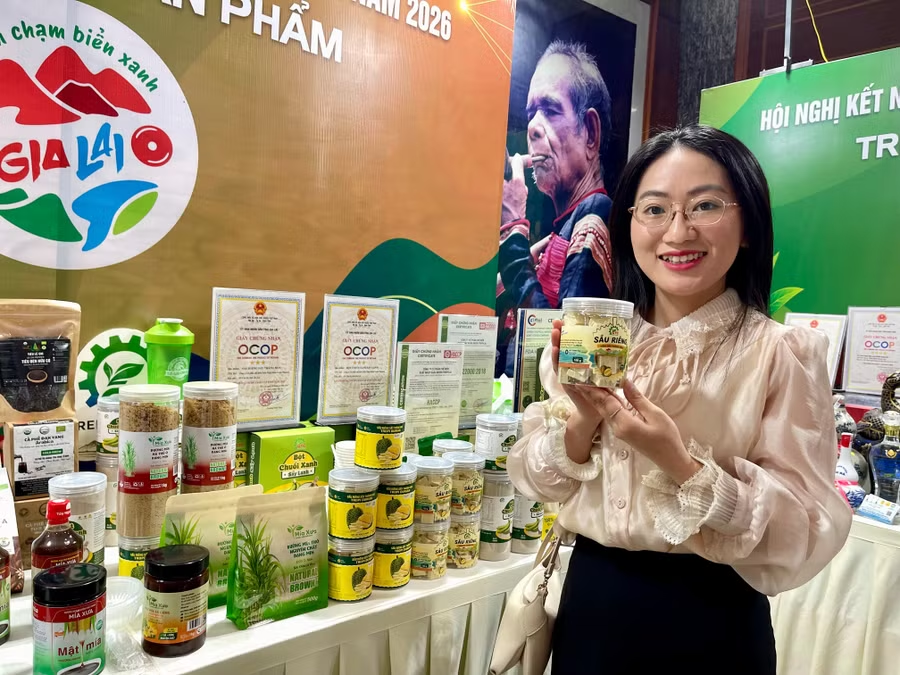
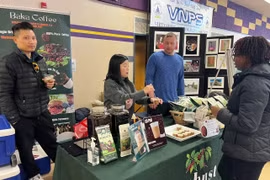
Hồ Thị Hoài Thu introduces products at a trade promotion event. Photo: Vũ Thảo
Thu acquired the language while working for a company in Ho Chi Minh City. After returning to Gia Lai, she used that experience to connect local agricultural products with Chinese customers.
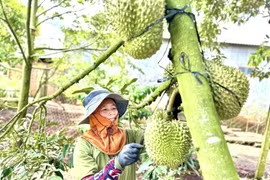
At trade fairs, she introduces freeze-dried durian products while also explaining the land, climate and natural conditions of Gia Lai that contribute to the characteristics of its durians.
She said customers who directly experience the products also notice the distinctive aroma and rich flavor of Gia Lai durians.
“Such feedback gives me more reason to believe that the advantage of agricultural products lies not only in output, but also in unique characteristics shaped by the soil,” Thu said.
From processing and product development to digital marketing and storytelling, young people returning to Gia Lai are finding different ways to bring local agricultural products closer to consumers
Livestreams, e-commerce platforms and trade promotion programs are becoming not only sales channels but also ways for producers to receive feedback and understand what consumers want.
There is no single formula behind these ventures. Some entrepreneurs focus on processing, others on telling the story behind their products, while others draw on language skills and market experience.
What they share is a broader view of agricultural value: a product is not made from raw materials alone, but also from the land, the people who produce it, the knowledge applied to it and the story that connects it with consumers.