After returning from Ho Chi Minh City, she began developing ways to process locally grown cinnamon into higher-value products while working with ethnic minority farmers to build a more sustainable supply chain and create local employment.
• Not many people with stable jobs in Ho Chi Minh City choose to return to their hometowns to start over. Yet you not only did that, but also chose to launch a startup in a mountainous commune still facing many hardships and shortages like An Lão. Why did you make that choice?
- That used to be the case. But in recent years, while it’s still not common, it’s not so rare either.
In 2014, after graduating with an intermediate-level Pharmacy degree from Saigon Polytechnic College, I worked at a pharmacy in Ho Chi Minh City. However, I realized that the pace of life there didn’t really suit me, so I decided to return to live in Hoai An commune. In 2015, I married Đinh Lê Tuấn Anh, an H’re ethnic minority from An Lão commune.
In 2019, I continued my studies in Pharmacy at Binh Dinh Medical College, now Gia Lai Medical College, and graduated in 2022. I then opened a pharmacy in Hamlet 6, An Lão commune.
While living and working here, I noticed that local people cultivated large areas of cinnamon but mostly sold the raw material to traders at low prices.
I thought that if we could increase the value of cinnamon through processing, product development and market building, it would not only create greater economic value but also encourage people to preserve their cinnamon-growing areas.
• When you decided to embark on this journey, did you anticipate how challenging it would be?
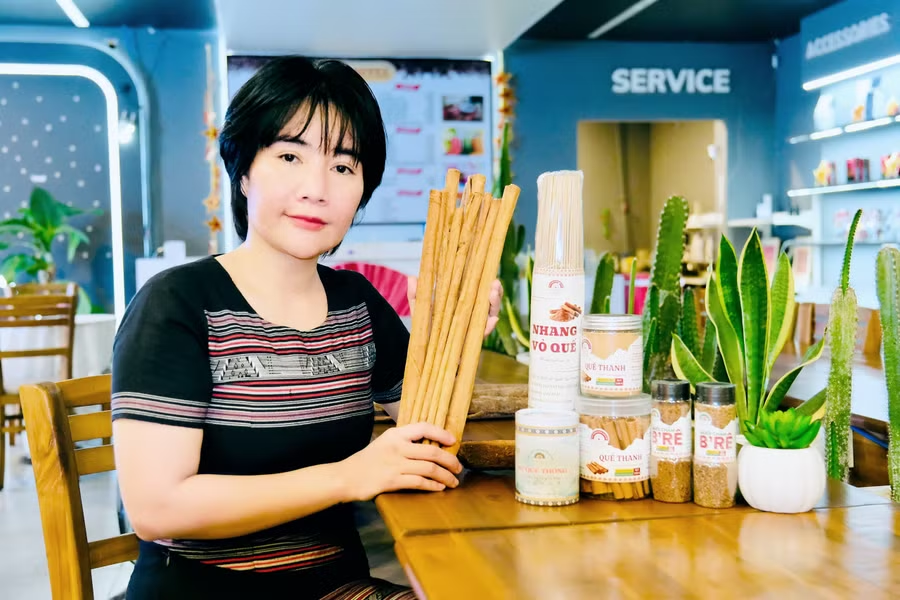
- I knew from the outset that this would be a very difficult path.
I was a newcomer to the cinnamon industry, while locally, most people were still harvesting and selling raw materials, with no deep-processing facilities.
At first, I learned as I went, researching information online and visiting long-established cinnamon-growing regions such as Lào Cai, Quảng Ngãi and Quảng Ninh to learn about cultivation, harvesting, preliminary processing and manufacturing.
There were many failures at the beginning. Some products did not meet the required standards. The cinnamon powder was not fine enough and the aroma was not as expected. Cinnamon incense sticks cracked, dried out and lacked cohesion.
Each time, I had to identify the cause, adjust individual steps and keep experimenting.
• In 2023–2024, you began surveying raw material areas and building partnerships with local people. How did you establish these connections?
- I focused on surveying the raw material areas and learning about each household’s production conditions. I then guided them towards cleaner and more sustainable cultivation methods and committed to purchasing their products.
While traders buy cinnamon bark for about 8,000-12,000 VND per kilogram (about $0.31–$0.46), I pay around 18,000 VND per kilogram (about $0.69).
However, to receive this price, farmers must harvest according to specific requirements. For example, cinnamon sticks must be cut to the right size and must not be damaged.
To help them meet these requirements, I provide tools and directly instruct them in harvesting techniques.
I believe that to build a sustainable product, you cannot simply look for raw materials during the harvest season. You have to accompany farmers from planting and cultivation through to harvesting.
• And cinnamon has now yielded many higher-value products. How have you developed them?
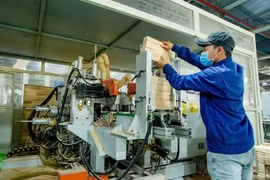
- Cinnamon is mainly harvested from July to September each year. To become more proactive, I invested more than 1 billion VND (about $38,500) to build a workshop and purchase cutting machines, incense-stick rolling machines, dryers and powder grinders.
My husband and I also studied processing techniques so that we could become self-sufficient in production.
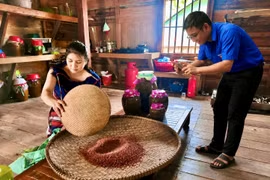
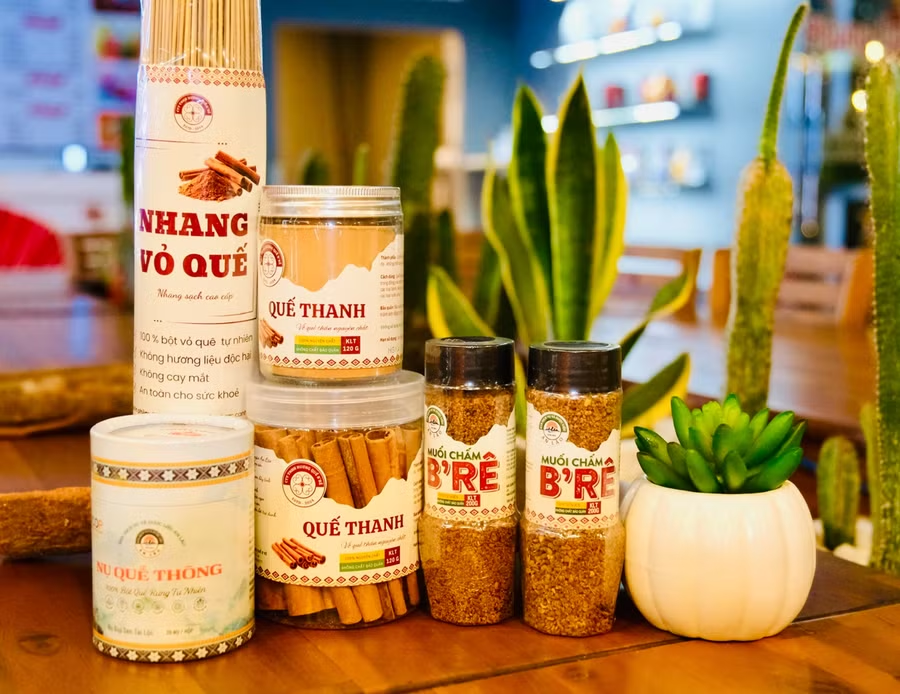
From the cinnamon tree, the leaves and small branches are distilled into essential oil, while the bark is processed into cinnamon sticks, cinnamon powder, cinnamon incense, cinnamon cones and B’rê dipping salt, among other products.
Among these, the cinnamon cone product received a three-star OCOP certification in 2024.
Current product prices are about 250,000 VND per kilogram (about $9.62) for cinnamon sticks and powder, 150,000 VND per kilogram (about $5.77) for cinnamon incense, and 120,000 VND per box (about $4.62) for cinnamon cones.
B’rê dipping salt is priced at 55,000 VND per 70-gram box (about $2.12) and 65,000 VND per 200-gram box (about $2.50).
• In your opinion, what is the most important factor for local products to succeed in the market?
- First and foremost, it is quality, including traceability and food safety certification.
I also invest in branding, packaging and design so that the products are well preserved while making a strong impression on customers.
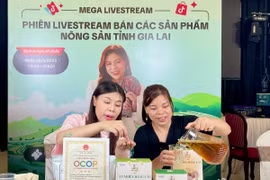
Currently, our products are sold on e-commerce platforms such as Shopee and TikTok, as well as at OCOP stores inside and outside the province.
My husband and I also regularly livestream to introduce our products and participate in trade fairs to seek customers and partners.
• Could you share more about your partnership with local residents?
- At present, I work with 15 Bana and H’re households, covering about 20 hectares for product sourcing.
I hope that as production expands, the raw material area will also grow. But quality and sustainability must be prioritized over sheer acreage.
The company currently provides regular employment for five local workers, with a salary of about 3.5 million VND per person per month (about $135). During the harvest season, I create additional jobs for about 10–15 workers.
The company’s annual revenue is around 1 billion VND (about $38,500).
Besides production, I also organize workshops for young people to experience making cinnamon cones and create opportunities for local youth to visit and learn about the model.
I want young people to see that crops grown in their own homeland can become startup opportunities if they know how to harness them properly.
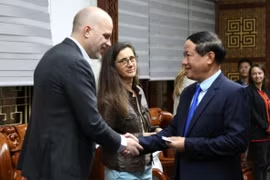
• On September 19, you were the sole representative from Gia Lai province to receive the 21st Lương Định Của Award in 2026, presented by the Central Committee of the Hồ Chí Minh Communist Youth Union. How did you feel upon receiving the award?
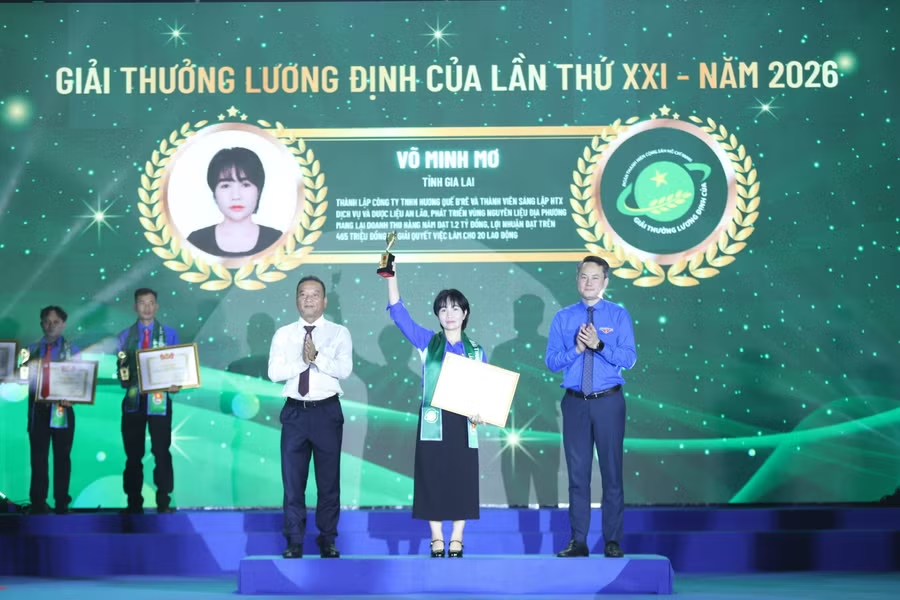
- I was very happy and honored.
At the award ceremony, I had the opportunity to meet many young people from across the country with inspiring and meaningful startup projects.
I was also able to share experiences, learn new approaches and connect with some businesses to introduce and find markets for our products.
Earlier, on August 8, I was also honored as one of 15 outstanding young people in the province to receive a certificate of merit from the Chairman of the Provincial People’s Committee for having an exemplary startup model or project.
These recognitions give me more motivation to continue on my chosen path, but they also remind me to strive for better results, as there is still much to do for a local product to reach further afield.
• After these initial achievements, what goals are you setting for your model in the near future?
- B’RÊ Cinnamon Aroma Co., Ltd. was only established in March 2026, so we still face many challenges.
In the near future, I plan to invest in a cold dryer, a planer and other equipment to increase productivity and better preserve the essential oil content in our products.
I also want to guide farmers in selecting and cultivating higher-yield, higher-quality cinnamon varieties, gradually expanding the raw material area to increase local incomes while securing a stable supply for processing.
My greatest wish is to make cinnamon a signature product of An Lão, so that local advantages and resources are effectively harnessed, creating lasting value for both the people and the region.