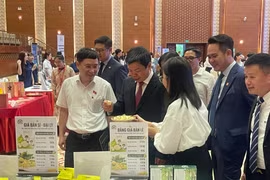
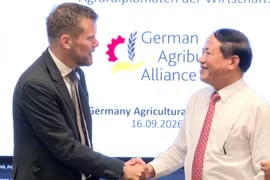
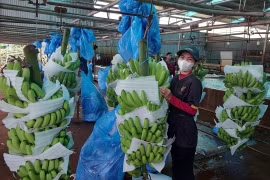
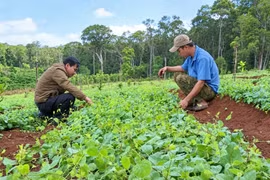
The provincial Farmers’ Association announced the targets at a review conference in Quy Nhon Nam Ward on October 22.
The meeting assessed its 2022-2026 campaign to improve production and business performance, encourage mutual support and reduce poverty sustainably.
The new programme seeks to move farmers towards commercially focused agriculture, replacing small-scale, individual production with cooperation and value-chain partnerships.
It also places greater emphasis on quality and added value alongside productivity and output.
Each year, the association aims to have at least 60% of farming and member households register for the outstanding production and business title, with at least half of registered households achieving recognition at various levels.
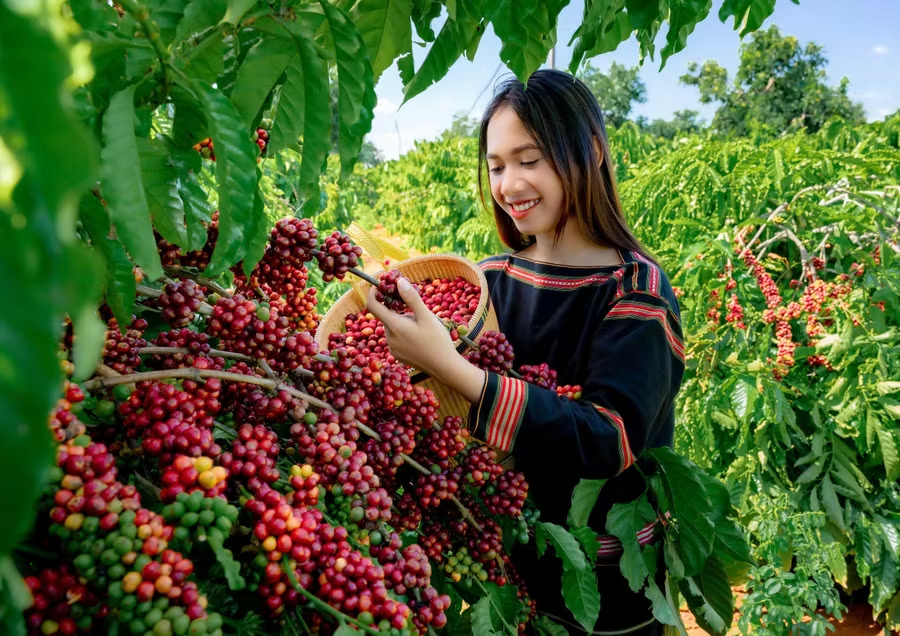
By 2030, Gia Lai aims to increase the number of households holding provincial and national-level titles by at least 10%.
It also plans to establish at least one outstanding farmers’ club in each commune or inter-commune area, and one effective partnership or cooperative model in every commune or ward, led by outstanding or exemplary farmers.
The targets follow a period marked by natural disasters, disease outbreaks, rising production costs and agricultural market instability, according to the association.
Despite those pressures, 164,841 households registered for the outstanding farmer title in 2026, equivalent to 100.5% of the assigned target.
Speaking at the conference, Comrade Nguyễn Ngọc Lương, Deputy Secretary of the Provincial Party Committee and Chairman of the Vietnam Fatherland Front Committee of the province, acknowledged and highly appreciated the results achieved over five years of implementing the movement.
He also suggested that in the coming period, the Provincial Farmers’ Association should innovate its operational methods, shifting from merely propagating and mobilizing to directly participating in agricultural and rural development programs and projects; select effective models for replication, promote the role of cooperatives, foster value chain linkages, build brands, and develop OCOP products.
He emphasized the need to accelerate the application of high technology, digital transformation, and the development of green economy and circular economy; proactively propose, supervise, and provide feedback on policies to ensure they are practical and meet the needs of farmers.
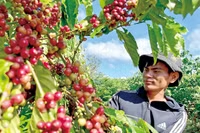
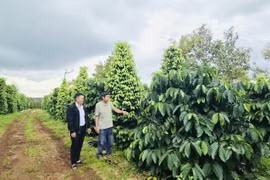
Among the production models highlighted was Nguyễn Văn Lập’s farm in Brep village, Mang Yang commune. His combination of coffee, pepper and fruit trees generates annual profit of about VND3 billion (US$116,100) and provides steady employment for 10–15 workers.
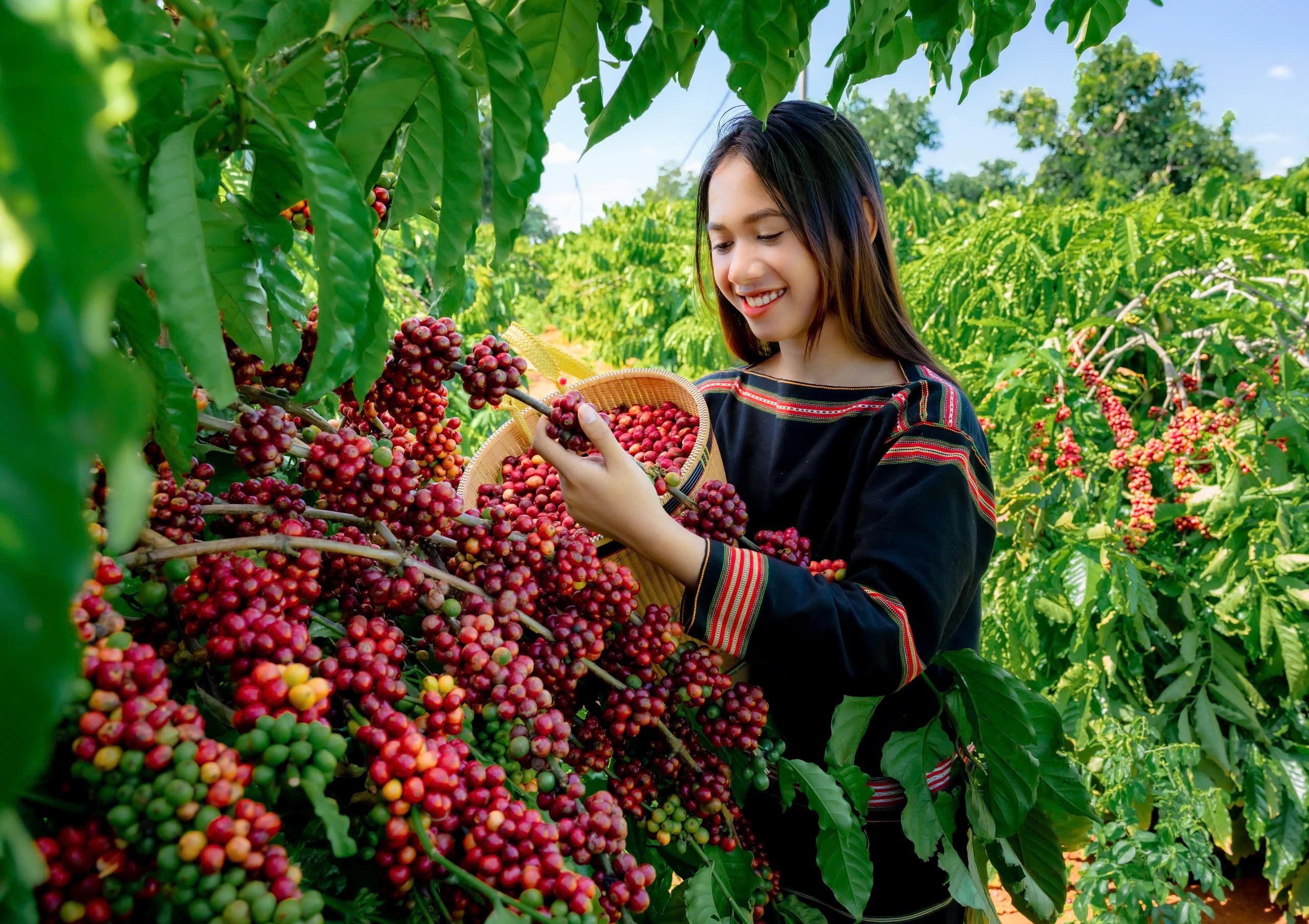
In Ia Ping hamlet, Ia Ly commune, Nguyễn Thị Thanh Xuân cultivates five hectares of organic coffee linked to the Xuân Dương ground coffee brand.
The operation earns annual profit of about VND1.6 billion (US$61,900) after costs. Dollar equivalents are approximate.
Product development has also extended to seafood processing. In An Phú hamlet, Đề Gi commune, Lưu Thái Cầu has developed tuna braised with pineapple and tomatoes under the Thái An DeGi brand.
Made with tuna sourced directly from Đề Gi Fishing Port, the product comes in 500-gram portions and requires three to five minutes of reheating before serving.
During the five-year campaign, Farmers’ Association organisations held 1,451 training sessions, workshops and technology-transfer events, attracting 86,619 participants. They also established or expanded 489 demonstration models.
A further 813 vocational training classes drew 28,344 participants, of whom 21,374 found employment after completing their courses.
More than 145,000 members received guidance on installing, activating and using the Vietnamese Farmers’ digital platform to manage production, promote products and reach new markets.
However, the association said progress remained uneven across localities, while the proportion of households earning provincial and national-level recognition was still low.
The new programme sets different recognition targets for three groups of localities, aligned with the new rural commune criteria for 2026–2030.
For the 12 communes and wards in the first group, at least 60% of registered households are expected to earn the title. The target is at least 50% for 16 communes in the second group and at least 40% for 83 communes in the third.
The differentiated targets are intended to help local authorities tailor implementation to their circumstances and strengthen accountability for results.
Rơ Chăm H’Hồng, chairwoman of the provincial Farmers’ Association and vice chairwoman of the provincial Vietnam Fatherland Front Committee, urged members to adopt new approaches, innovate in production and business, and help one another improve their livelihoods.
She said the objective extended beyond increasing the number of recognised households to building competitive businesses, securing stable markets, raising incomes and sharing development benefits within communities.
The conference was attended by Nguyễn Ngọc Lương, deputy secretary of the provincial Party Committee and chairman of the provincial Vietnam Fatherland Front Committee, and Nguyễn Thị Phong Vũ, head of the provincial Party Committee’s Propaganda Department.
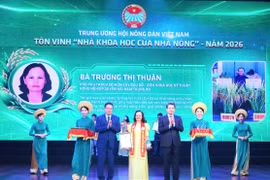
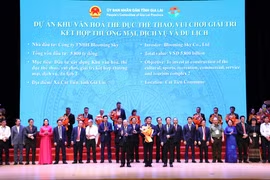
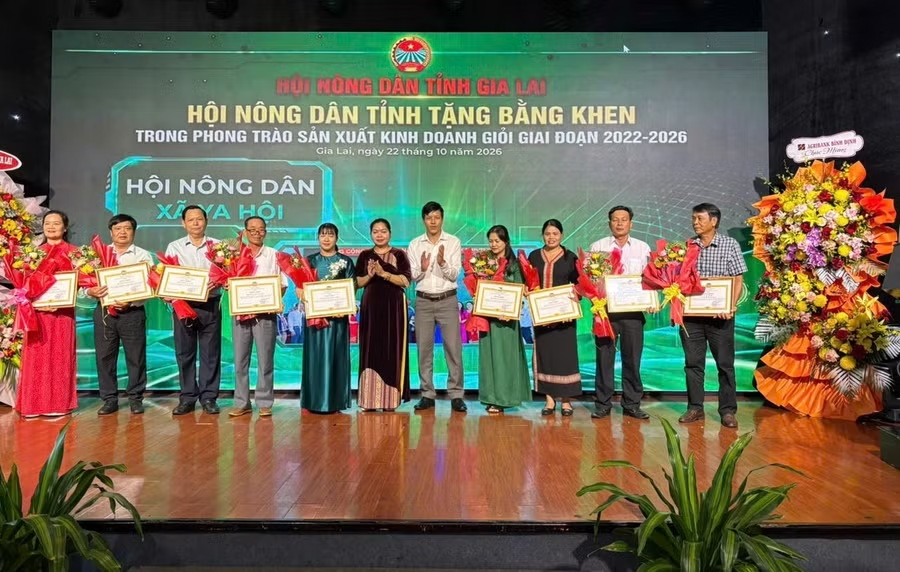
Alongside recognising 509 outstanding farming households for 2022–2026, the event honoured individuals and organisations for their contributions.
The provincial People’s Committee chairman awarded certificates of merit to 10 individuals, while the Farmers’ Association recognised 24 collectives and 68 individuals.