Over 20 years in research, plant breeding and technology transfer, Thuận has helped bring new crop varieties into commercial production.
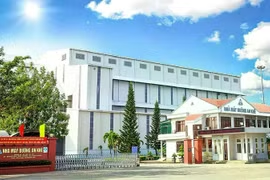
She is acting deputy head of the Legume Department at the South Central Coastal Agricultural Science and Technology Institute in North Quy Nhon Ward and holds a master’s degree in crop science.
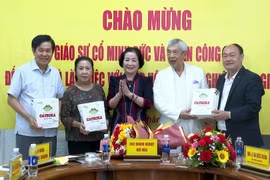
On October 2, she was among 42 people honoured by the Central Committee of the Vietnam Farmers’ Union as a “Scientist for Farmers” in 2026.
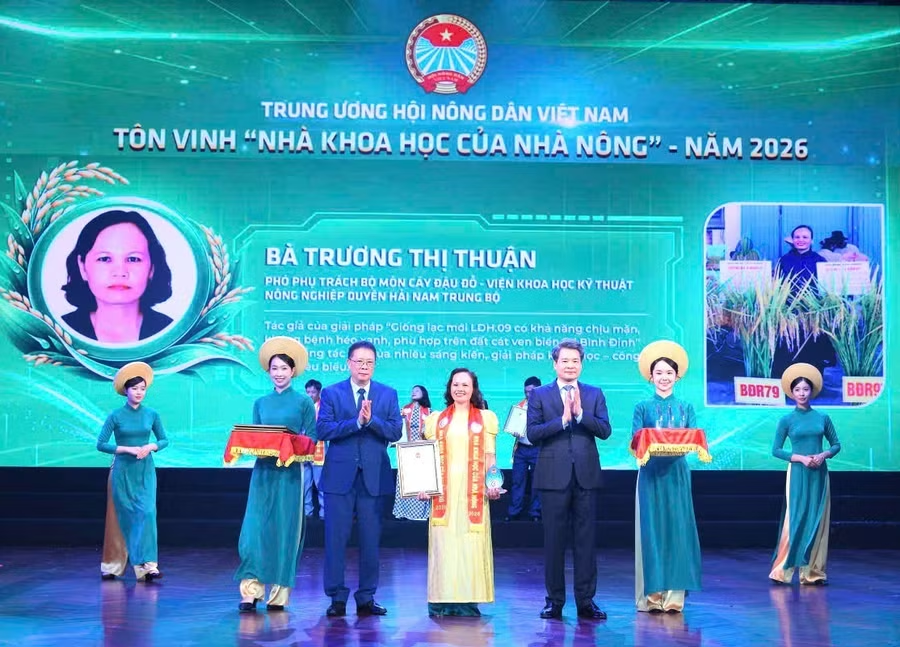
Born in 1980, Thuận previously received a certificate of merit from the Ministry of Agriculture and Rural Development, now the Ministry of Agriculture and Environment, for her work in 2020–2021.
She was also recognised at Bình Định Province’s fourth Outstanding Intellectuals in Science and Technology awards in 2025.
In this interview, she discusses the patience required in plant breeding, the adoption of her team’s crop varieties and why research must deliver practical benefits.
• How did you feel about being recognised as a “Scientist for Farmers”?
I was deeply moved. It is a personal honour, but it also recognises everyone who helped make our research successful: the institute’s leaders, department colleagues, local authorities and the farmers who worked with us through research, field trials and the introduction of new varieties.
The award also highlights what science can contribute to agriculture and farmers’ livelihoods.
A new variety or farming technique has real value only when it works in the field, helping farmers raise yields, improve quality and achieve better financial returns. That reinforces my commitment to this career.
• What drew you to agricultural research and plant breeding?
I grew up in a farming family in An Cửu hamlet, West An Nhơn commune. My childhood revolved around the fields. Seeing how hard farmers worked gave me a lasting attachment to agriculture.
That led me to study agronomy at Ho Chi Minh City University of Agriculture and Forestry from 2000 to 2005. I wanted to contribute to agricultural production in my home area.
In 2006, I joined the South Central Coastal Agricultural Science and Technology Institute, working in the Food Crops Department, now the Legume Department. From 2013 to 2015, I studied for a master’s degree in crop science at the Vietnam Academy of Agriculture.
My work covers crossbreeding, selecting breeding lines, variety trials, cultivation research, demonstration plots and transferring technical advances to growers. The crops include peanuts, mung beans, soybeans, cowpeas and sesame.
• How important are perseverance and integrity in plant breeding?
Plant breeding takes time. It requires selection across several generations, trials over multiple growing seasons, and repeated assessment and verification. Some projects take five or even 10 years to produce the desired results.
There are setbacks. Some crosses do not meet our requirements, while promising lines can show weaknesses during trials. Researchers need to work carefully and patiently, examine why something has gone wrong and find a solution. We cannot rush the process or settle for short-term results.
Research must also address actual production needs, with farmers benefiting directly. Honesty and objectivity are therefore as important as perseverance.
We must assess results against scientific data and performance in the field, recognising both strengths and weaknesses so we can improve the varieties further.
• After 20 years, what keeps you motivated?
I have worked on many national and provincial research projects. These include a 2022–2025 project in Bình Định to conserve genetic resources from indigenous upland rice, sticky corn and sweet cassava, linked to economic development for rural women and ethnic minority communities.
Other projects have focused on high-yielding peanuts for fresh consumption, as well as peanut, mung bean and sesame varieties, including work on high oil content for processing.
Some of this work has received awards. Our integrated nutrient and irrigation management solution for peanuts grown on sandy soils won second prize at Bình Định’s 11th Technical Innovation Contest in 2018–2019 and a consolation prize at the 15th National Technical Innovation Contest during the same period.
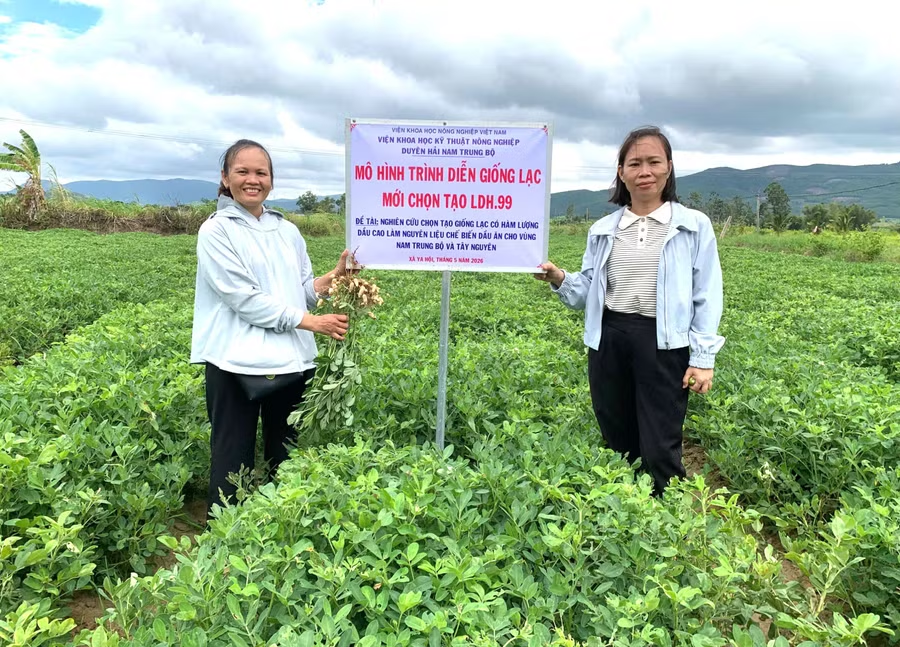
The LDH.09 peanut variety, which tolerates salinity and resists bacterial wilt and is suited to Bình Định’s coastal sandy soils, won second prize at the province’s 12th Technical Innovation Contest in 2020–2021.
My strongest motivation, however, comes from seeing farmers adopt our research. It helps broaden their choice of varieties, improve crop rotation and adjust the crops they grow.
So far, our team has completed self-declarations for the circulation of seven new varieties: four peanuts — LDH.09, LDH.99, LDH.01 and LV20 — two sesame varieties, BĐ.01 and HLVĐ.78, and the mung bean variety ĐXBĐ.07.
• How widely are these varieties being grown?
The seven varieties are now cultivated across Gia Lai, Lâm Đồng and Da Nang, covering more than 1,000 hectares a year in total. Most account for around 100 hectares each annually, while LDH.09 peanuts cover more than 400 hectares.
In Gia Lai, the varieties have been included in the province’s crop variety structure and introduced in areas where farmers are changing their cropping patterns.
LDH.09 is one example. Following a one-hectare demonstration plot in Cát Tiến commune in 2015, farmers increasingly adopted it because it could adapt to different weather conditions and soil types, particularly coastal sandy soils.
Since 2021, it has been widely grown in Cát Tiến commune, An Nhơn ward and An Nhơn Đông ward, covering more than 400 hectares annually. Yields have reached eight tonnes per hectare, with profits exceeding VND50 million (approximately US$2,000) per hectare.
• What are your priorities for future research and technology transfer?
I want to continue developing varieties that have practical value and help farmers improve production efficiency.
Our team is selecting promising breeding lines and assessing their yield, quality, resistance and adaptability across different ecological regions.
Over the longer term, I hope to work with colleagues to build a diverse genetic resource base and develop high-yielding, high-quality legume varieties with strong resistance and the ability to adapt to climate change.
But a good variety is only the starting point. Results also depend on seed quality, planting dates, sowing density, nutrition, water management, pest and disease control, and local weather.
I will continue working with technical agencies, local authorities and farmers on demonstration plots and practical guidance. Farmers need to understand each variety’s characteristics and cultivation requirements so they can choose suitable production methods.
Combining good varieties with appropriate farming techniques and stable markets can help sustain improvements in production efficiency.