Vietnam’s seaport industry is accelerating green transformation, digitalization and logistics connectivity as ports face growing demands for efficiency, sustainability and stronger links with production and markets.

Seaports and logistics ecosystem
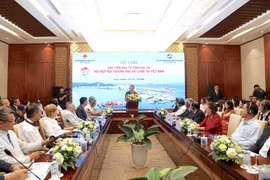
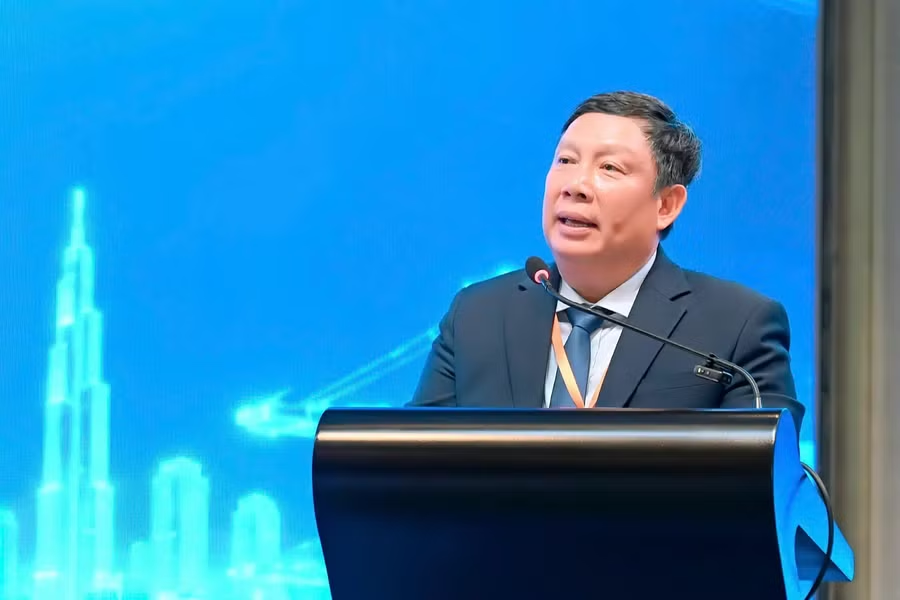
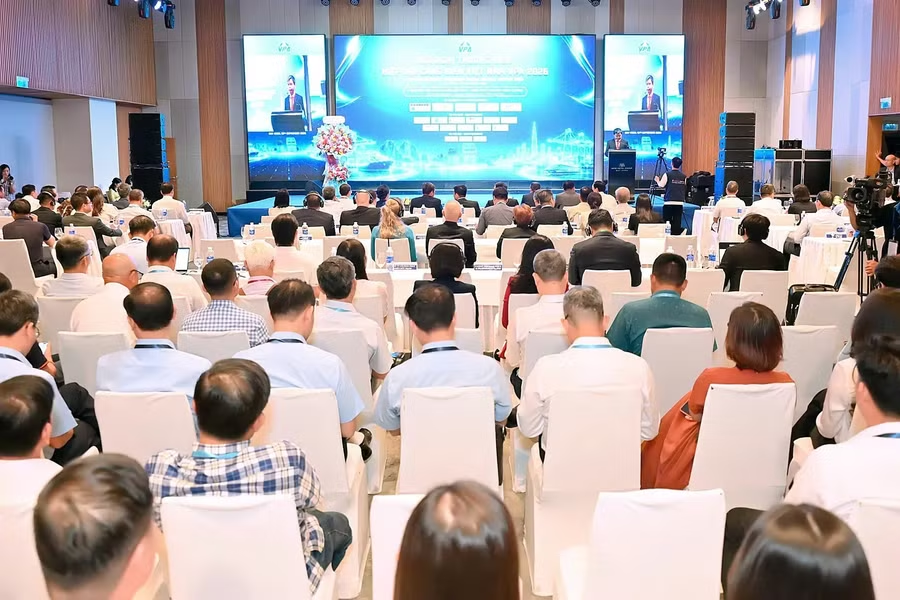
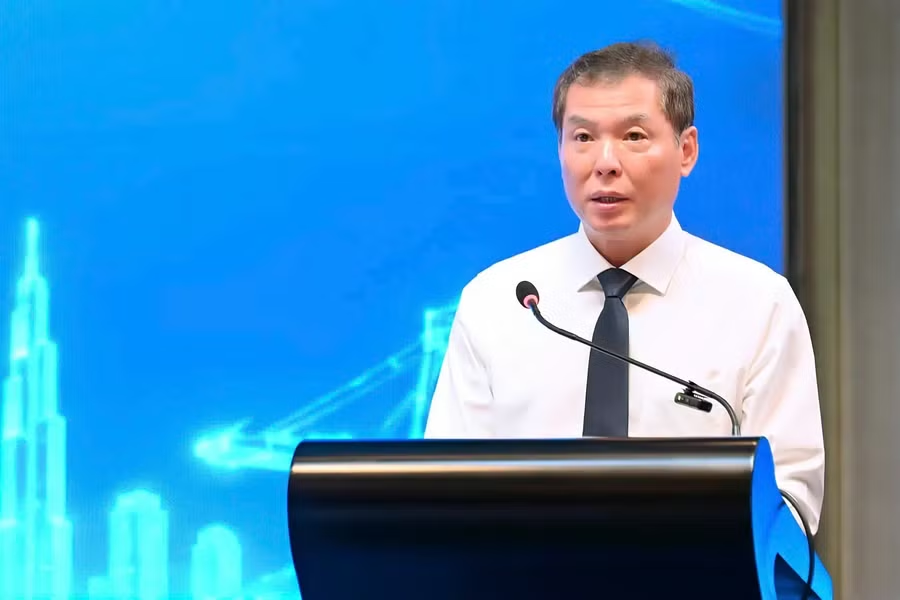
According to a report presented by VPA Chairman Huynh Van Cuong, the association’s membership increased by 14% between 2020 and 2025, while seaport cargo throughput rose 19% and container volumes increased 31%.
By 2025, VPA member ports are expected to handle about 530 million tonnes of cargo and 24 million TEUs.
As the sector expands, competition among seaports is increasingly shaped by productivity, reliability and service quality, as well as hinterland connectivity, costs, data and green capabilities.
The master plan for Vietnam’s seaport system to 2030, with a vision to 2050, is also expected to create opportunities to strengthen transshipment, logistics and international connectivity.
However, VPA identified several challenges, including incomplete links between seaports and roads, railways, inland waterways, inland container depots (ICDs), logistics centers and industrial zones.
Other issues include service pricing mechanisms, the competitive environment, and the dredging and maintenance of shipping channels and berthing areas.
The association also said ports differ significantly in their capacity for green transformation, digitalization and data standardization. Human resources and management capabilities also need to improve to meet the requirements of green ports, smart ports and modern logistics chains.
In response, the 10th VPA Executive Committee has identified three core roles for the association: representation, connectivity and value creation.
VPA aims to strengthen its role as a data- and expertise-based representative of the Vietnamese seaport community while connecting ports with a wider ecosystem that includes shipping lines, logistics companies, ICDs, transport providers, technology and energy companies, as well as training and research institutions.
The association also plans to move beyond addressing individual issues and instead develop systematic, standardized and data-driven solutions and practical tools.
Its six priorities through 2030 are policy, connectivity, green ports, smart ports, human resources and international integration.
Under the plan, VPA will advise and provide feedback on planning, infrastructure, service pricing, competition, dredging, investment, green transformation and digitalization based on data. It will also promote port development linked with economic corridors, railways, waterways, ICDs and logistics centers.
Green and digital transformation
VPA’s green and digital agenda includes energy management, emissions reduction, electrification, shore power, renewable energy, and emissions monitoring and reporting.
The association will also encourage digitalization, automation and the use of artificial intelligence, the Internet of Things, port community systems, electronic documentation and industry-wide data sharing.
Representatives from seaports and logistics companies presented proposals at the conference focused on improving infrastructure connectivity, reducing emissions, using clean energy, accelerating digital transformation and strengthening links among ports, shipping lines, logistics providers, ICDs, distribution centers and production areas.
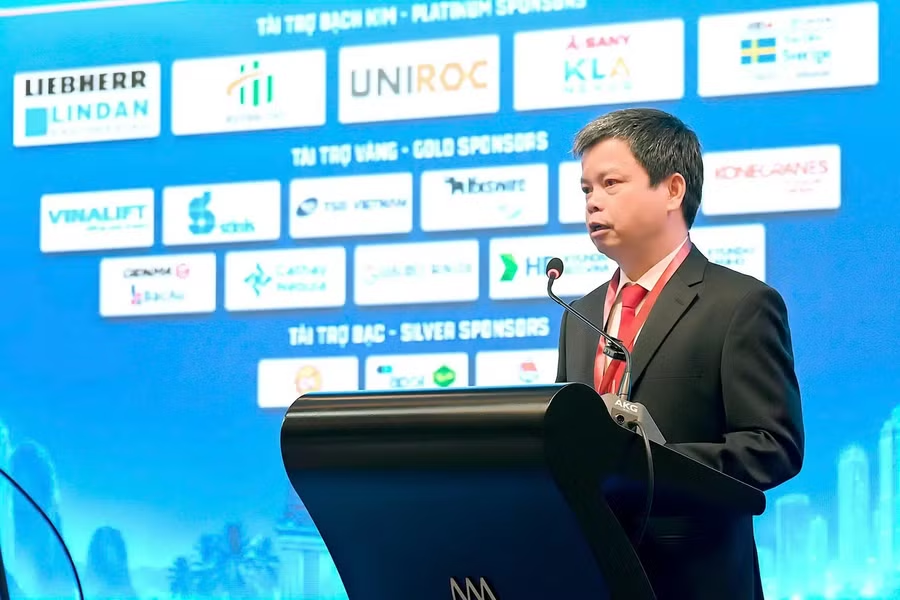
Deputy Director General Nguyen Dinh Viet said green transformation is becoming an increasingly important part of Vietnam’s seaport development.
He said the transition should be approached holistically, alongside modernization and improvements in operational efficiency. This includes not only investment in equipment, technology and appropriate energy use, but also innovation in management, operational organization and resource utilization.
Digital transformation and the application of science and technology are also key drivers of modernization, he said. Digitalizing processes, connecting and sharing data, and applying technology to management and operations can improve productivity, reduce time and costs, and raise service quality.
Quy Nhon Port links highlands with markets
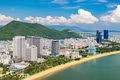
For Gia Lai, the conference has particular significance because it was held in Quy Nhon, within a new development space created by the merger of Gia Lai and Binh Dinh provinces.
Vice Chairman Nguyen Huu Que said the merger has created a development space linking the Central Highlands with more than 130 km of coastline, providing conditions for a “forest and sea” development zone.
The expanded province has opportunities to build economic linkages along a highland-plain-seaport axis, he said.
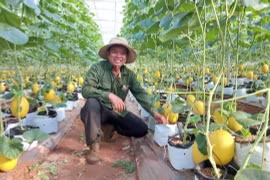
The highland area has strengths in agriculture, forestry, processing industries, renewable energy and cultural values, while the coastal area has advantages in seaports, logistics, the marine economy, industry, commerce, services and tourism.
For Gia Lai, seaports and logistics are important to connecting the province’s economic space with domestic and international markets.
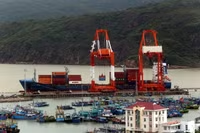
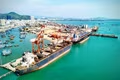
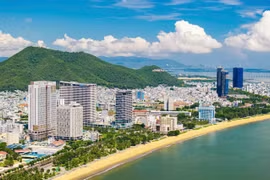
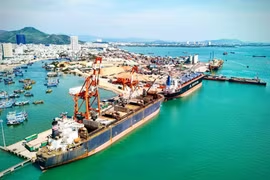
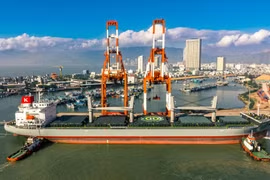
Quy Nhon Port, which has more than 50 years of development, is described as one of the Central region’s key seaports, with advantages in location, shipping channels and cargo-handling capacity.
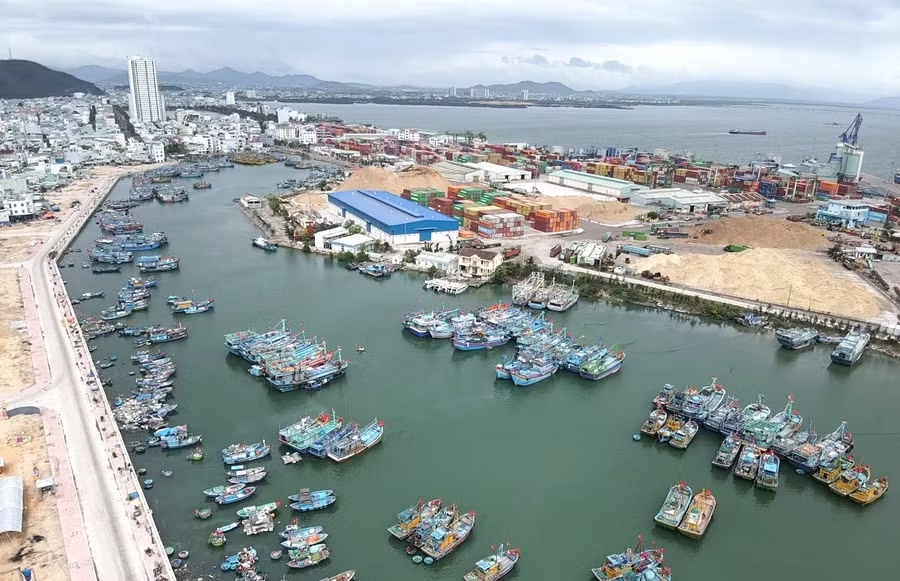
The port serves the import and export needs of the province, connects the Central Highlands with the East Sea, and supports trade with southern Laos and northeastern Cambodia through East-West economic corridors.
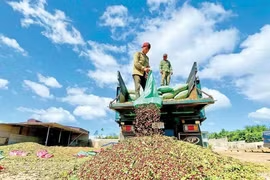
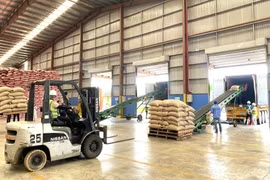
Highland products including coffee, rubber, timber, agricultural goods, minerals and processed industrial products have been transported along National Highways 19 and 25 and other connecting routes to Quy Nhon Port for import and export.
Following the provincial merger, Gia Lai expects coordinated planning, investment and operation of connecting routes to help establish an integrated network for transportation, logistics and production support.
The province has identified seaports and logistics, together with processing industries, commerce and the marine economy, as key elements in reorganizing its development space and strengthening competitiveness.
Gia Lai has completed and approved its master plan, including orientations for developing its seaport system, dry ports, logistics centers, industrial zones and transshipment hubs.
It is also prioritizing investment in transport routes connecting raw material and production areas with seaports, while gradually applying digital technologies, promoting green transformation and improving operational efficiency and service quality.
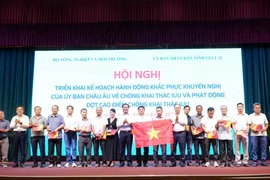
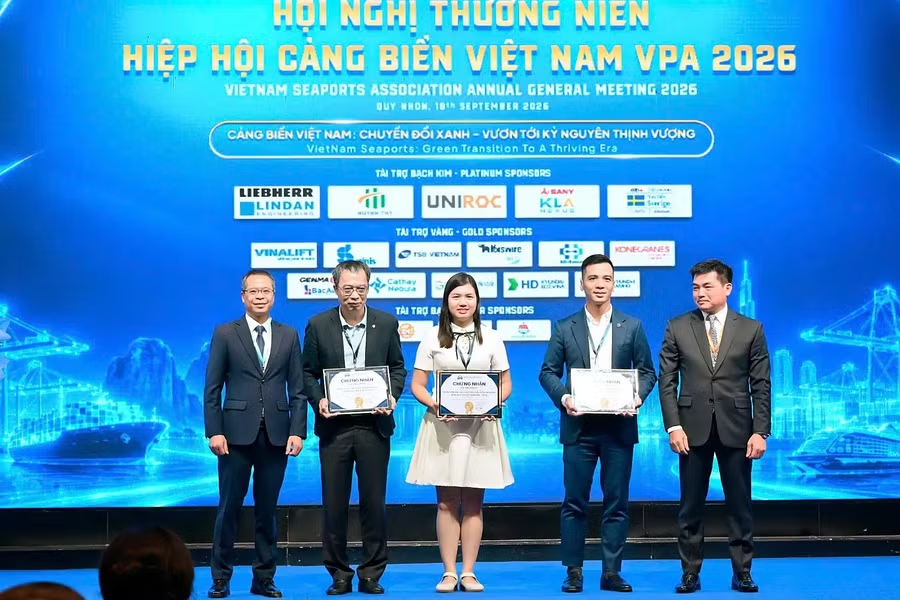
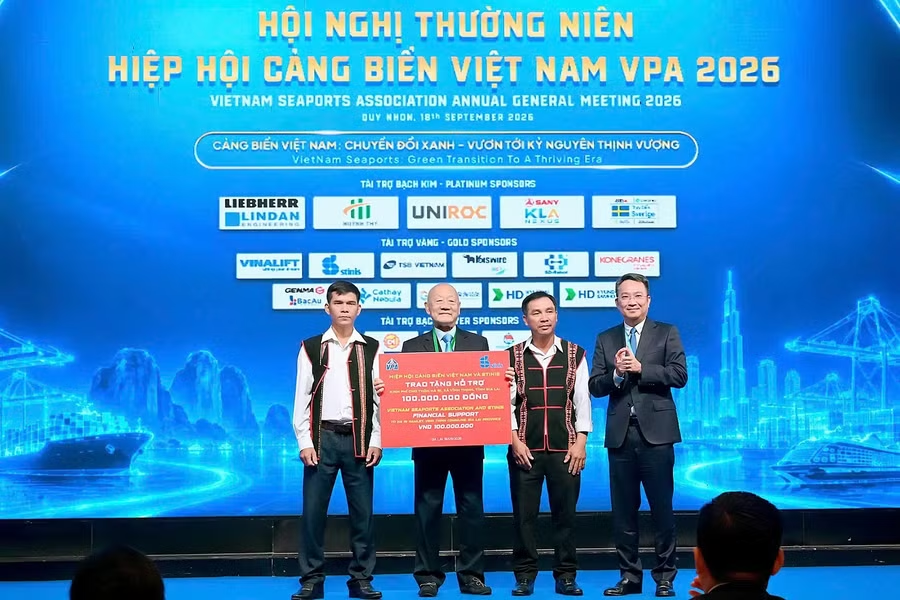
On this occasion, the Vietnam Seaports Association and sponsors donated VND 200 million to Vinh Hoa Hamlet (Vinh Quang Commune) and Ha Ri Hamlet (Vinh Thinh Commune), Gia Lai Province; each locality received VND 100 million.
Nguyen Huu Que said the province is also focusing on developing a logistics ecosystem linking manufacturers, transport providers, warehouses, seaports, shipping lines and import-export support services.
The aim is to reduce costs, shorten transportation times and improve market connectivity and product value, particularly for agricultural, forestry and processed industrial products from the Central Highlands.
Gia Lai is also accelerating administrative reform and digital transformation, while coordinating with central ministries, sectors and other localities to improve policies, infrastructure and other conditions needed for seaport and logistics development.
At the conference, the province called on VPA, its member ports, logistics companies and partners to continue working with Gia Lai on market connectivity, management experience, technology and modern operating methods, as well as on green port, smart port, green logistics and digital transformation initiatives.
The province also sought stronger links between VPA member companies and Quy Nhon Port, as well as between businesses and sectors across Gia Lai, to expand investment cooperation and improve the use of logistics infrastructure and services.
Nguyen Huu Que said Gia Lai is prepared to hold detailed discussions with businesses, investors and partners on specific projects and connectivity requirements, while directing relevant agencies to support project surveys, research and implementation in accordance with regulations.
With its position linking large highland raw material areas with the coastal economy, Gia Lai aims to develop long-term partnerships connecting production, processing, logistics, seaports and markets, with the goal of increasing product value, expanding export markets and strengthening regional economic links.