The growth reflects a structural shift toward sustainable farming, deeper processing, and stronger integration into global value chains, according to provincial authorities.
Across formerly barren areas such as Nam Yang, Kon Gang and Hneng, now part of Gia Lai, coffee cultivation has transformed livelihoods over the past two decades. Farmers who once depended on cassava and upland rice are now adopting organic and certified production methods that improve soil health, stabilize yields and meet international standards.
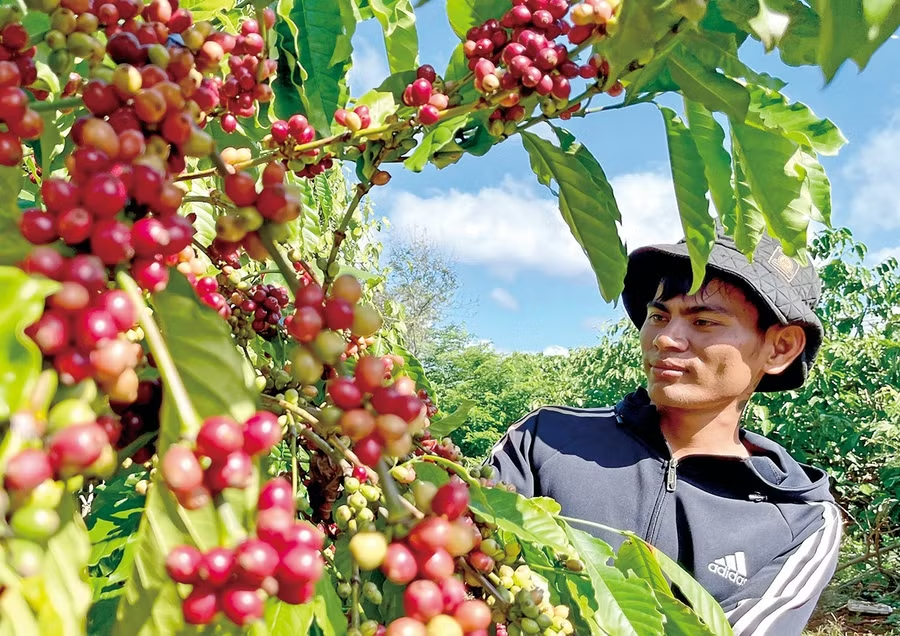
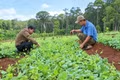
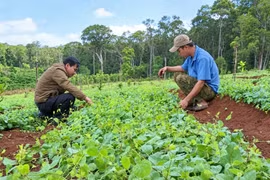
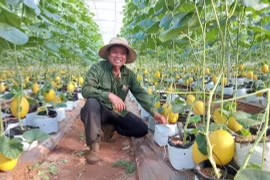
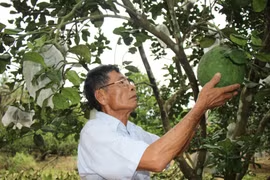
In Kon Gang commune, coffee farms have transitioned from chemical-heavy practices to natural farming. Mrs. Vũ Thị Từ, who migrated to Gia Lai in 1999, revived her depleted 4-hectare farm through organic inputs and sustainable techniques. Her 2.5 hectares cultivated to VietGAP and 4C standards now maintain consistent yields, with an additional 3 hectares entering their first harvest.
A similar shift is underway in Đak Đoa commune, where ethnic minority farmers have adopted organic cultivation. Mr. Anghêm, once dependent on conventional inputs, now produces more than 10 tons of green beans annually on his 2.5-hectare organic farm. In Diên Hồng ward, Mr. Phan Công Hoạt reports 10-12 tons of annual output from over 3 hectares, generating profits of at least 1 billion VND (approx. 40,000 USD) after costs.
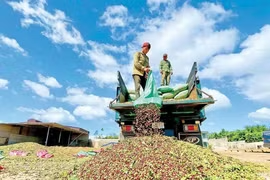
In the 2025-2026 coffee season, favorable weather has helped yields reach 3–3.5 tons of green beans per hectare, with total output estimated at 333,250 tons, an increase of over 8,200 tons compared to the 2024-2025 season.
Cooperatives have emerged as the backbone of organic expansion. The Lam Anh Agricultural and Service Cooperative has helped hundreds of households comply with 4C, UTZ and organic standards, forming large raw-material zones linked to export buyers. In Bờ Ngoong commune, the Ia Ring Agricultural Service Cooperative has expanded from 40 to 500 members, managing over 600 hectares certified to 4C and Rainforest Alliance standards.
To support market access, the National Agricultural Extension Center partnered with Hàm Rồng Ecotourism, Trade and Agricultural Cooperative to develop an EU-certified organic model covering 30 hectares in Ia Băng commune. Farmers harvest only fully ripe cherries, and products are purchased by Vĩnh Hiệp Co., Ltd. at premiums of 15–35% over conventional prices.
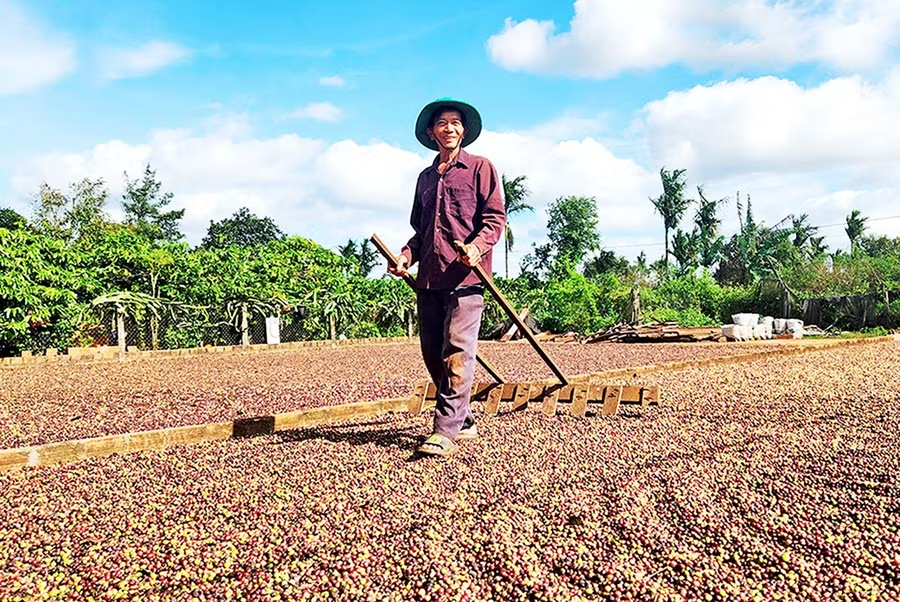
According to local officials, the province now has 107,400 hectares under coffee, with more than 56,000 hectares certified to Organic, Rainforest Alliance and 4C standards. Producers increasingly register planting-area codes and adopt traceability systems to meet stringent regulations in markets such as the EU, Japan, and the United States.
“Organic coffee plants grow more vigorously, investment costs drop significantly, while profits increase. When people see the results, they will voluntarily follow suit.”
Mr. Lê Hữu Anh,
Director, Lam Anh Agricultural and Service Cooperative
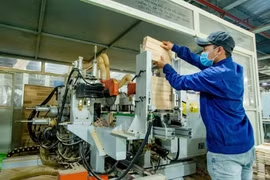
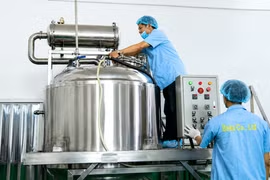
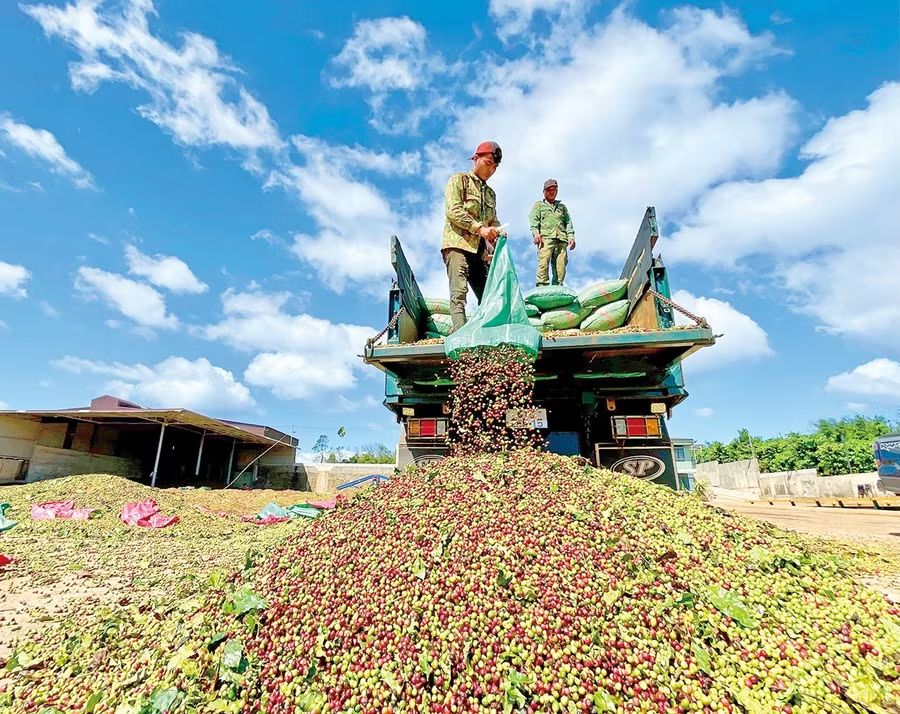
Enterprises are also scaling up deep processing. Tropico Tây Nguyên Coffee Co., Ltd. produced 20,000 tons this year, including 2,500 tons of high-quality green beans exported to the EU, Middle East and Southeast Asia. Tam Ba Production and Service Co., Ltd. is completing international organic certifications for 200 hectares and investing nearly 700 billion VND (approx. 28 million USD) in an instant coffee processing plant to boost value-added exports.
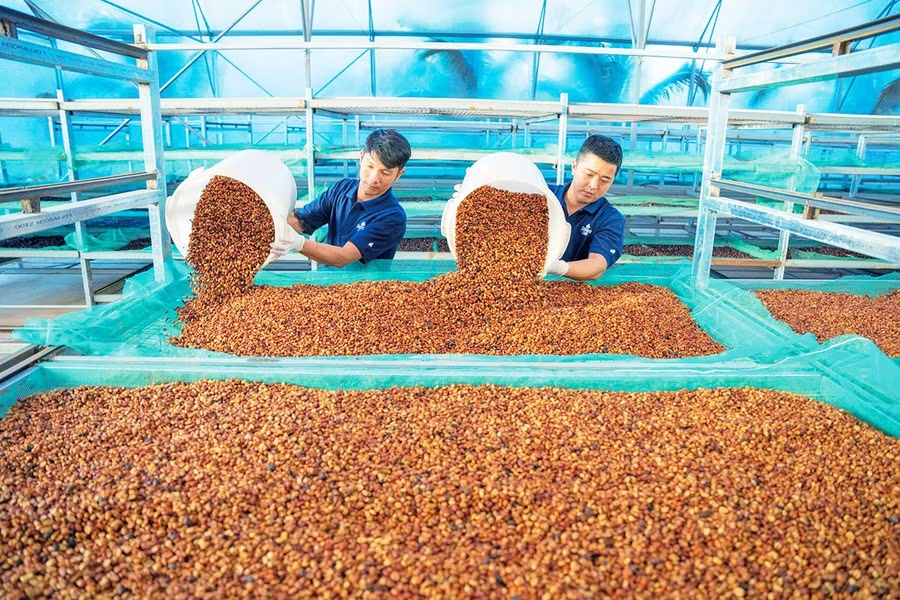
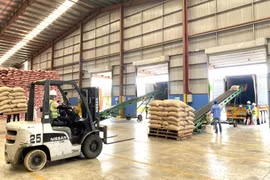
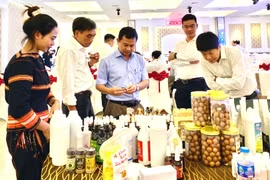
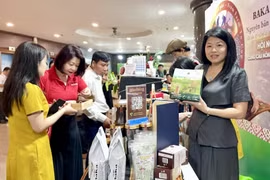
Exporters are diversifying markets through trade fairs and certifications. VCU Joint Stock Company, based in Chư Prông commune, will participate in CAFEEX Shenzhen 2025 to connect with roasters and distributors in China. The firm has secured GACC certification for roasted coffee and is finalizing approval for green beans to enter the Chinese market officially.
From sustainably cultivated coffee farms, coffee beans are no longer just raw materials, but also embody stories of the land, the people, and responsible agriculture—creating opportunities for Gia Lai coffee to step onto the world stage with a new status.”
As one of Vietnam’s major raw-material regions, Gia Lai is strengthening the entire farm-to-cup value chain. Companies such as Vĩnh Hiệp Co., Ltd., BaKa Co., Ltd., and Nam Yang Cooperative are building standardized raw-material zones, expanding deep-processed exports and promoting Fine Robusta. With over 10,000 linked farming households, Vĩnh Hiệp is also exporting organic-certified beans to the United States, EU, South Korea and Japan.
The shift is contributing to broader economic gains. In 2025, Gia Lai’s total export turnover reached 3.44 billion USD, up 14.7% year-on-year, with coffee acting as the primary driver. Authorities say the province is transforming its natural advantages, basalt soil, highland climate, and established logistics, into global competitiveness through modern farming and supply-chain linkages.
From sustainably cultivated farms to cooperatives connected with global buyers, Gia Lai coffee is evolving beyond raw exports into products that carry the story of the land and its people, anchoring its place on the world stage with renewed value and identity.