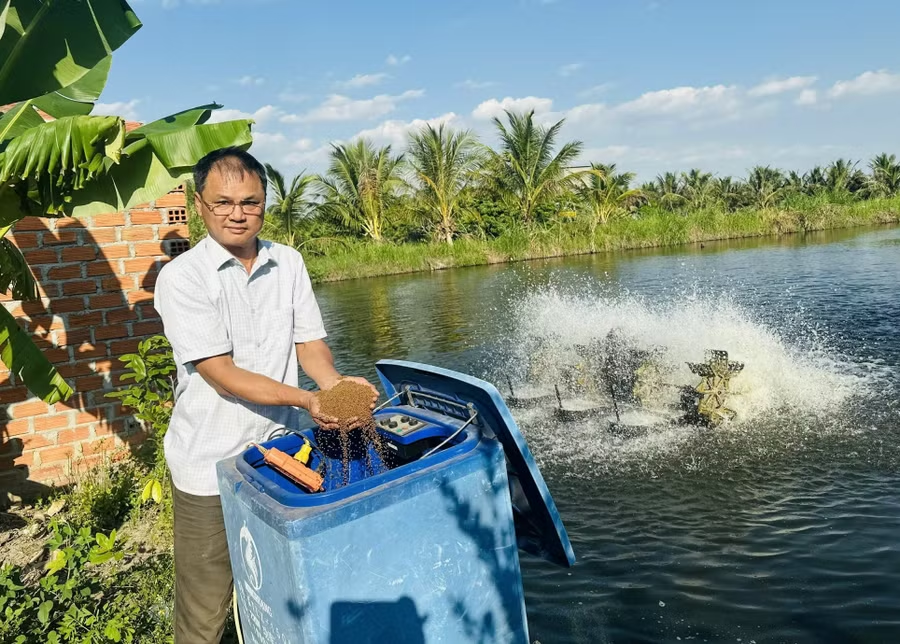
Starting a new life in Ia Hiao commune, Mr. Nguyễn Đức Thắng (born in 1969, originally from Bắc Ninh province) has not only built a successful commercial fish fry farming model but also helped spread the practice among local farmers.
Having moved to Gia Lai in 2000, Mr. Thắng began his journey in aquaculture and has served as Head of the Farmers’ Association branch in Bình Trang hamlet since 2008. His contributions have earned him multiple commendations, including recognition from the Central Committee of the Vietnam Farmers’ Union in 2020.
▪ As a pioneer of commercial fish fry farming in Ia Hiao and nearby areas, what inspired you to pursue this profession?
- I grew up in Bắc Ninh, where fish fry farming is well established. When I moved to Ia Hiao, I noticed favorable natural conditions, especially abundant water from the Ayun Hạ irrigation system. That encouraged me to continue my family’s tradition in a new place.
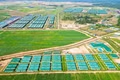
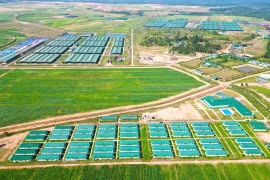
Initially, I lacked capital and rented 1 hectare of land. I took advantage of ongoing infrastructure projects to reduce pond excavation costs. I began with a small 1,800 m² pond and gradually expanded to 1 hectare after achieving positive results. Eventually, I purchased the land for long-term stability.
▪ What was the turning point that allowed you to scale up production?
- At first, I depended on suppliers from Đắk Lắk for fry and feed, which was expensive. I decided to learn breeding techniques and produce fry myself. This reduced costs and improved survival rates, as locally bred fish adapted better to the environment.
Currently, I manage 1 hectare of ponds, producing five batches per year. Yields have increased significantly, from 100-150 kg per sào per batch to 300-500 kg. Annually, I supply about 100 million fry and over 2 tons of commercial fish, earning profits of 400-500 million VND (approximately $16,000–$20,000).
▪ Fish fry farming is often described as a “gamble.” Why is that?
- It’s a risky business due to disease and market fluctuations. In the early days, I constantly monitored the ponds, yet still faced losses from disease outbreaks.
When I first experimented with breeding, mistakes in reproductive techniques caused mass losses. At one point, I nearly had to start over. I returned to my hometown and visited other aquaculture regions to learn and improve. Without continuous learning, survival in this field is impossible.
▪ Encouraging farmers to switch from raising fish for meat to fry production must have been challenging…
- The biggest challenge was gaining their trust. Raising fish for meat generates only about half the profit compared to fry farming.
I had to demonstrate real results, provide technical guidance, and support farmers with loans for pond construction, fry, and feed. I also committed to purchasing their products to reduce their risks.
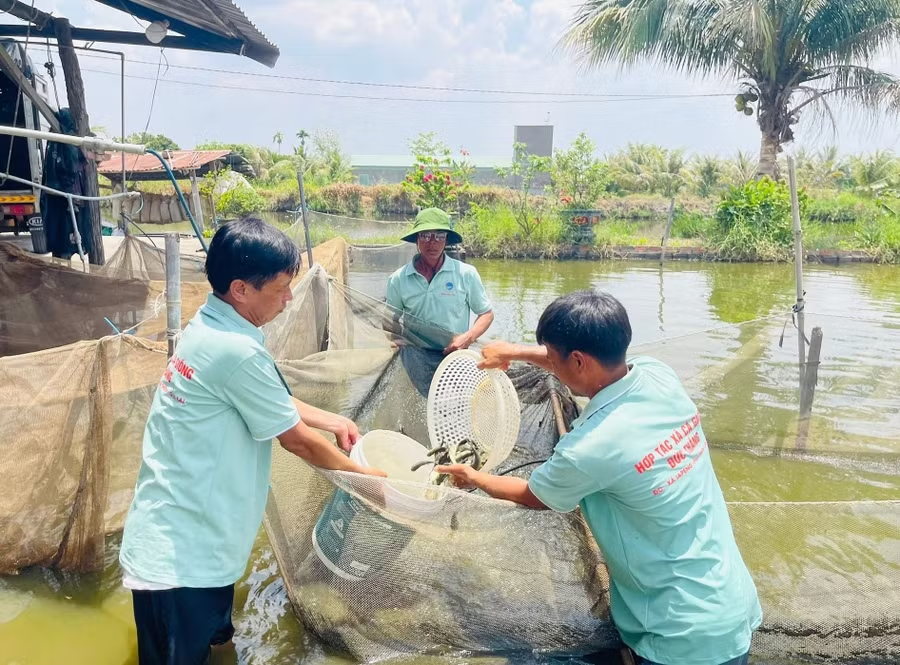
▪ What role did the fish fry cooperative play in expanding the model?
- In 2017, I founded the Đức Thắng Fish Fry Cooperative to support farmers technically and guarantee market access. This shifted production from individual efforts to a collaborative model.
From 2020 to 2023, more than 50 households joined, with 40 currently active. Farm sizes range from small plots to as large as 3 hectares. Members produce 50-60 tons of fry annually, with profits reaching 2-3 billion VND (approximately $80,000-$120,000).
▪ What is the key factor for avoiding failure, especially in the first batch?
- Disease prevention is critical. Farmers must treat ponds and water with lime before stocking and filter water to prevent predators.
Equally important is securing stable market outlets. I actively connect with buyers, including dealers, businesses, and cooperatives. Currently, we have more than 20 regular customers, ensuring stable demand.
▪ After 25 years, how has this model impacted local livelihoods?
- The results are clear. Seven households have escaped poverty, and many families have built new homes thanks to fish fry farming.
The cooperative also creates jobs, around 30 seasonal workers and six full-time workers earning about 5 million VND (approximately $200) per month.
▪ As Head of the Farmers’ Association branch, how do you view your responsibility moving forward?
- My priority is sustainability rather than rapid expansion. The cooperative has created a value chain that connects production and consumption.
Demand for fry still exceeds supply, presenting both opportunities and challenges. I will continue supporting farmers with technical guidance and encourage participation in the model. With strong water resources and market demand, I believe fish fry farming will remain a sustainable livelihood for the community.