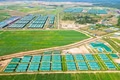
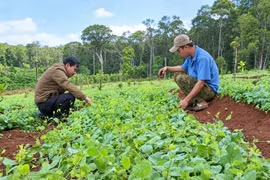
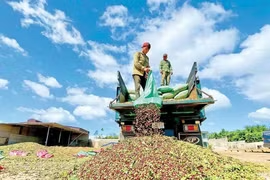
In An Nhơn Nam ward, 23 households recently harvested a successful Winter-Spring crop using the TBR85 rice variety. Cultivated across 3.6 hectares through a partnership between Nhơn Thọ Agricultural Cooperative II and ThaiBinh Seed Co., yields reached 9.5 tons of fresh rice per hectare—up to 0.6 tons higher than conventional varieties.
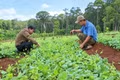
Farmers highlighted the variety’s resilience and efficiency. With sturdy stalks, uniform growth, and resistance to pests and diseases, TBR85 required only minimal pesticide use while maintaining strong yields. Output reached nearly 500 kg of dried rice per sào, underscoring both productivity and cost savings.
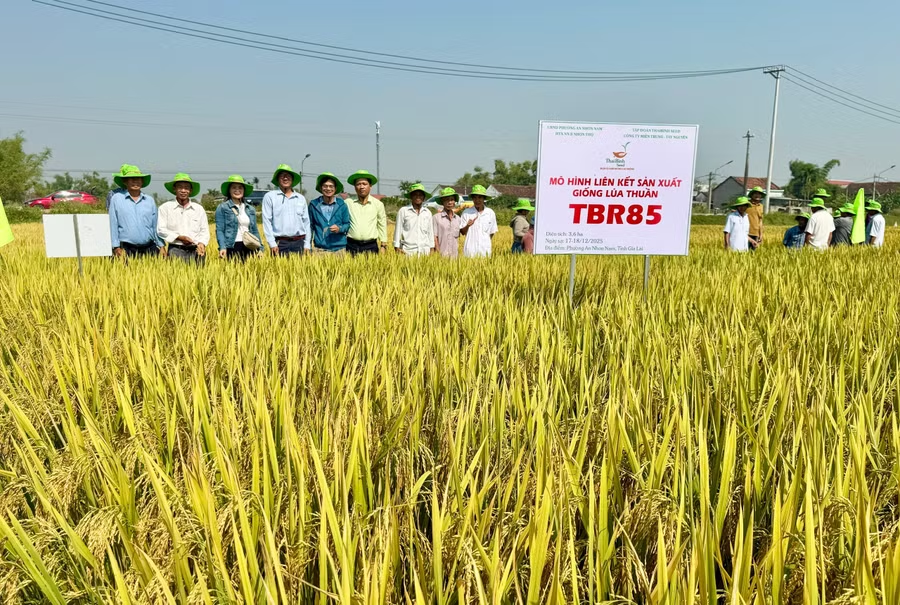
The cooperative has shifted from earlier varieties such as TBR36, which proved vulnerable to adverse weather, and plans further trials of TBR85 in upcoming seasons before wider adoption.
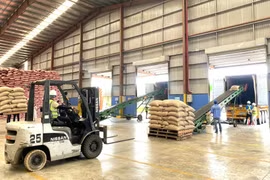
A key feature of the model is its integrated production-consumption linkage. Farmers receive technical training, deferred seed payments, and guaranteed purchase prices 20-30% above market rates. Fresh rice is bought directly in the field at 6,700 VND/kg (≈ $0.26/kg), reducing post-harvest labor.
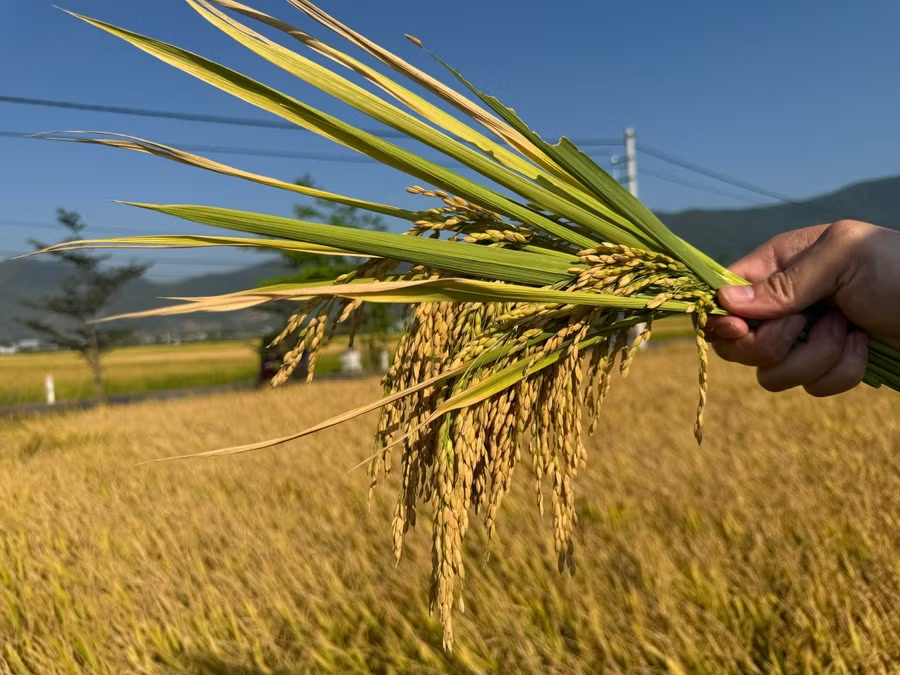
Similar gains have been recorded in Tuy Phước Đông commune, where the ADI 168 variety achieved yields of 8.4 tons per hectare, surpassing traditional varieties despite challenging weather conditions.
Across the province, 25 linked production models now cover 906 hectares, involving over 3,400 households. Authorities say the expansion of high-quality rice varieties and value chain linkages is enhancing resilience, stabilizing incomes, and positioning Gia Lai’s rice sector for long-term growth.