The trend has accelerated following the implementation of Decree No. 58/2025/NĐ-CP, which provides detailed regulations governing self-produced, self-consumed rooftop solar systems. Businesses providing consultation and installation services report a sharp rise in customer inquiries during the first half of 2026.
Nguyễn Văn Hưng, Director of Hưng Lợi Technology Co., Ltd. in Quy Nhơn Nam Ward, said interest has expanded beyond reducing electricity bills.
"Most inquiries come from coffee shops, restaurants, hotels, manufacturing facilities and households seeking greater control over their electricity supply. Customers are increasingly interested in clean energy while also enhancing the value of their properties", Hưng said.
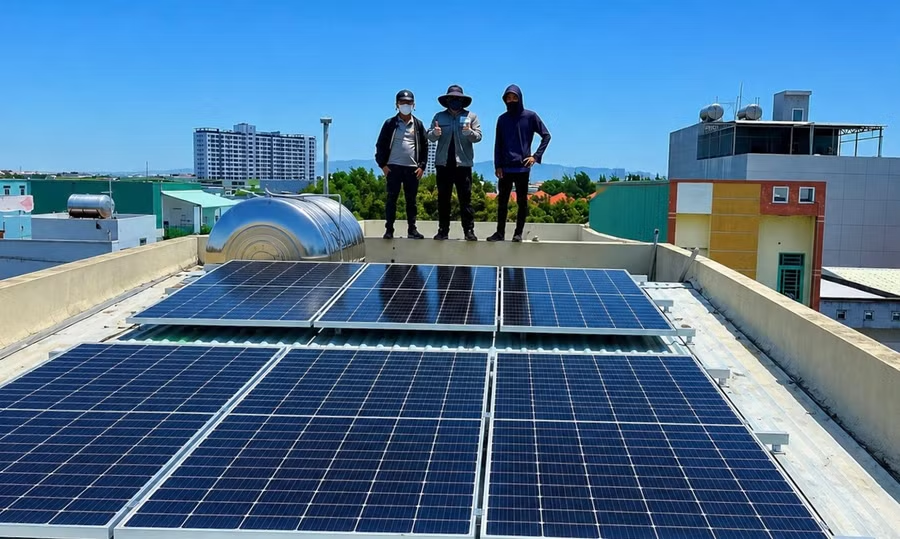
He said self-produced rooftop solar systems benefit both consumers and the wider electricity network by enabling households to secure their own power supply, helping businesses lower production costs and easing pressure on the national grid during periods of peak demand.
The company continues to work with installation providers to assist customers with application procedures, site inspections, grid connections and technical safety requirements to ensure stable system operation, Huỳnh added.
The financial benefits are also encouraging wider adoption.
Nguyễn Hữu Minh, whose home at 147 Phan Chu Trinh Street in Quy Nhơn Ward also operates as a coffee shop, recently invested more than VND110 million (about US$4,200) in a rooftop solar system.
Minh said his family had considered installing solar panels in 2025 but delayed the investment because of the upfront cost. After receiving a May 2026 electricity bill of VND3.5 million (about US$135), they decided to proceed.
He estimates the savings on electricity bills will recover the investment within three to four years, after which the system will provide substantial long-term savings.
Many service businesses in the city's central wards are making similar investments, particularly as electricity consumption rises during the summer because of increased demand for air conditioning and cooling equipment.
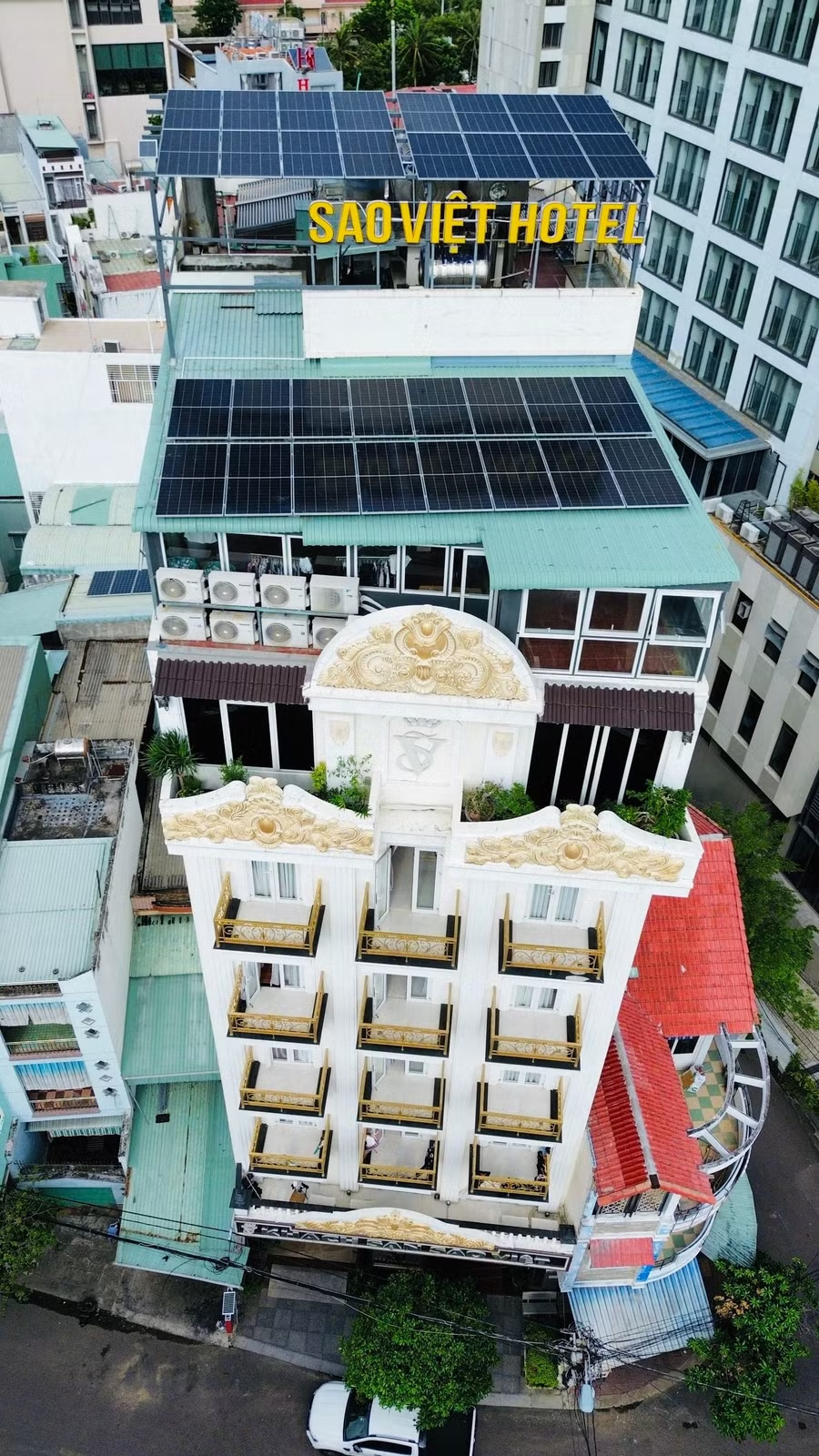
Huỳnh Thị Thắm, owner of Sao Việt Hotel in Quy Nhơn Ward, said the rooftop solar system has reduced operating costs while providing a more stable electricity supply during the busy summer season and peak guest hours.
According to Nguyễn Duy Khiêm, a lecturer at Quy Nhơn University and adviser to multiple solar projects in Quy Nhơn and Vietnam's central coastal region, the area's high solar radiation delivers strong performance for rooftop solar systems.
Khiêm said households and businesses could further improve efficiency by investing in battery storage systems, allowing electricity generated during the day to be used at night or during periods of poor weather.
Although the initial investment remains relatively high, he said rooftop solar is expected to become an increasingly important energy solution as electricity demand and the adoption of electric vehicles continue to grow.