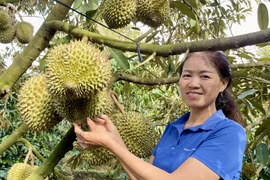
Provincial authorities view cross-border e-commerce as an increasingly important driver of economic growth. According to Nguyễn Đình Kha, Deputy Director of the Department of Industry and Trade, digital platforms have significantly reduced the distance between producers and overseas buyers, allowing businesses to reach global markets without relying heavily on intermediaries or foreign distribution networks.
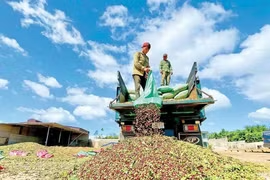
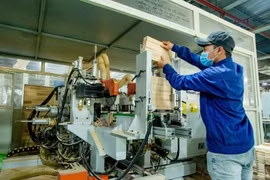
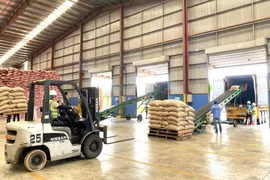
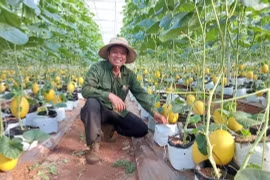
The shift is particularly significant for small and medium-sized enterprises, many of which have limited resources but produce goods with strong export potential, including coffee, pepper, processed agricultural products, OCOP products, handicrafts, furniture and textiles.

To support businesses seeking international expansion, the Department of Industry and Trade partnered with Amazon Global Selling in May to organize the “Made in Gia Lai – Ready for the World” program. During the event, Amazon experts introduced the company’s business-to-consumer operating model, analyzed consumer trends in the United States and other major markets, and provided guidance on export readiness assessments.
The program also gave local companies access to strategic consulting services aimed at helping them develop and position their brands internationally.
“Cross-border e-commerce is not simply a new sales channel, but a tool that enables businesses to shift from an outsourcing mindset to brand building,” said Phạm Thị Trang Đài, Senior Expert at Amazon Global Selling. She added that direct participation on global e-commerce platforms allows companies to promote their brand identity, communicate their stories and build trust with international customers.
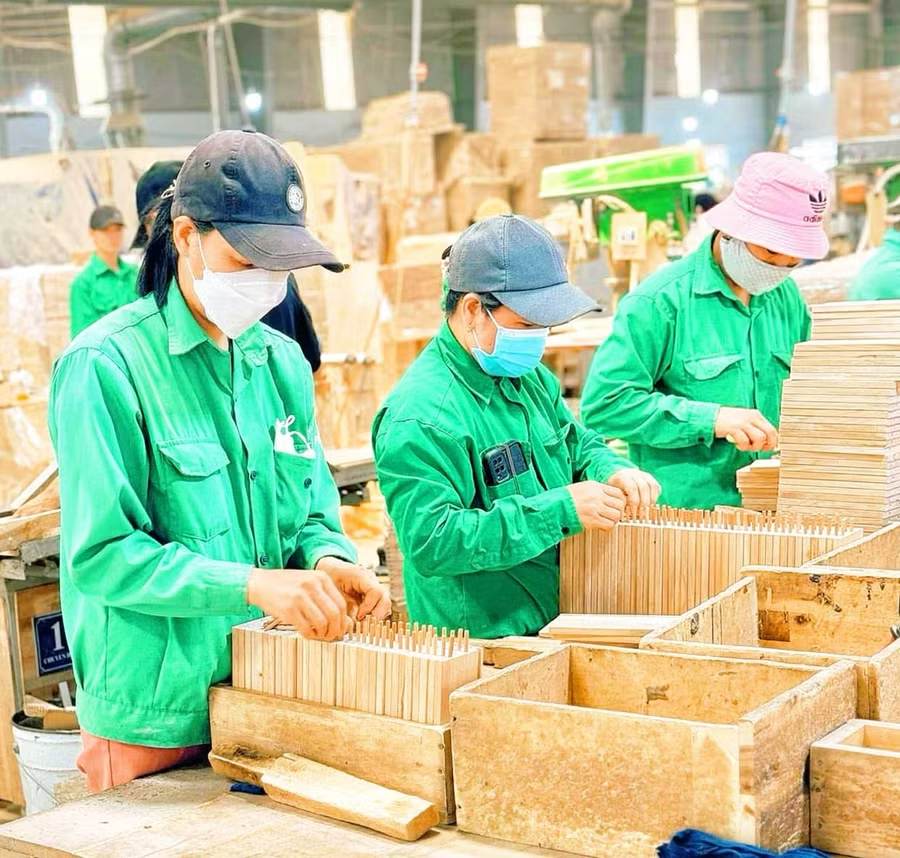
The province’s export sector has already shown strong momentum. More than 300 local businesses are currently engaged in export activities, with products reaching over 120 countries and territories. Export turnover in 2025 is projected to reach approximately USD 3.447 billion, representing a 14.7% increase from 2024 and nearly 19% above the target.
Despite the positive outlook, businesses continue to face challenges related to quality standards, traceability requirements, intellectual property protection, green development, carbon-emission reduction and supply-chain management. Provincial officials believe cross-border e-commerce can help companies adapt more effectively to increasingly demanding international market requirements.
Hồ Thị Hoài Thu, Chief Executive Officer of Green Tropical Import-Export Processing JSC in Chư Sê commune, said her company previously relied heavily on intermediaries, limiting direct access to overseas consumers.
“Now, we have a better understanding of how to build our brand, promote products and reach international customers on digital platforms,” she said. “This is an opportunity for businesses to increase product value instead of merely exporting raw materials or undertaking outsourcing work.”
Nguyễn Thị Diễm Hằng, Vice Chairwoman of the Board of Directors of Vinanutrifood Bình Định JSC in Tây Sơn commune, said cross-border e-commerce offers opportunities not only for large corporations but also for smaller enterprises.
She noted that many local specialty products possess unique stories, clear origins and strong quality credentials. With support in digital sales skills, brand development and international logistics, products ranging from coffee and pepper to processed fruits, handicrafts, furniture and OCOP goods could reach a broader customer base in major global markets.
Industry representatives and businesses agree that building a digital export ecosystem will be critical to expanding international market access. Alongside corporate efforts, they said continued support from authorities will be needed in workforce training, trade promotion, international platform connectivity, market intelligence and technical standards consulting.