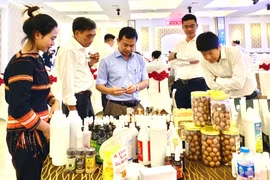
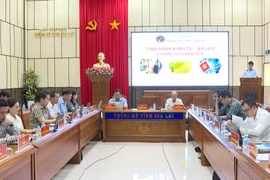
The meeting brought together provincial officials, representatives from departments and agencies, the Provincial Economic Zone Management Board and businesses engaged in trade activities with Cambodia.
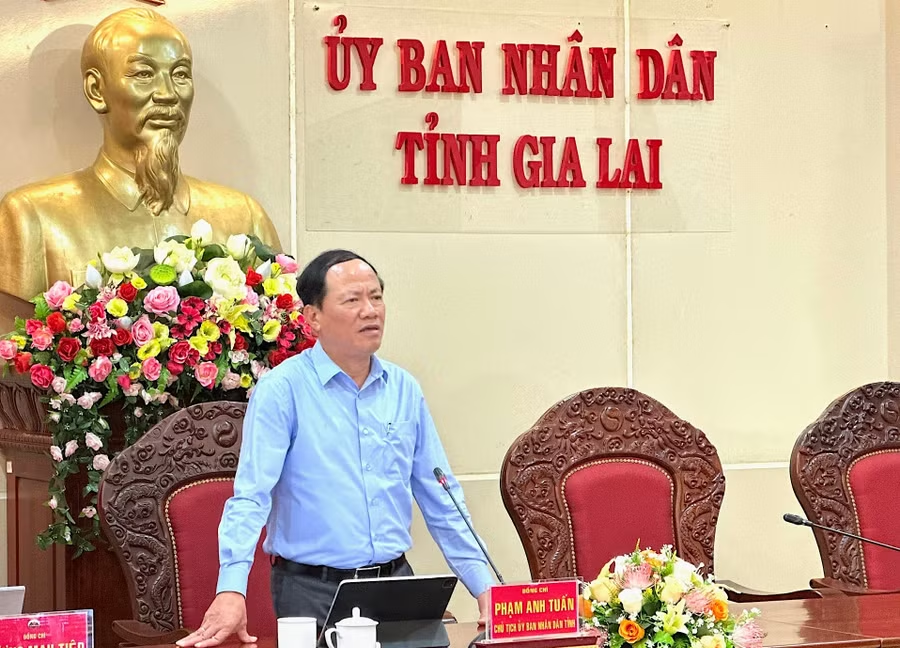
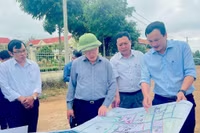
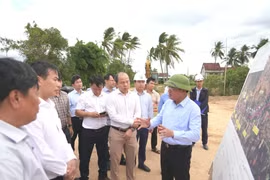
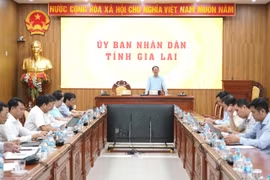
Chairman of the Provincial People's Committee Phạm Anh Tuấn delivers directives at the working session. Photo: Hà Duy
According to enterprises, one of the main obstacles is Cambodia’s requirement that all imported goods obtain import permits from the General Department of Customs and Excise (GDCE), a process businesses said is time-consuming. Companies also said Cambodia has yet to introduce preferential trade conditions for agricultural exports, limiting market access for products including fruit.
Businesses further cited slow customs declaration and entry-exit procedures, a lack of transparency and unclear guidance. They also highlighted differences in border gate operating hours, with Oyadav Border Gate operating from 7:00 a.m. to 5:30 p.m., while Vietnam’s Le Thanh International Border Gate remains open until 8:00 p.m.
Enterprises said the number of vehicles licensed for cross-border transportation between Vietnam and Cambodia remains insufficient to meet demand.
During the meeting, businesses proposed import tax exemptions for raw steel, construction steel and building materials, as well as a reduction in the list of goods requiring customs permits. They also called for coordination with counterparts in China, South Korea and Japan to promote market-opening agreements.
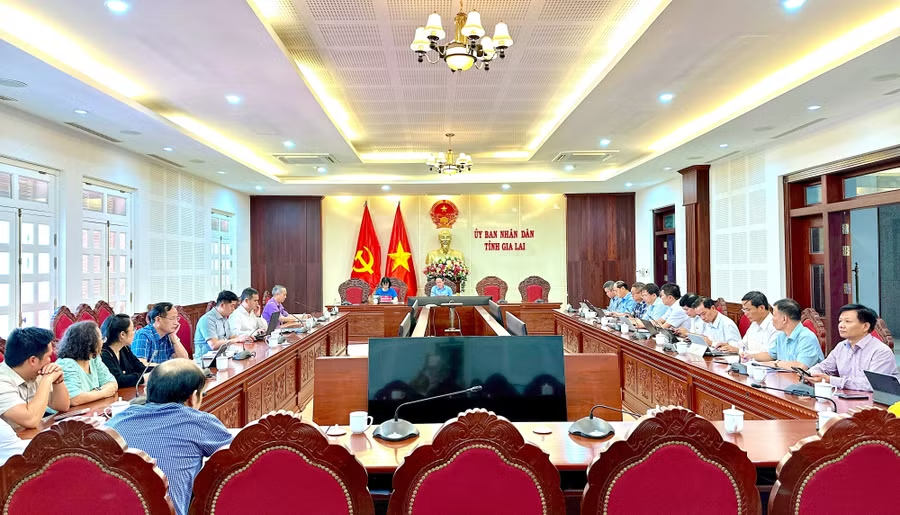
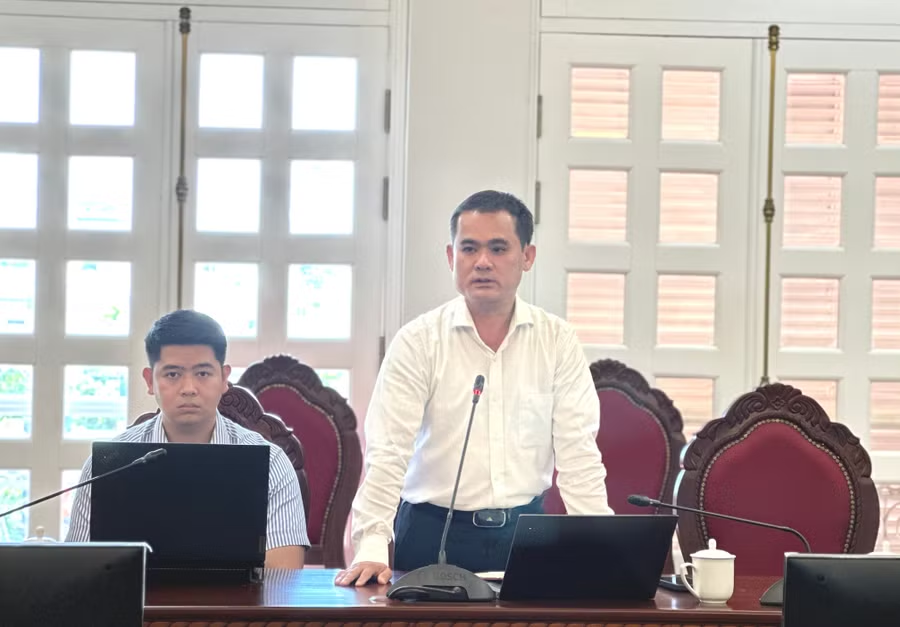
Overview of the working session. Photo: Hà Duy
Companies proposed that Vietnam and Cambodia jointly seek quota mechanisms for duty-free imports and simplify customs declaration procedures to reduce processing times and costs. They also suggested extending operating hours at Oyadav Border Gate to 8:00 p.m. to align with the Vietnamese side and introducing a One-Stop, Single-Checkpoint mechanism to facilitate customs clearance.
Concluding the session, Chairman Pham Anh Tuan said businesses should prioritize trade and investment activities in Cambodia’s three northeastern provinces before expanding to other localities.
He assigned the Department of Industry and Trade to support enterprises in implementing trade activities, while the Department of Finance was tasked with reviewing investment needs in neighboring provinces.
The chairman also called for identifying essential goods demanded by neighboring Cambodian provinces and attracting major investors to support exports. He stressed the need to develop a trade center at the Le Thanh International Border Gate.
Pham Anh Tuan assigned the Department of Industry and Trade to lead trade development efforts, while the Department of Finance would oversee investment-related activities. The Provincial Economic Zone Management Board and the Department of Foreign Affairs were instructed to strengthen support and connections for businesses.
“Departments and agencies must report monthly results to the Provincial People’s Committee, focus on resolving difficulties for businesses, cutting unofficial costs and standardizing customs clearance documentation,” he said.
The Provincial Economic Zone Management Board was also directed to upgrade infrastructure and improve the appearance of the Le Thanh International Border Gate to ensure a modern and clean environment.
Items suitable for socialized investment should be implemented under that model, with results reported to the Provincial People’s Committee within one month, Pham Anh Tuan added.