Field measurements show the method cut greenhouse gas emissions by 53.8%, lowering CO₂-equivalent output to 5.77 tons per hectare per crop, down from 12.5 tons under traditional continuous flooding. Water use fell sharply, with irrigation cycles reduced by four to five times, saving about 2,600 cubic metres per crop. Yields also increased by around 180 kilograms per hectare.
The initiative forms part of the Ministry of Agriculture and Environment’s emission reduction programme for 2025-2035, with a vision to 2050. It is being implemented across 668 hectares involving 11 agricultural cooperatives under a carbon credit generation scheme in rice cultivation.
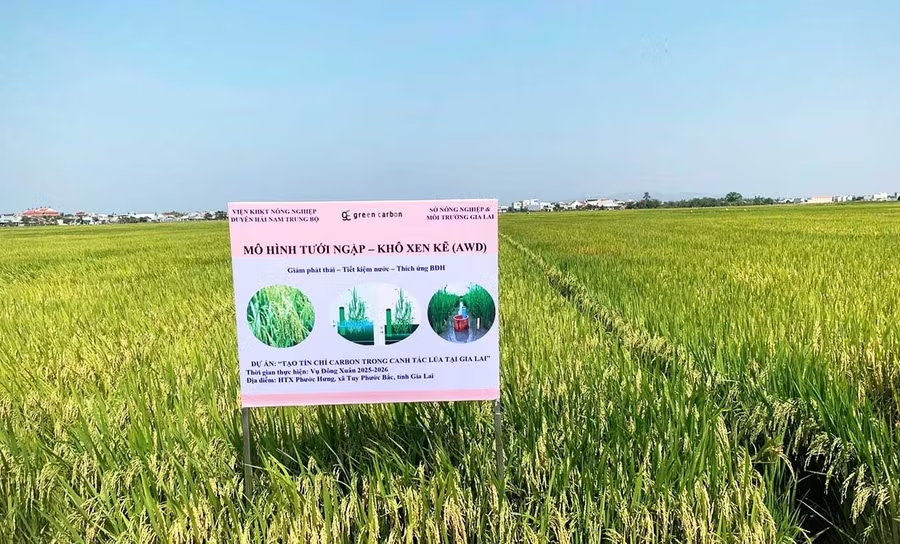
The project is jointly carried out by Green Carbon Inc. (Japan), the provincial Department of Agriculture and Environment, the Agricultural Extension Center, and the Institute of Agricultural Science and Technology for the South Central Coast.
AWD irrigation allows rice fields to dry intermittently instead of maintaining continuous flooding, helping to reduce methane emissions while sustaining productivity. The approach is seen as a climate-resilient solution adaptable to water scarcity.
“This is a remarkable achievement, with emission reduction efficiency improving significantly compared to previous crops,” said Phạm Vũ Bảo, Deputy Director of the Institute. He noted reductions of 6.73 tons CO₂e per hectare in the latest crop, compared with 4.5 tons previously, indicating strong scalability.
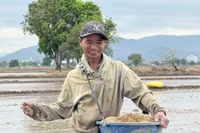
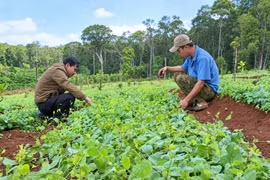
Farmers reported positive results after initial hesitation. Nguyễn Thế Truyền, Director of Phước Quang Agricultural Cooperative, said growers became confident after training and observing outcomes, with no yield loss and improved plant strength and resilience.
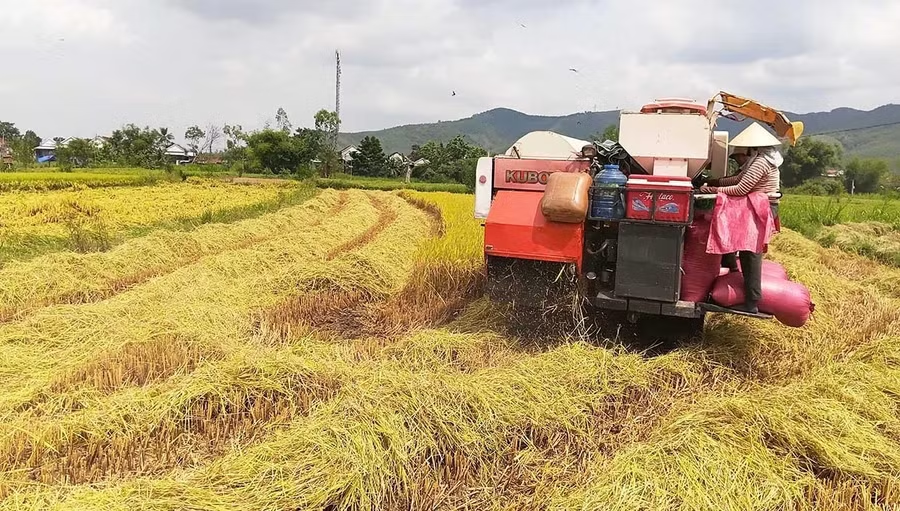
At the cooperative, yields of the AN26 rice variety averaged 500 kg per sào, with some plots reaching 520 kg-higher than the previous 470-480 kg. Rice was purchased at 7,000 VND/kg (about $0.28/kg), supported by a consumption partnership, improving farmer incomes.
Across all models, average yields reached 7.56 tons per hectare, up 0.18 tons from conventional methods, with improvements in key yield components such as filled grains and productive panicles.
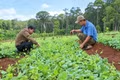
Participants also reported reduced labour demands. Farmer Nguyễn Ngọc Bình said irrigation is now managed by monitoring water levels, cutting effort while improving crop performance.
Each ton of rice produced under AWD reduces emissions by approximately 0.89 tons of CO₂-equivalent, creating equivalent carbon credits. Authorities say this provides a foundation for entering carbon markets and generating additional income streams.
The next phase will focus on establishing a monitoring, reporting and verification (MRV) system aligned with international standards to enable formal carbon credit registration, alongside expanded farmer training.
The province plans to scale the model to over 1,000 hectares in the 2026 summer-autumn crop and add a further 2,000-3,000 hectares in the following winter-spring season. Expansion will prioritise areas with similar ecological conditions, particularly in the eastern region.
Officials say the model supports Vietnam’s climate commitments and contributes to the country’s net-zero emissions target by 2050, while delivering tangible benefits including reduced costs, water savings and higher-quality rice production.