The target, outlined in an implementation plan for Decision No. 261/QĐ-TTg issued by the Prime Minister on February 9, 2026, is expected to be supported by annual growth of around 12-14%.
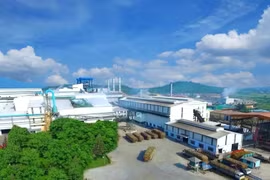
Alongside output expansion, the province plans to attract investment in downstream steel processing, deep-processing projects and steel structure manufacturing. It also seeks to bring the Hoa Sen Nhon Hoi - Binh Dinh Steel Plant expansion project into operation.
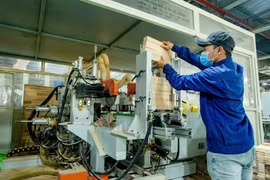
By 2030, at least half of enterprises in the sector are expected to adopt advanced, highly automated technologies, while more than 70% of production lines should meet energy-saving standards.
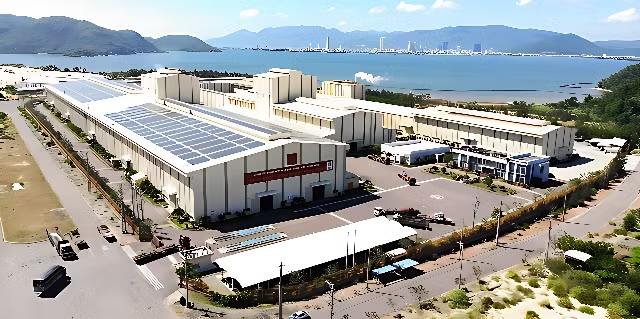
Looking further ahead, Gia Lai targets annual production of 1.5 to 2 million tonnes of finished steel by 2035. The province also plans to establish a steel distribution and trading centre in Pleiku, linked to the Quy Nhon - Pleiku - Le Thanh economic corridor, serving the Central Highlands and supporting exports to Cambodia.
By that stage, at least 70% of enterprises are expected to use advanced automated technologies, and more than 80% of production lines should comply with energy efficiency standards.
In the long term, by 2050, Gia Lai aims to become a major regional hub for steel production, processing, distribution and logistics in Vietnam’s central and Central Highlands regions. The strategy emphasises deeper integration into domestic and regional supply chains, with a focus on low-emission production, circular economy models and high-tech applications.
To achieve these goals, the provincial People’s Committee has identified seven priority areas, including regulatory and land-use planning reforms, selective investment attraction, infrastructure development, technological upgrades, green transition and efficient energy use. Additional measures focus on developing raw material supply chains and supporting industries, expanding markets and regional linkages, and strengthening workforce capacity.
The Department of Industry and Trade has been tasked with leading implementation, coordinating with relevant agencies and local authorities, and conducting regular monitoring and evaluation. It will report progress, challenges and policy recommendations to both the provincial People’s Committee and the Ministry of Industry and Trade.
Local departments and authorities have been instructed to proactively implement assigned tasks in line with their functions and the approved timeline.