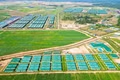
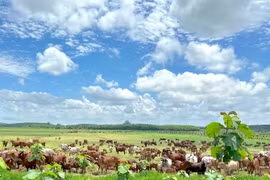
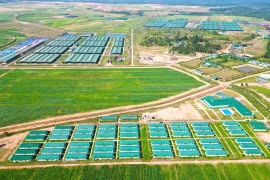
The commune has attracted 11 livestock projects with a combined investment of more than VND 1,368 billion (approximately USD 53.7 million) and a total herd capacity exceeding 110,000 animals. Of these, five projects have already received investment approval, covering around 92 hectares and accounting for over VND 630 billion (USD 24.8 million) in capital.
Local authorities have played a central role in accelerating project implementation, fast-tracking administrative procedures and facilitating land conversion, environmental assessments and construction permits. Previously low-yield agricultural land is now being repurposed for high-value livestock production.
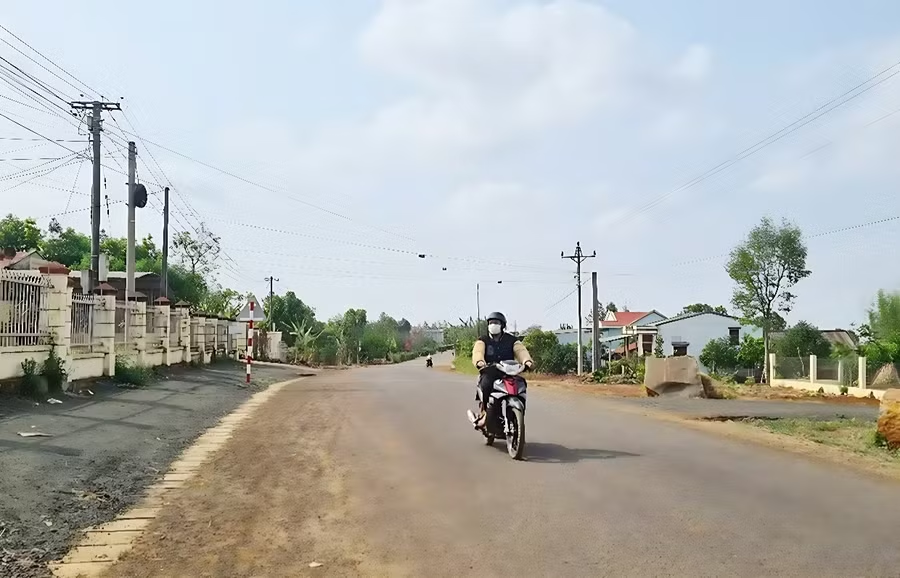
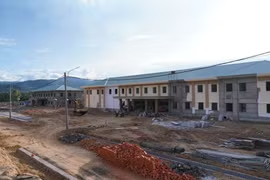
In Klăh village, where sugarcane farming once dominated, Nắng Vàng Gia Lai Ba Livestock Joint Stock Company is nearing completion of a large-scale pig farm. The project spans over 10.4 hectares with an investment of about VND 70 billion (USD 2.75 million) and is approximately 80% complete. It is expected to begin operations by July 2026.
Once operational, the farm will house around 1,200 sows and supply roughly 30,000 piglets annually, generating estimated revenues of VND 50–60 billion (USD 2.0–2.4 million) per year.
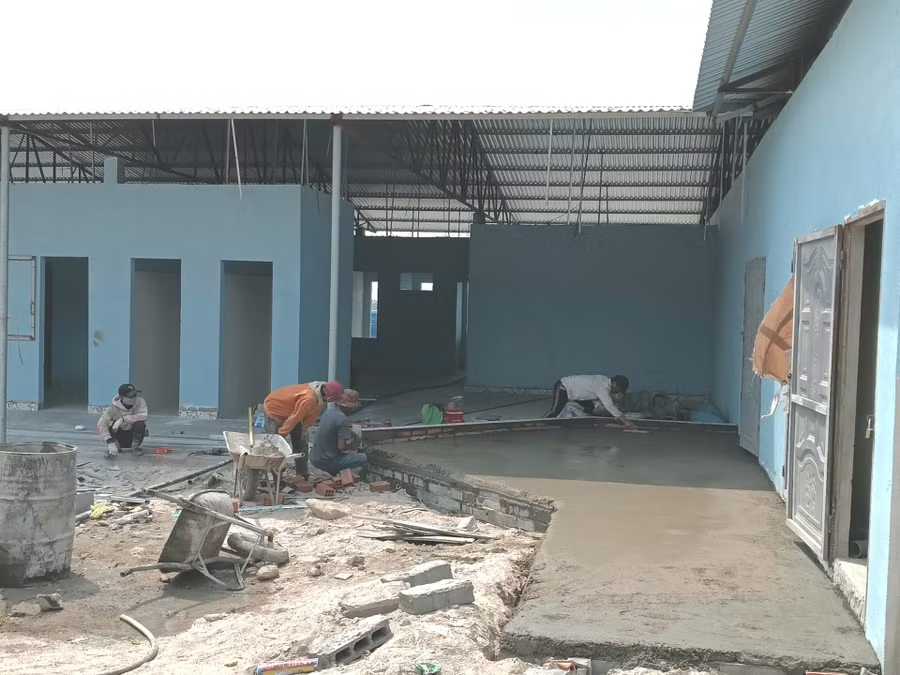
Company director Tô Vũ said strong support from local authorities had been critical to the project’s progress, noting that administrative procedures were handled efficiently and officials were assigned to directly assist the project.
Elsewhere, Phát Lộc Mang Yang Livestock Co., Ltd. is developing a pig farm in Deng village, covering 22.4 hectares with an investment exceeding VND 150 billion (USD 5.9 million). The project is expected to produce around 40,000 pigs annually once operational.
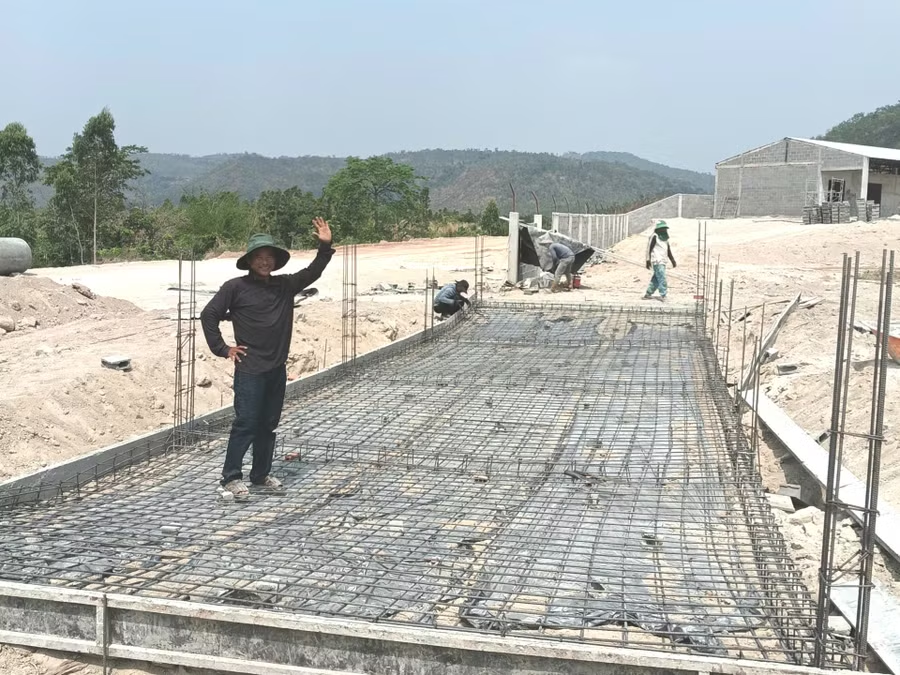
According to deputy project director Huỳnh Văn Phúc, construction is scheduled to begin in August 2026, with operations targeted for early in the second quarter of 2027. The company is working with local authorities to complete land and environmental procedures.
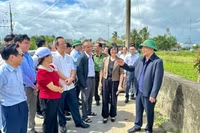
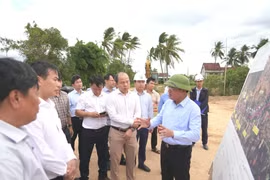
Kon Chiêng authorities say they are focused on eliminating bottlenecks that could delay implementation. Officials have been assigned to oversee each project, guiding investors through procedures related to land use, environmental compliance and construction approvals.
Several projects, including those by Viet My Gia Lai Livestock Joint Stock Company (VND 105 billion / USD 4.1 million), Chau Au Gia Lai Livestock Joint Stock Company (VND 140 billion / USD 5.5 million), and Huy Hoang Farm Gia Lai Co., Ltd. (VND 165 billion / USD 6.5 million), are currently completing legal documentation ahead of construction.
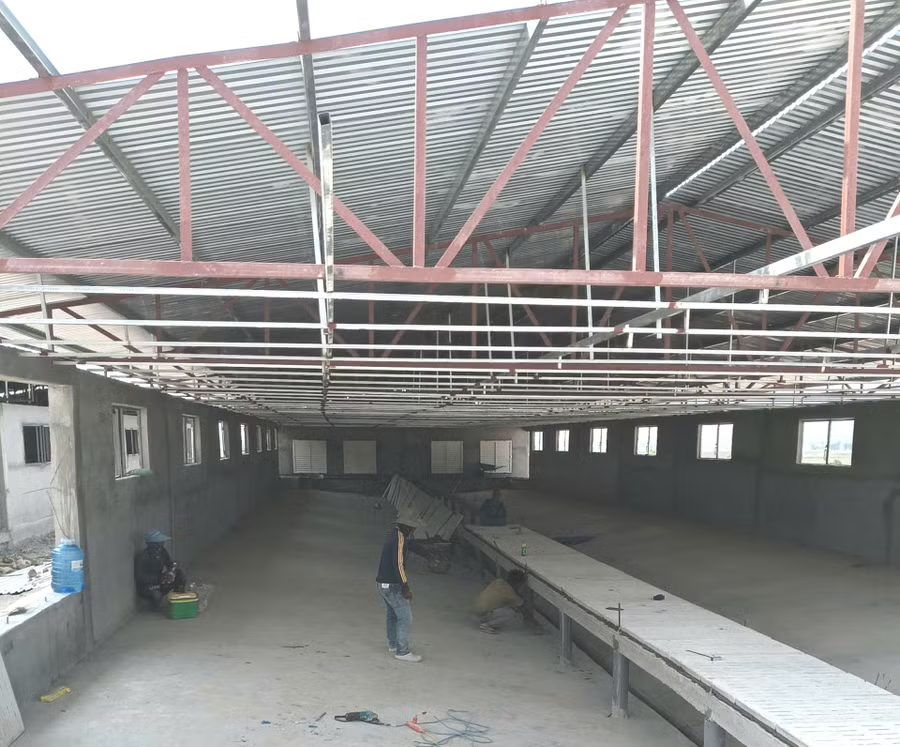
Vice Chairman of the commune People’s Committee, Võ Đình Huy, said approved projects must be implemented without delay to avoid wasting land and resources. He emphasized that while authorities provide maximum support, investors must fulfill commitments and ensure projects are carried out substantively.
“We are determined not to allow construction to begin before procedures are completed”, he said, adding that delayed projects would be reviewed and reported to higher authorities.
Local officials also act as intermediaries with provincial agencies to resolve issues beyond commune-level authority, while closely monitoring project timelines.
If implemented as planned, the livestock projects are expected to generate employment, boost local revenues, support economic restructuring and improve living standards.
With a coordinated and proactive approach, Kon Chiêng is transforming its untapped potential into a foundation for sustainable socio-economic growth.