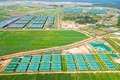
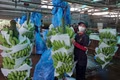
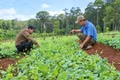
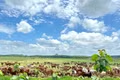
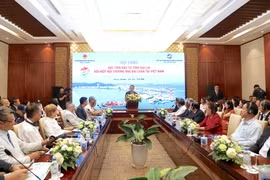
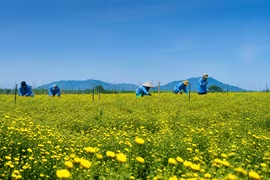
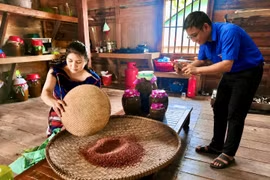
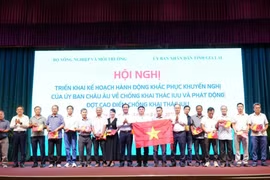
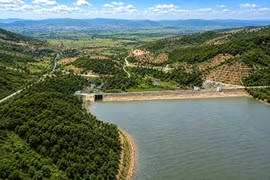
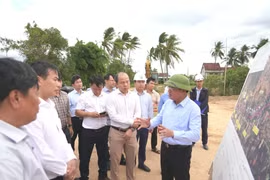
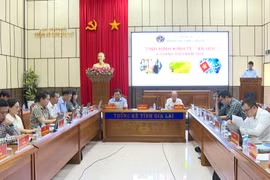
Amid growing challenges from climate change and geopolitical tensions, agriculture has become a critical sector shaping energy security, food supply, and trade across Vietnam and the wider region. In response, Gia Lai is prioritizing integrated investment models that combine production, processing, and export with advanced technologies.
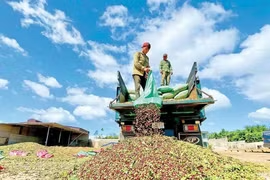
The province holds significant agricultural advantages, with more than 108,000 hectares of coffee, including over 56,000 hectares certified under international standards such as 4C, Rainforest Alliance, and organic labels.
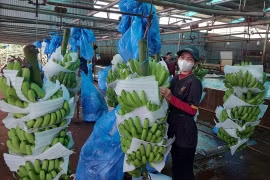
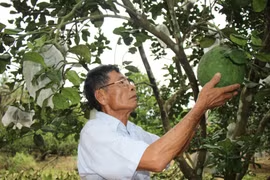
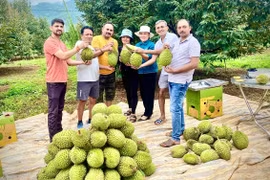
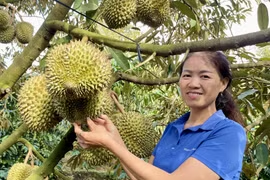
Passion fruit cultivation spans approximately 5,650 hectares, exporting to major markets including China, the EU, the United States, Japan, and South Korea. Durian, though a newer crop, has expanded rapidly to more than 9,200 hectares, producing nearly 57,700 tonnes annually.
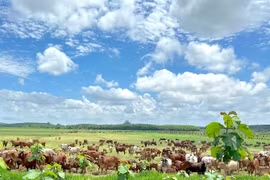
Livestock farming is also expanding, with 790 farms recorded by early 2026, including nearly 150 large-scale operations.

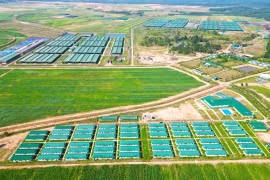
To reduce risks and improve efficiency, Gia Lai is focusing on building standardized raw material zones linked to deep processing and export chains. Authorities are accelerating digital transformation, including planting area codes and traceability systems, to meet international standards and enhance product quality control.
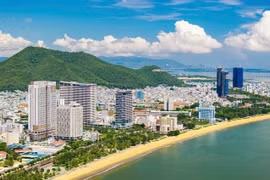
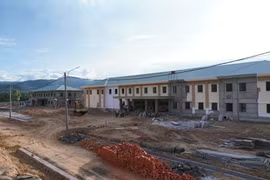
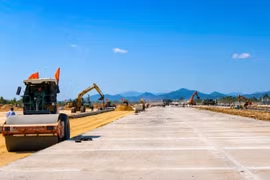
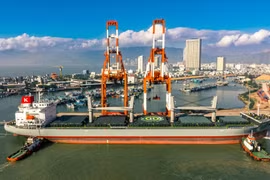
The province has emerged as an increasingly attractive investment destination, supported by its strategic location connecting the Central Highlands with coastal regions.
Within less than a year of administrative restructuring, Gia Lai attracted 192 projects with total registered capital exceeding VND 160 trillion (approximately USD 6.3 billion), including 16 foreign-invested projects. Around 3,000 new enterprises were established, with combined capital of VND 27 trillion (approximately USD 1.06 billion).
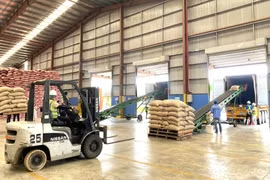
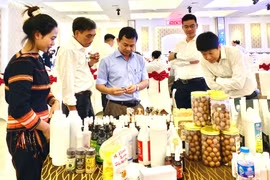
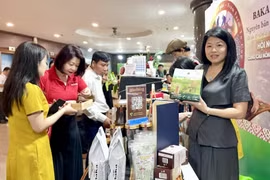
Agricultural trade has expanded to more than 40 countries and territories, with the sector ranking fifth nationwide. Local companies are also gaining prominence, with Vinh Hiep Co., Ltd. leading Vietnam’s coffee exports.

At the national level, Vietnam has become one of the world’s leading agricultural exporters, reaching over 190 markets. Over the past decade, the country has intensified efforts to transition toward greener, more sustainable agriculture, with a strong focus on climate adaptation and mitigation.
However, the sector continues to face structural challenges. Crop production remains heavily dependent on weather conditions, and limited application of advanced technologies, particularly in post-harvest preservation and deep processing, has constrained product value.
Experts emphasize that investing in scientific and technological solutions is critical. Improved preservation and processing technologies can significantly enhance export value, reduce losses, and ensure product consistency.

International examples highlight this potential. In South Korea, post-harvest preservation extends tomato shelf life from seven to 20 days. In Malaysia, durians reach Chinese markets within two days, achieving higher and more stable prices than Vietnamese products.
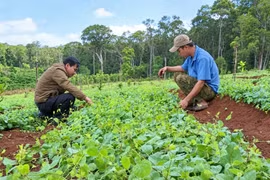
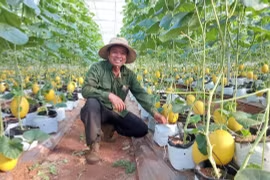
Drawing on such experiences, Vietnamese enterprises are increasingly adopting advanced farming techniques. Companies are implementing net-house systems, modern irrigation, and organic fertilizers under circular agriculture models to improve productivity and product quality.
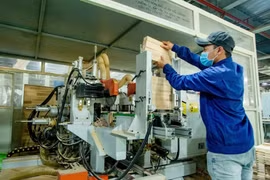
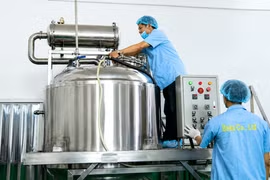
Investment in processing technology is also rising. Firms such as Vinamit JSC and Green Tropical Import-Export Processing JSC have deployed freeze-drying technology to produce processed fruits that retain natural flavor, color, and nutrients while meeting export standards.

Although these technologies require substantial capital, they deliver higher added value and reduce post-harvest losses, reinforcing their long-term economic benefits.
Authorities are now promoting a shift from a “production mindset” to an “agricultural economic mindset,” emphasizing sustainability, clean production, and integration into global value chains. This approach combines high technology, digital transformation, and region-specific agricultural planning.
At the same time, policymakers are encouraging multi-value agriculture models that integrate ecological farming with tourism, aiming to attract investors with strong financial and technological capabilities.
Despite these advances, barriers remain. Not all businesses, cooperatives, and farmers have the resources to adopt high-tech solutions. As a result, stronger linkages across the value chain, between producers, processors, distributors, and exporters, are seen as essential to unlocking the sector’s full potential.
---------------
(*) Vice Chairman of the Vietnam Association of Farms and Agricultural Enterprises, Head of the Central and Central Highlands Representative Office.