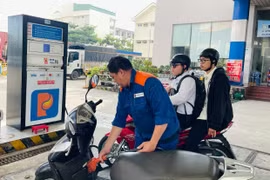
The transition marks a major step in the province’s strategy to develop sustainable fuels and support long-term low-emission growth, with businesses completing infrastructure upgrades and consumers gradually becoming familiar with the new fuel.
Petrolimex Gia Lai One Member Limited Liability Company said it has largely completed preparations for storage systems, blending infrastructure, ethanol supply and technical equipment required for E10 gasoline production and distribution.
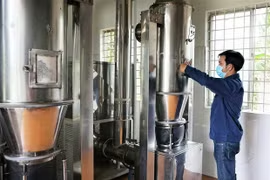
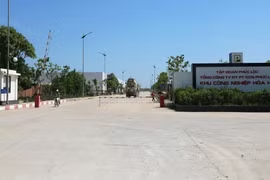
At the Phu Hoa petroleum depot in Quy Nhon Bac Ward, the company has finalized preparations for base gasoline tanks, ethanol storage facilities and supporting machinery to ensure uninterrupted supply during the transition.
The company began pilot sales of E10 gasoline at selected high-volume retail stations in central areas on May 12, ahead of a network-wide rollout scheduled for May 25. Since May 15, Petrolimex Gia Lai has also supplied E10 RON 95-III gasoline to distributors and franchise operators.
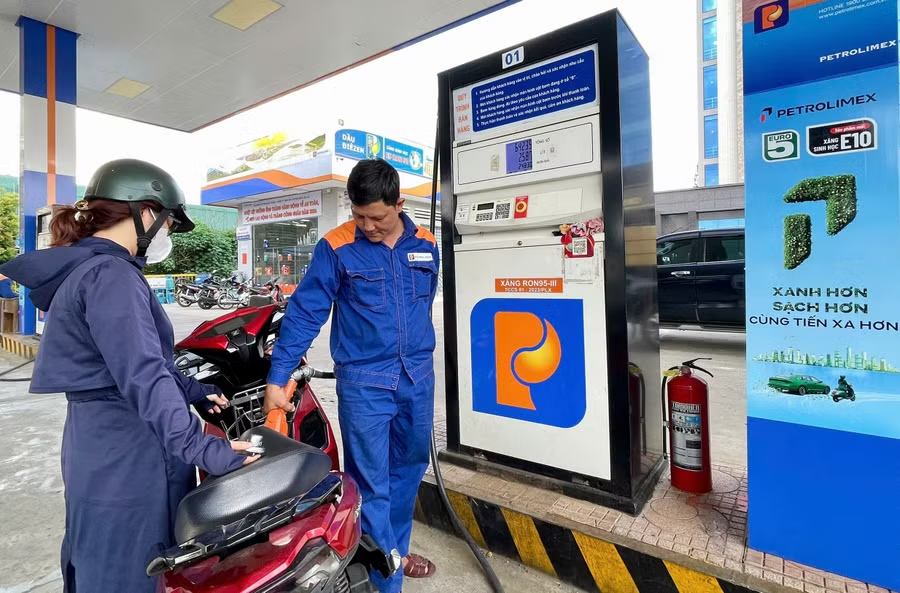
Petrolimex Gia Lai currently operates 113 company-owned outlets and the Petrolimex Pleiku Branch, alongside a wider distributor and franchise network. Once the transition is completed, the company expects monthly E10 biofuel consumption to reach between 9,500 and 10,000 cubic metres.
Phan Thanh Dao, head of technical management at Petrolimex Pleiku Branch, said stations switching to E10 gasoline must first sell all remaining conventional fuel, clean storage tanks thoroughly, and refill the system with E10 to ensure fuel consistency across tanks, pipelines and pumps.
He added that pump calibration, labeling and technical inspections are also being completed before sales begin.
Other fuel businesses in the province have also accelerated preparations.
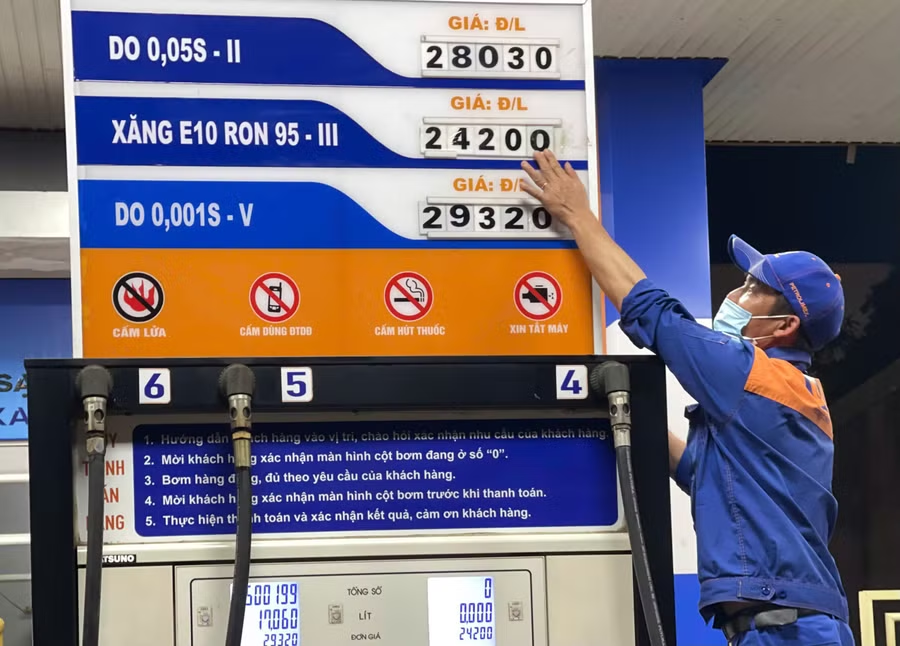
The Gia Lai branch of Phu Yen Petroleum Joint Stock Company began partially converting its system to E10 RON 95-III sales at seven retail outlets on April 2.
Meanwhile, the Central Highlands Military Petroleum Branch (MPC), which operates 22 company-owned stations along with agents and franchise outlets, has announced its own transition roadmap.
From May 20, MPC stations will sell both E10 RON 95-III and conventional RON 95-III gasoline in parallel before fully switching to E10 biofuel from June 1.
According to Nguyen Dinh Kha, deputy director of the provincial Department of Industry and Trade, gasoline consumption in Gia Lai currently averages about 2,000 to 2,200 cubic metres per day across a network of 10 major traders, 11 distributors and 733 retail stations.
Kha said businesses have proactively upgraded storage systems, tanks and blending facilities to meet biofuel requirements, adding that biofuel development would help reduce dependence on fossil fuels and support long-term energy security.
Alongside business preparations, consumers are also gradually adapting to the new fuel.
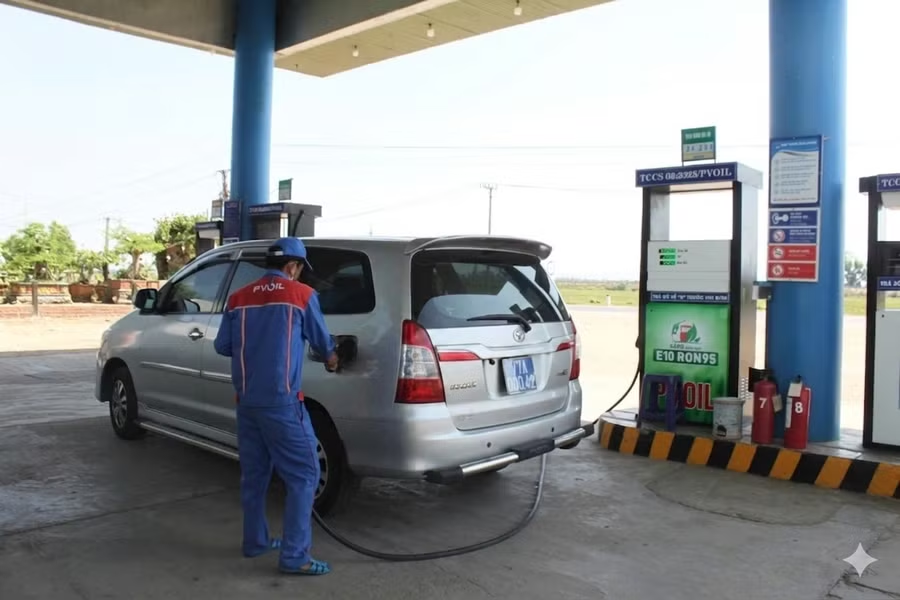
Hoa Binh Petroleum Station in Ayun Pa Ward, operated by the Gia Lai branch of Phu Yen Petroleum Joint Stock Company, has sold E10 RON 95 biofuel since April 18 while continuing to offer E5 RON 92.
Dang Thuong Tin, the station manager, said consumption of E10 gasoline has steadily increased since its launch, with daily sales currently averaging about one cubic metre.
However, some hesitation among consumers remains, prompting station staff to explain the benefits and characteristics of the new fuel directly to customers.
Tin said E10 RON 95 biofuel is currently sold at around 600 Vietnamese dong ($0.02) per litre less than traditional RON 95 gasoline, a price difference he expects will encourage more drivers to switch.
Nguyen Ba Liem, a resident of Ayun Pa Ward, said his vehicle had operated smoothly after several uses of the new fuel, although he believed more time was needed to fully assess quality.
“With environmental benefits as well, I think more people will gradually trust and use it,” he said.
Another consumer, Nay Nguyen from Ia Rbol Commune, said he decided to test the fuel out of curiosity and hoped its performance would remain stable.
Industry officials and businesses say the biggest challenge facing E10 biofuel is not supply or technology, but consumer confidence.
They noted that E5 gasoline previously required significant time to gain wider acceptance, and hope transparent communication, scientific information and positive customer experiences will help E10 achieve broader adoption.
As Vietnam’s transition toward greener energy accelerates, the introduction of E10 gasoline represents not only a change in fuel supply, but also a broader shift among businesses and consumers toward sustainable development.