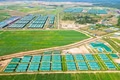
Since the early 1980s, thousands of households from northern and central provinces relocated to newly established economic zones, including Ia Hrung, Ia Ko and Ia Lau communes.
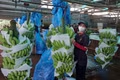
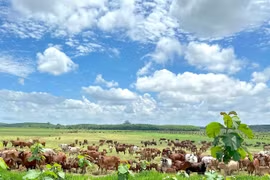
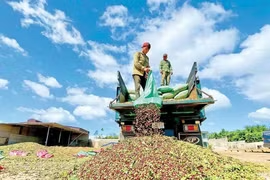
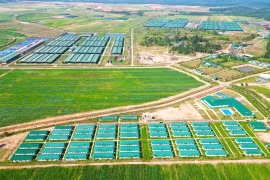
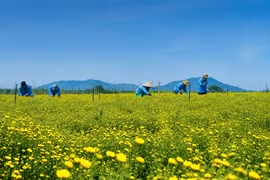
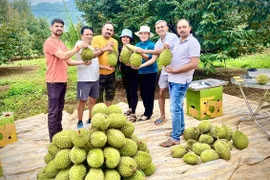
What began as subsistence farming on harsh terrain has evolved into large-scale cultivation of coffee, pepper and fruit, forming the backbone of the local economy.
In Ia Hrung commune, over 2,000 migrants arrived in the early years, enduring malaria, poor infrastructure and limited resources. Many initially worked on plantations or cleared land themselves. Over time, farms expanded and production diversified.
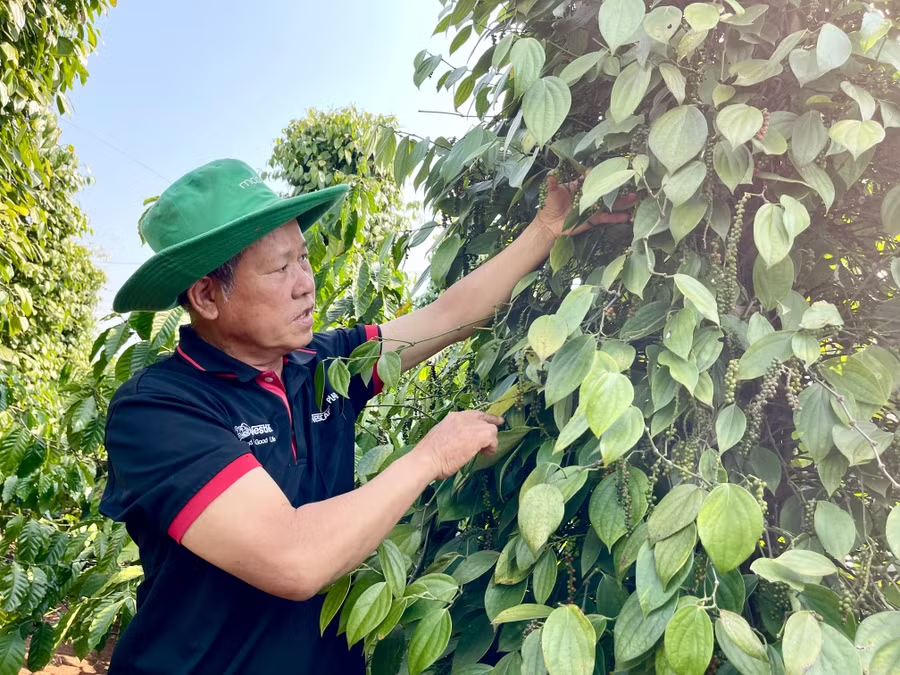
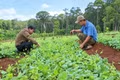
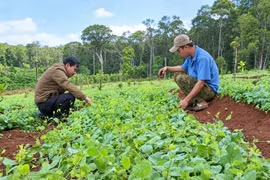
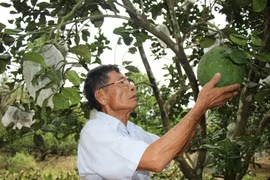
Farmers such as Duong Xuan Duc, who migrated from Ha Tinh in 1984, developed multi-hectare farms before adapting to market volatility by scaling down and diversifying crops. Similarly, Nguyen Tat Tiem rebuilt his livelihood after crop disease wiped out his pepper plants, eventually stabilising income through coffee cultivation.
Agricultural practices have also shifted. Farmers increasingly join cooperatives and adopt standardised production models. Participation in programmes such as Nestlé’s 4C-certified coffee initiative has helped raise yields by around 30%.
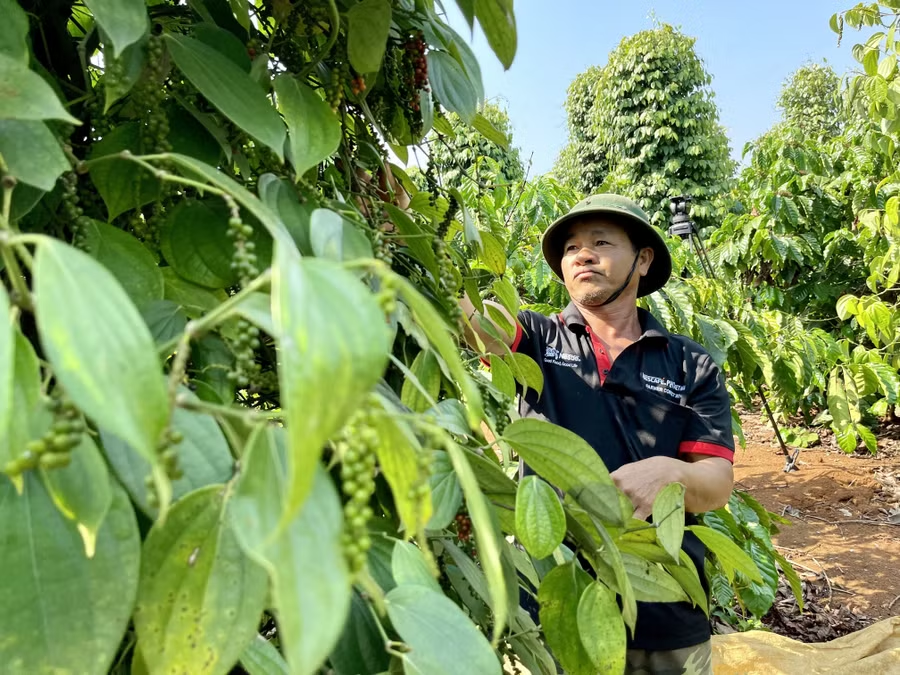
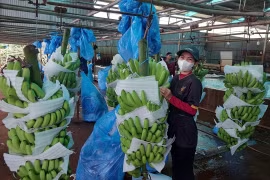
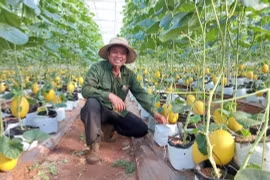
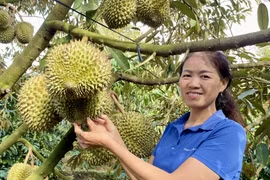
Across the province, households have moved from single-crop farming to diversified models combining coffee, pepper and fruit trees. In Ia Ko commune, one family expanded from pepper farming into a 20-hectare mixed plantation generating billions of dong annually.
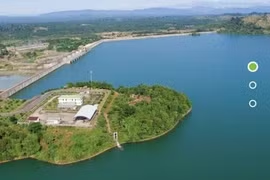
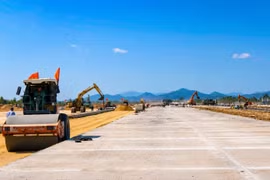
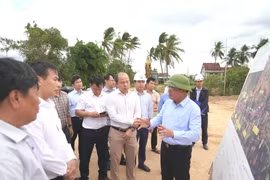
Government investment has played a key role. Infrastructure upgrades and irrigation projects since the 1990s have improved productivity, while more than VND250 billion (about $9,800,000) in funding between 2021 and 2026 has further boosted rural development.
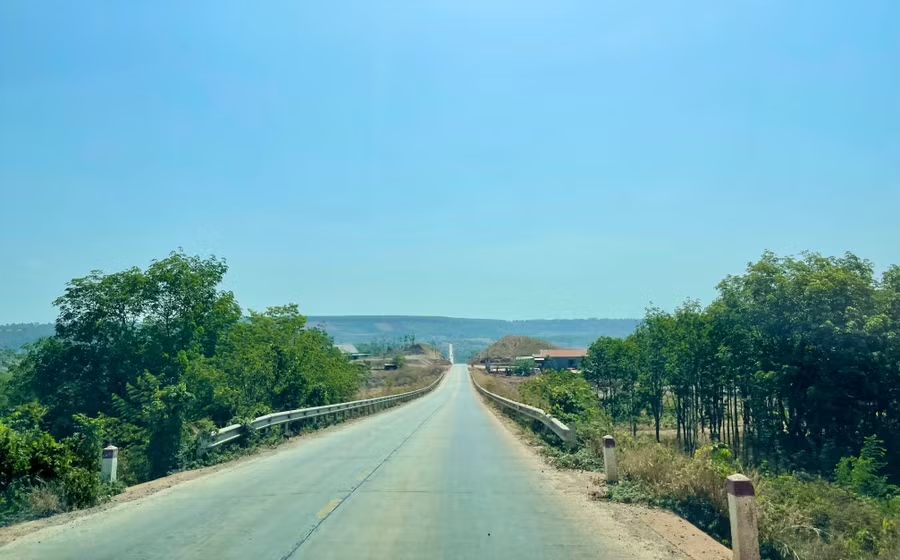
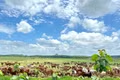
Today, once-isolated settlements have grown into stable communities, with rising incomes and no remaining poor households in some areas. Improved crop prices in recent years have also strengthened financial security.
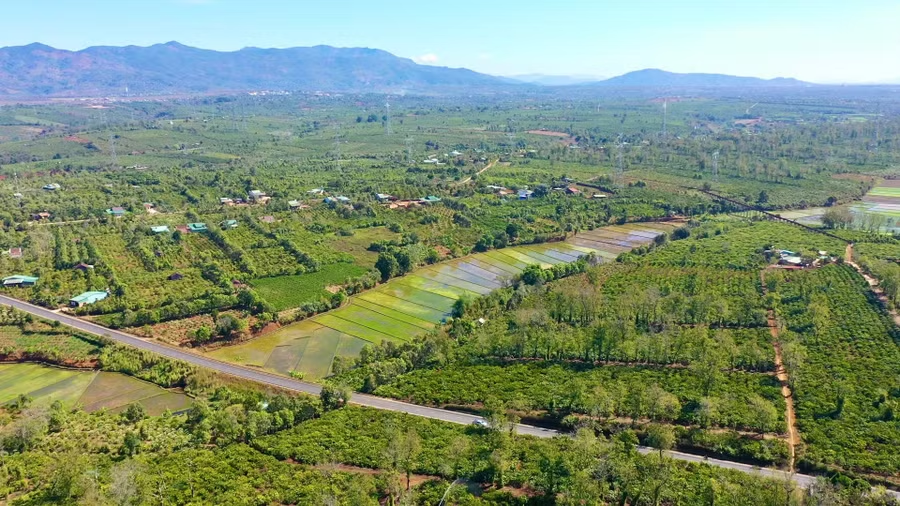
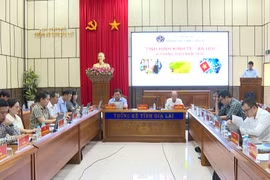
The experience of Gia Lai reflects a broader shift from subsistence to commercial agriculture, underscoring how migration, persistence and adaptation have reshaped the region into a sustainable rural economy.