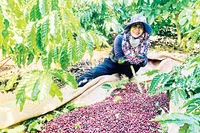
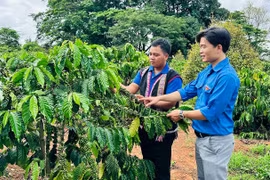
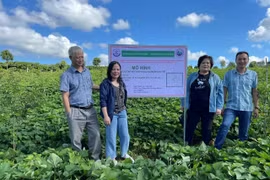
The shift comes as erratic weather patterns, ranging from unseasonal rainfall to prolonged drought, continue to disrupt production in one of the country’s key coffee-growing regions.
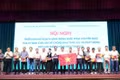
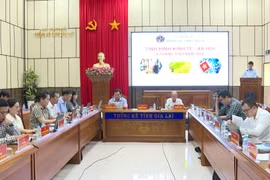
The initiative is part of the “Reducing Climate Risks for Coffee Crops” project, launched in late 2025 by Atlantic Vietnam Trading Co., Ltd. (ACOM), Bao Minh Insurance Corporation and the International Center for Tropical Agriculture (CIAT).
Gia Lai is home to more than 110,000 hectares of coffee plantations, producing around 365,000 tonnes of green coffee beans annually and generating approximately $1.5 billion in export revenue in 2025. However, recent climate volatility has directly affected yields and farmers’ livelihoods, prompting the adoption of new risk mitigation tools.
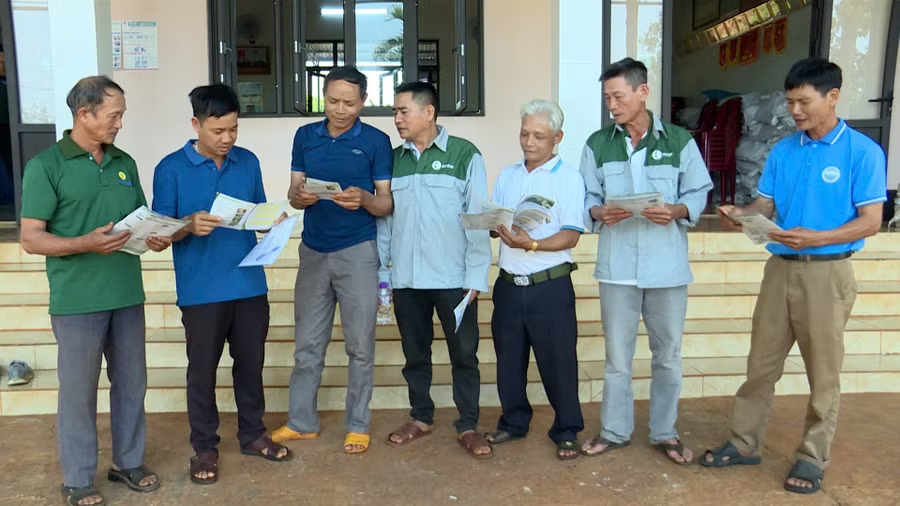
Under pilot schemes in communes including Chu Prong, Ia Hrung, Ia Chia and Ia Khai, farmers have enrolled in two insurance packages covering off-season rainfall and drought.
Unlike traditional policies, weather index insurance does not require field-based damage assessments. Instead, payouts are triggered automatically based on verified weather data such as rainfall and temperature, collected via satellite and monitoring systems.
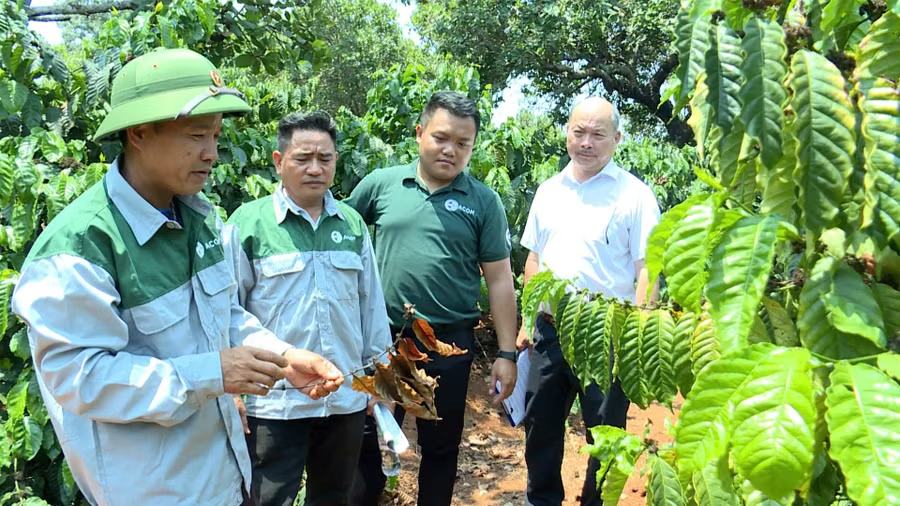
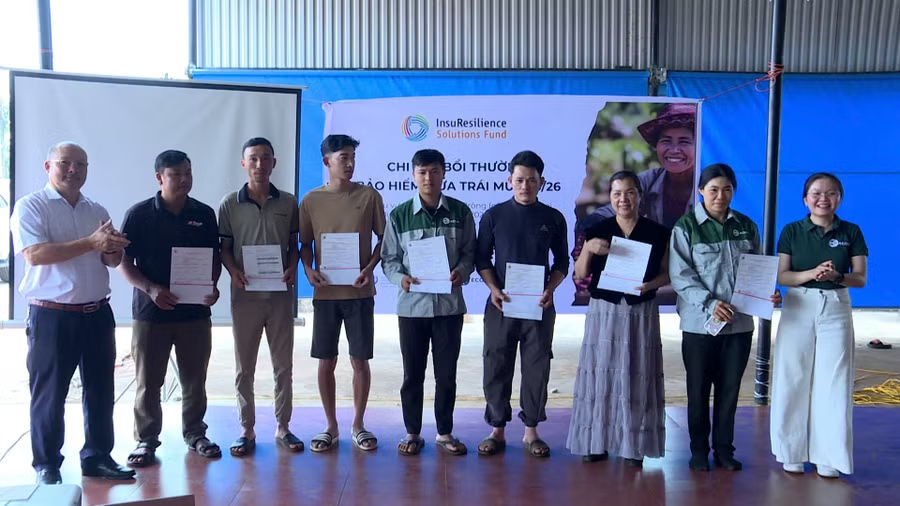
The model has already delivered tangible results. A total of 44 households participating in the off-season rainfall insurance programme, covering the period from November 1, 2025, to January 31, 2026, received compensation after rainfall levels exceeded predefined thresholds. Prolonged heavy rains in November 2025 were cited as the primary cause.
Project representatives say the system accelerates payouts, enhances transparency and reduces disputes. While compensation levels remain modest, timely financial support enables farmers to reinvest in production following adverse weather events.
The initiative is also driving a broader shift in farming practices. Many growers are moving beyond reliance on traditional experience, instead adopting financial instruments alongside climate-adaptive cultivation techniques introduced through training programmes.
As climate change continues to intensify, weather index insurance is expected to play a growing role in cushioning farmers against losses, stabilising output and supporting the long-term sustainability of Gia Lai’s coffee industry.