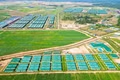
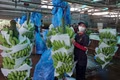
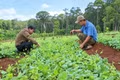
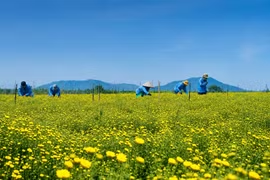
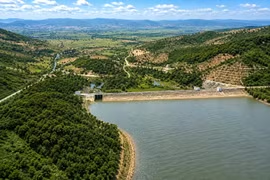
Provincial data shows more than 13,351 hectares of low-yield crops were converted in 2025, delivering economic gains two to five times higher than previous plantings.
Officials said the restructuring aims to improve land-use efficiency, raise farm incomes, and strengthen long-term agricultural resilience. The 2026 plan targets conversion of another 8,000 hectares, including over 3,700 hectares to fruit trees and 4,200 hectares to vegetables, beans, and medicinal plants.
Practical outcomes from several communes show significant income improvements when land is matched with high-value crops and supported by technical guidance.
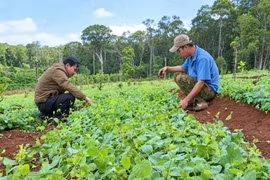
Binh Hiep Commune has emerged as one of the province’s most successful cases. Since 2022, it has replaced around 450 hectares of low-yield rice and cassava with peanuts.
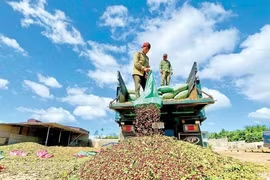
Peanuts, which can be grown two to three times annually, yield 2.2–2.5 quintals per sao, with selling prices of 25,000–37,000 VND (USD 1–1.48) per kilogram. Profits reach 4.5–5 million VND (USD 180–200) per sao—triple that of rice and up to six times higher than cassava.

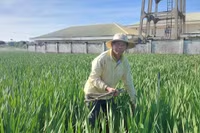
Farmers report similar gains. Bui Ba Tao, from Thuan Hanh hamlet, said converting 12 sao of low-yield rice land to peanuts produces more than 2.5 tons per crop, boosting profits to over 30 million VND (USD 1,200) per harvest—three times higher than rice.
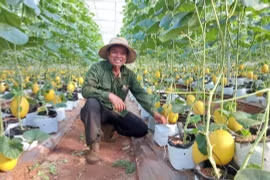
Ia Pa Commune restructured more than 990 hectares in 2025, shifting rice fields lacking irrigation and low-yield cashew and cassava to sugarcane, tobacco, watermelon, and mulberry. Mulberry and silkworm farming now generates monthly profits exceeding 30 million VND (USD 1,200) per hectare, more than triple the revenues from rice or cashew.
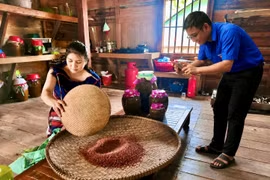
In Chu A Thai Commune, farmer Tran Van Them replaced 1.2 hectares of low-yield cashew with mulberry and silkworm raising. Each 15-day silkworm cycle, repeated three to four times monthly, sells at 180,000–200,000 VND (USD 7.2–8) per kilogram, generating 30–40 million VND (USD 1,200–1,600) per month—far surpassing cashew income.

Shifts to perennial fruit crops are also rising. Lai Quang Huan in Ia Cha Wau village replaced 10 hectares of sugarcane with Australian mango and longan, harvesting nearly 30 tons annually. With selling prices of 25,000–30,000 VND (USD 1–1.2) per kilogram, profits reach 500–700 million VND (USD 20,000–28,000) each year, doubling previous sugarcane revenues.
In Ia Krel Commune, authorities plan a long-term transition from cashew to coffee and fruit trees. Despite over 2,000 hectares of cashew, yields average only 1–1.5 tons per hectare, generating farmer incomes of 40–60 million VND (USD 1,600–2,400) per hectare before costs. Coffee, however, yields more than 3 tons per hectare and brings profits of 150–200 million VND (USD 6,000–8,000). The commune intends to convert about 700 hectares of cashew, starting with 10 hectares per year through 2030.
De Gi Commune has shifted more than 530 hectares of low-yield rice to corn, chili, onion, and peanuts, and plans to convert an additional 5–7 hectares to medicinal plants in 2026. Local authorities will expand agricultural extension services, promote organic fertilizers, biological pesticides, and efficient irrigation systems.
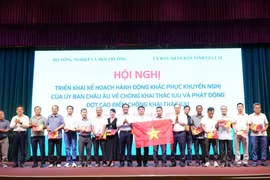
The Provincial Agricultural Extension Center deployed 14 pilot models in 2025 across shallots, chili, rice, mung beans, biomass corn, coconut, coffee, mango, and Solanum procumbens. Most demonstrated higher productivity on previously low-yield land. The center plans to scale up demonstration models and technological applications to support sustainable restructuring.