In Phú Túc commune, 125 households from Ia Prông, Ia Rnho, Ia Rpua and Ama Giai villages are contracted to protect more than 2,180 hectares of forest. By assigning clearly demarcated plots to individual families, local authorities have effectively created a grassroots forest protection force capable of detecting and preventing violations in a timely manner.
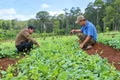
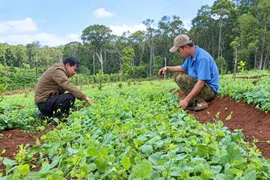
Alê Tùng, from Ia Rnho village, is among the exemplary participants. His family is responsible for nearly 19 hectares of protective forest in subzone 1346, plot 6, located about 10 km from his home. Tùng conducts monthly patrols, increasing to up to four inspections a month during the peak dry season from February to June to monitor fire risks. Trained in GPS satellite mapping software, he can quickly respond to abnormal alerts and verify conditions on the ground.
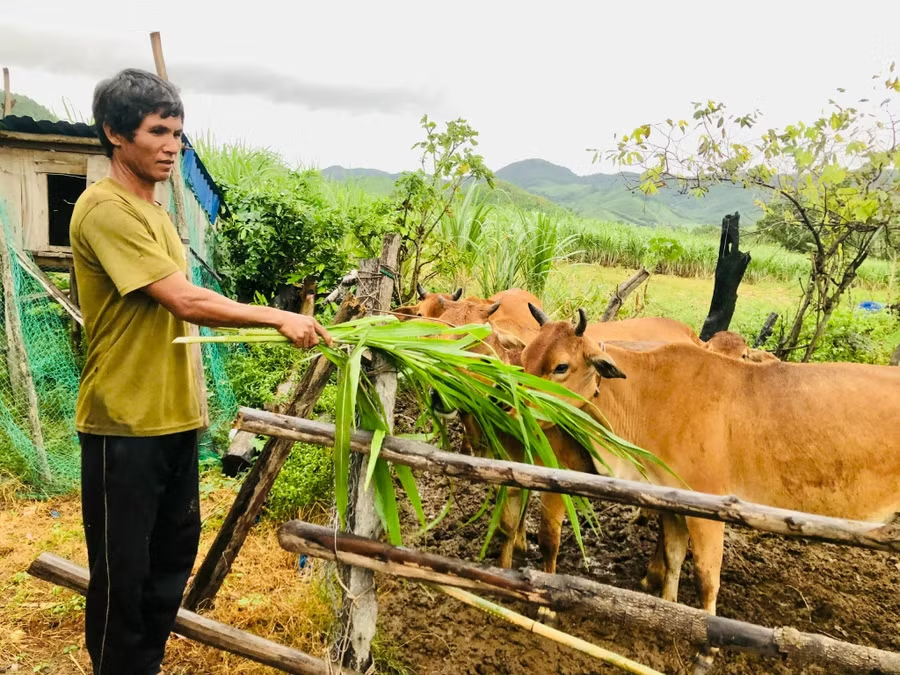
Beyond patrols, Tùng works with forest rangers to encourage nearby farming households to commit not to clear or burn forest land and to report unusual activity. Local awareness campaigns, he said, have helped residents better understand their responsibilities.
Nearby, Kpă Riem’s family has managed almost 16 hectares of forest since 2023. Despite difficult terrain and high travel costs, Riem views forest protection as a long-term obligation. “Seeing the forest green again has raised awareness”, he said, adding that future models such as cultivating medicinal plants under forest canopies could further strengthen community commitment.
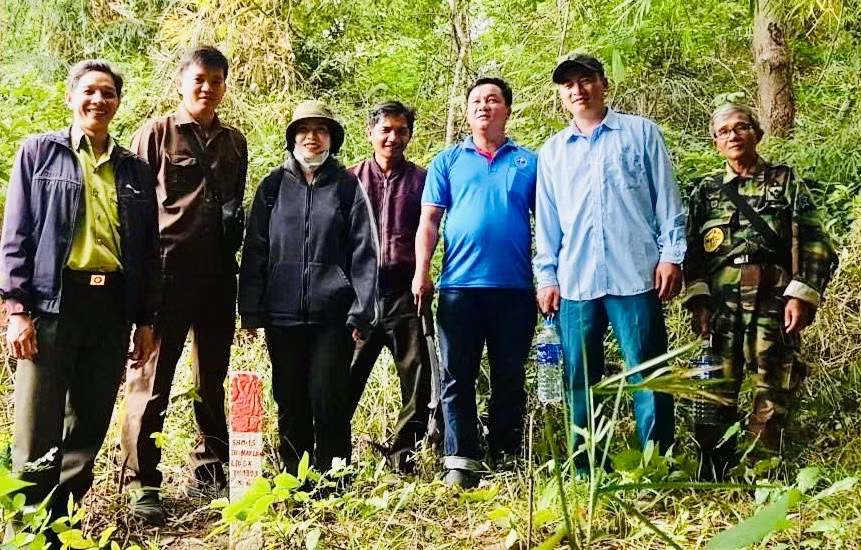
According to Trịnh Thanh Khiết, Deputy Secretary of the Phú Túc Commune Party Committee, assigning forest land to households has reduced violations by raising accountability at the grassroots level. In 2024, the commune also launched a livelihood model linked to sustainable forest management.
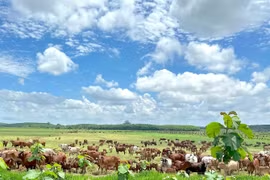
The Vietnam Fatherland Front Committee of the former Krông Pa district provided 108 million VND (about USD 4,500) to nine poor and near-poor households in Ama Giai village to purchase livestock. Many families now have additional calves, improving incomes and reinforcing long-term forest stewardship, Khiết said.
Similar results have been recorded elsewhere. In Ia Dreh commune, eight community groups managing more than 2,040 hectares underwent forest acceptance checks in 2025, with 100% compliance and no encroachment or violations reported.
Nay Phơr, head of the Kơ Jing village community group, said his 17-member team manages 218.1 hectares. “When the forest is assigned to the community, people treat it as a shared asset,” he said, noting that regular patrols and prompt reporting of outsiders have helped stabilize payments from forest environmental services.
Võ Thúy Vân, Chairwoman of the Ia Dreh Commune People’s Committee, said community-based forest management has proven suitable for local conditions, with residents becoming more proactive in protection efforts. Authorities plan to continue strengthening coordination while linking conservation with stable livelihoods.
In Uar commune, forest protection contracts now cover more than 1,310.2 hectares through six community groups and six households. Nguyễn Thanh Vân, Vice Chairman of the commune, said clearly defined boundaries have markedly improved residents’ sense of responsibility and effectiveness in forest patrols.