As Vietnam moves toward its net-zero emissions target by 2050 and gradually establishes a national carbon market, forests have been identified as a key pillar due to their long-term capacity to absorb and store carbon dioxide (CO₂). Gia Lai, one of the Central Highlands’ most forest-rich provinces, is considered well-positioned to capitalize on this opportunity.
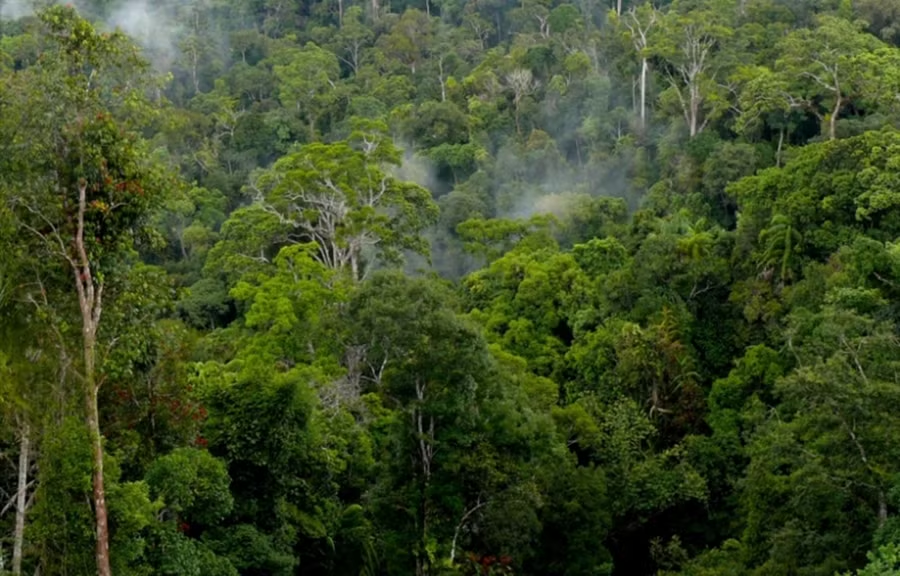
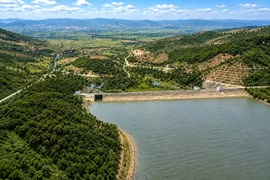
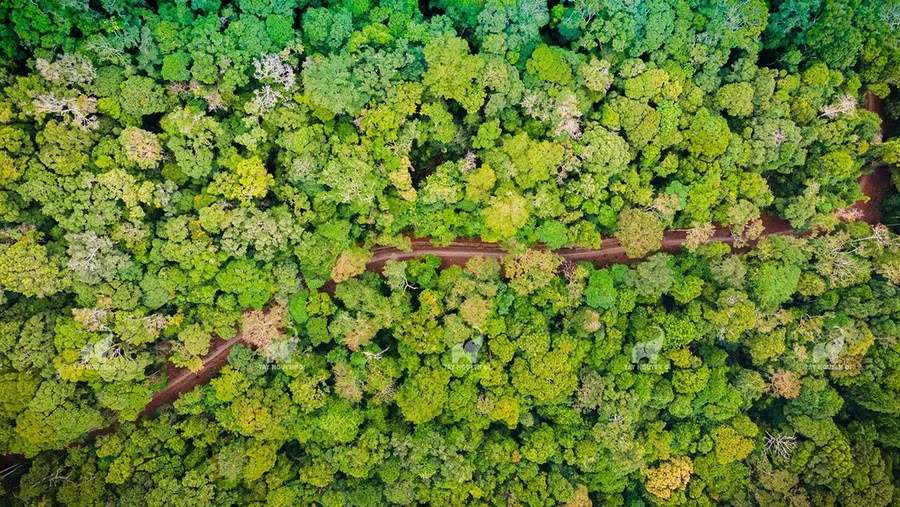
The province covers more than 2.15 million hectares, including nearly 988,000 hectares of forest land. Of this, over 692,000 hectares are natural forests and more than 295,000 hectares are planted forests. This scale, combined with diverse terrain and ecosystems, provides a significant advantage in carbon absorption and storage—an essential prerequisite for carbon credit trading.
According to Trương Thanh Hà, Deputy Director of the Gia Lai Provincial Forest Protection Department, forests in the Central Highlands absorb an average of 4–6 tons of CO₂ per hectare annually, depending on forest type and condition. Using a midpoint of around 5 tons per hectare, Gia Lai’s forests could absorb approximately 4.9 million tons of CO₂ each year.
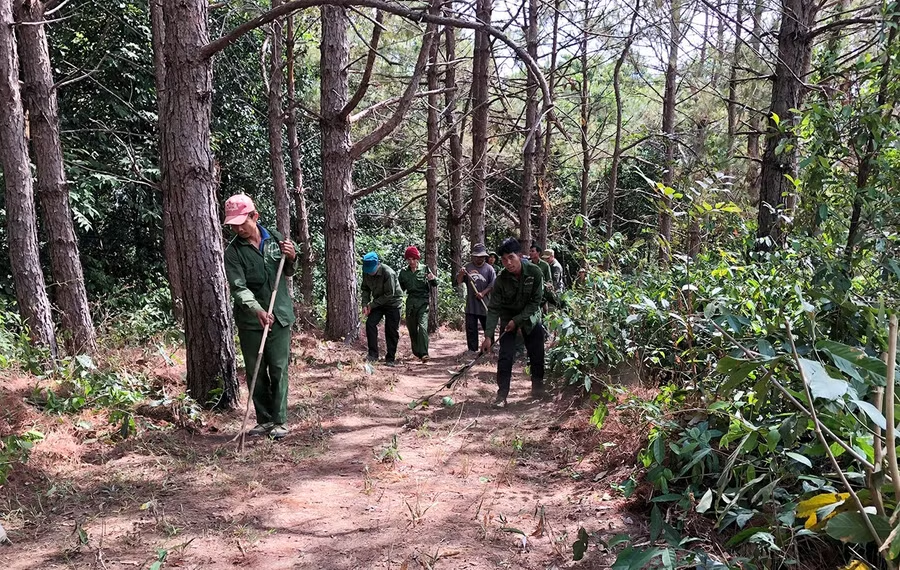
If this volume were converted into carbon credits and traded at a reference price of about USD 10 per ton, the potential economic value could reach tens of millions of dollars annually. However, Mr. Hà stressed that any development must be carried out cautiously, sustainably, and in line with regulatory requirements.
Recognizing the opportunity, Gia Lai has joined national and international initiatives to reduce greenhouse gas emissions from forests, including participation in the Emission Reductions Purchase Agreement (ERPA) for the Central Highlands and South Central Coast regions.
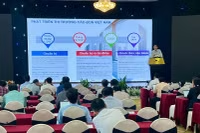
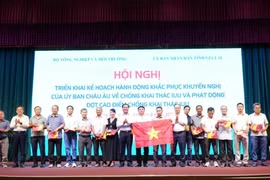
To implement ERPA locally, the provincial Department of Agriculture and Environment has coordinated with consultants, specialized agencies, and the Forest Inventory and Planning Institute to survey, verify, and appraise emission reduction results. Conferences and workshops have also been held to ensure transparency and consensus among authorities, forest owners, and local communities.
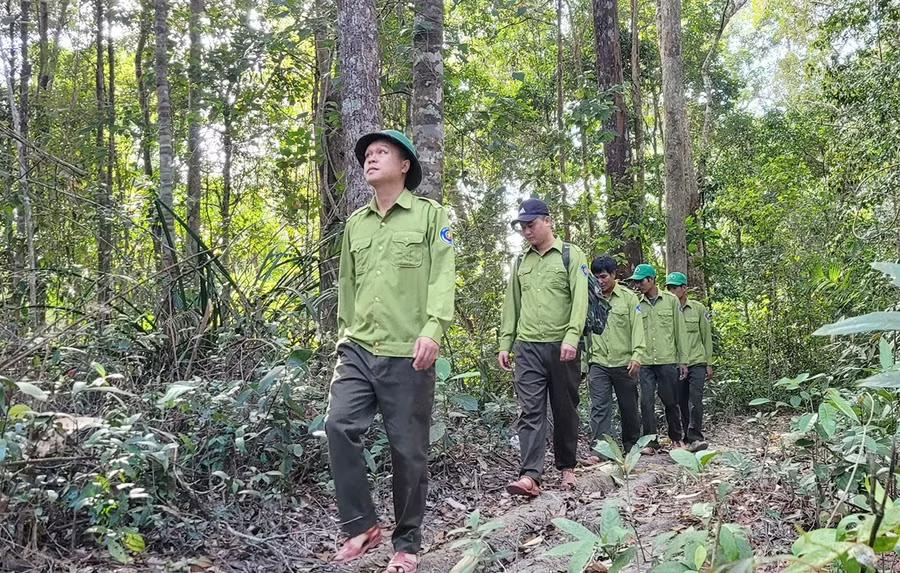
Industry assessments indicate that participation in the carbon market involves more than selling credits. It requires standardized forest management, emissions monitoring, and transparent data systems—steps seen as essential for Gia Lai’s deeper integration into domestic and international carbon markets and for enhancing the forestry sector’s role in the green economy.
On the ground, forest carbon projects are already being viewed as a tool to support conservation and improve livelihoods. Kon Ka Kinh National Park, which manages more than 42,000 hectares of mainly natural forest with high biodiversity, is considered a promising area for carbon market participation.
Ngô Văn Thắng, Director of the park, said revenue from carbon credits could strengthen conservation funding while supporting local communities through forest protection contracts, sustainable livelihood programs, and ecotourism development. Increased legal income, he noted, helps reduce pressure from illegal forest exploitation and creates a positive cycle between conservation and development.
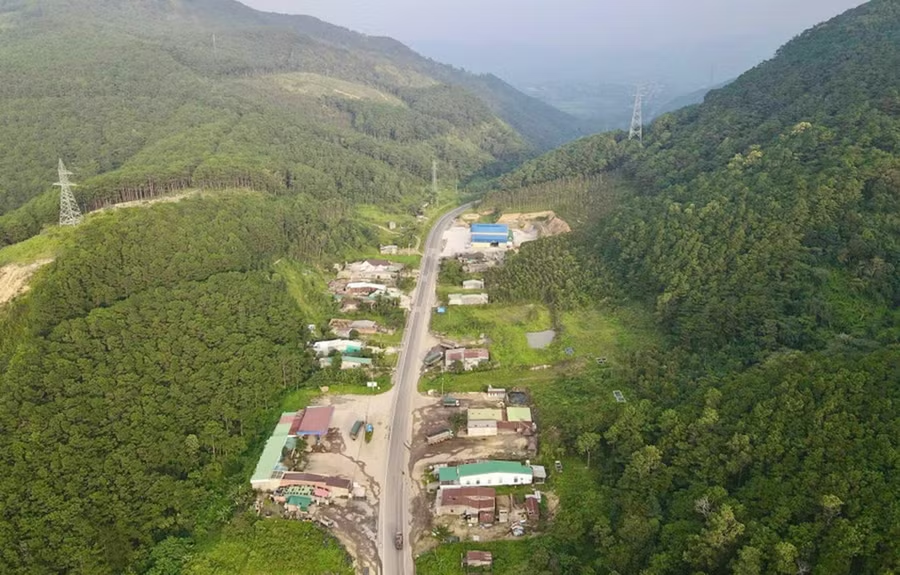
Carbon credit development is also expanding beyond special-use forests. Ecotree Group Joint Stock Company has surveyed and assessed cooperation potential with forest owners in Gia Lai to pilot a carbon credit project in planted forests.
The planned investment area covers about 155,000 hectares, including bare land, planted forests, and poor regenerating forests, with an estimated carbon yield of 15–30 tons of CO₂ per hectare per year, depending on the project phase.
Lê Thanh Tùng, Chairman and General Director of Ecotree Group, said carbon credit sales could increase income from emission reductions while incentivizing sustainable afforestation and forest restoration. The company has committed to investing in planting activities without reclaiming funds already disbursed to local people and forest owners, aiming to foster long-term cooperation among businesses, communities, and forest managers.
From a forest management perspective, Nguyễn Văn Hùng, Director of the Mang Yang Protection Forest Management Board, said that if businesses support afforestation costs, sponsor surveys, and purchase carbon credits at around USD 10 per ton of CO₂, forest owners and local residents could secure more stable incomes, strengthening forest protection efforts.
According to Mr. Hà, trading forest carbon credits could create new revenue streams for both the state budget and forest owners while serving as a key driver for sustainable forest protection and development. With its extensive forest resources and coordinated efforts across sectors, Gia Lai’s forest carbon market is expected to become a new pillar of the province’s forestry sector, safeguarding green assets while generating long-term socio-economic value.