Provincial authorities say the restructuring of the growth model is designed to secure long-term sustainability and competitiveness, anchored by high-tech agriculture, clean energy and modern logistics.
Agriculture shifts to global standards
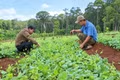
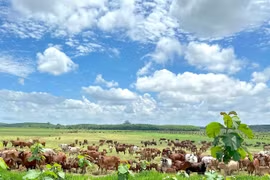
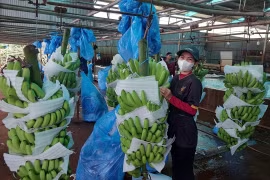
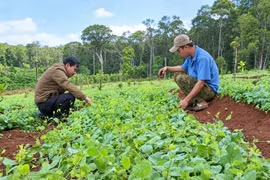
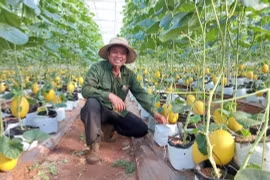
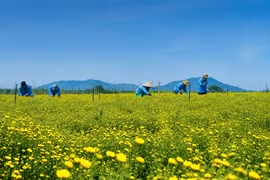
With around 977,000 hectares of agricultural land and an annual cultivated area of 771,000 hectares, the second largest nationwide, Gia Lai has a substantial base for agro-forestry development. Officials are prioritising production linkages aligned with international sustainability standards, from planting area codes to brand building, to strengthen export capacity.
Đoàn Ngọc Có, Deputy Director of the Department of Agriculture and Environment, said effective standardised production chains would allow the province’s products to access even the most demanding markets.
Provincial authorities say the restructuring of the growth model is designed to secure long-term sustainability and competitiveness, anchored by high-tech agriculture, clean energy and modern logistics.
Agriculture shifts to global standards
With around 977,000 hectares of agricultural land and an annual cultivated area of 771,000 hectares, the second largest nationwide, Gia Lai has a substantial base for agro-forestry development. Officials are prioritising production linkages aligned with international sustainability standards, from planting area codes to brand building, to strengthen export capacity.
Đoàn Ngọc Có, Deputy Director of the Department of Agriculture and Environment, said effective standardised production chains would allow the province’s products to access even the most demanding markets.
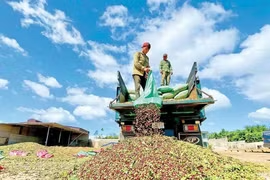
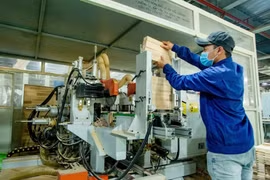
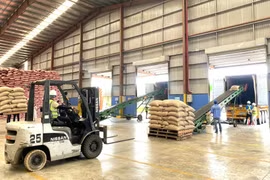
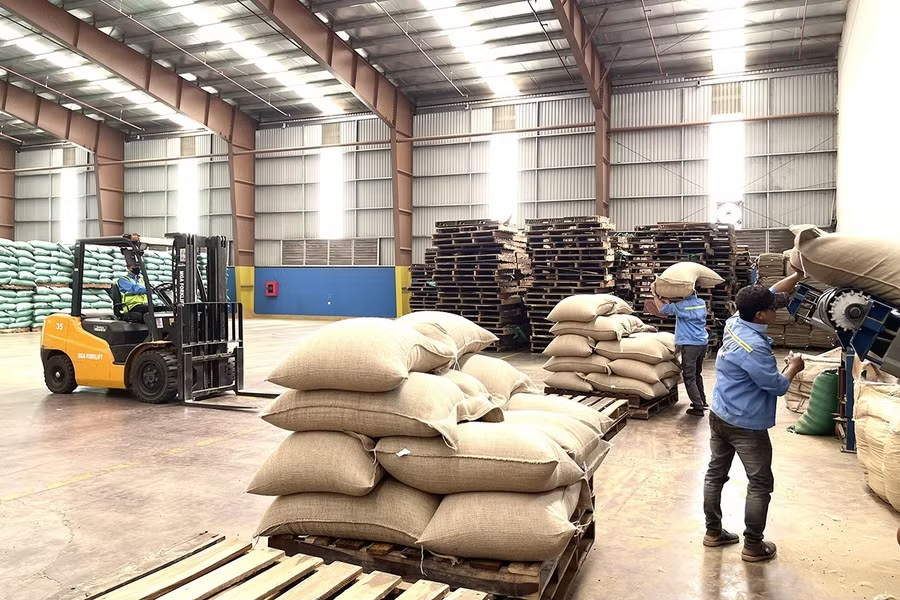
Coffee, rubber, wood and wood products are among Gia Lai’s key exports, with the European Union accounting for a significant share. The bloc’s implementation of the EU Deforestation Regulation (EUDR) has increased requirements for traceability and environmental responsibility, prompting local businesses to enhance transparency and sustainable practices.
Companies including Vĩnh Hiệp Co., Ltd., Tropico Tây Nguyên Coffee Co., Ltd., Tín Thành Đạt JSC and Chư Păh Rubber One Member Co., Ltd. have implemented projects aimed at protecting forest ecosystems while improving community livelihoods.
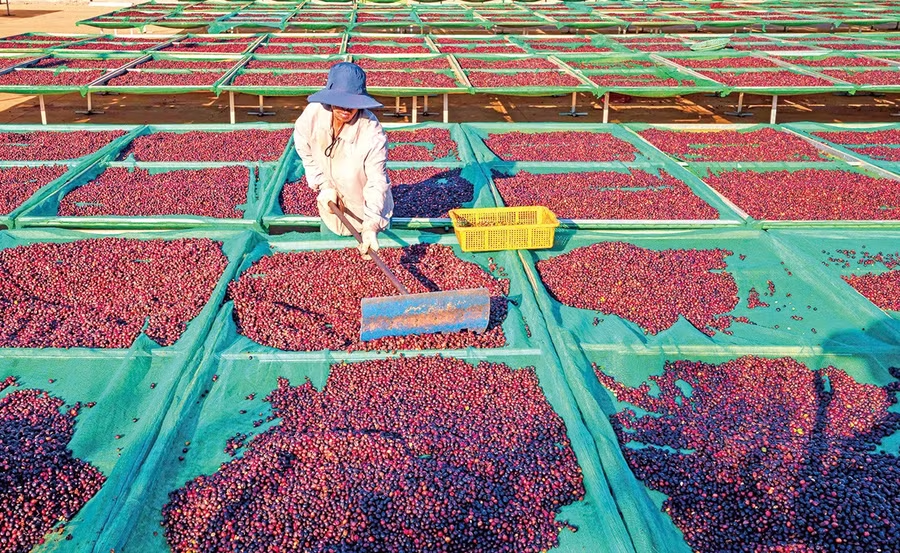
In the coffee sector, enterprises cooperating with international partners have adopted low-emission production models, complied with EUDR standards, joined the voluntary carbon market and secured certifications such as Rainforest Alliance, 4C and Organic.
Nguyễn Đặng Tuấn Minh, Director of KisStartup JSC, said a green export incubation and acceleration project implemented in Gia Lai with Tropico Tây Nguyên Coffee Co., Ltd. addresses quality standardisation, a major bottleneck for export agriculture while helping producers adapt to sustainability-driven market demands.
In the rubber industry, Chư Păh Rubber One Member Co., Ltd. recently announced products meeting EUDR requirements. General Director Lê Anh Tuấn described compliance as a strategic commitment to customers, markets and environmental protection, rather than merely a procedural step.
Renewable energy as growth engine
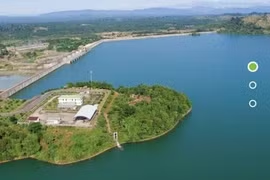
Alongside agricultural reform, Gia Lai is expanding renewable energy capacity in a bid to become the Central Highlands’ “green energy capital”.
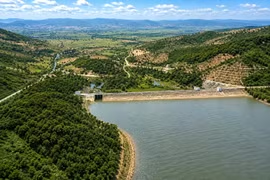
The province currently operates 61 hydropower projects with total capacity of 2,736 MW, 17 wind power projects totalling 916 MW, seven solar projects with 590 MWp, and two biomass plants generating 130 MW. Under the revised Power Development Plan VIII, renewable energy capacity allocated to Gia Lai for 2025–2030 is expected to exceed 6,500 MW.
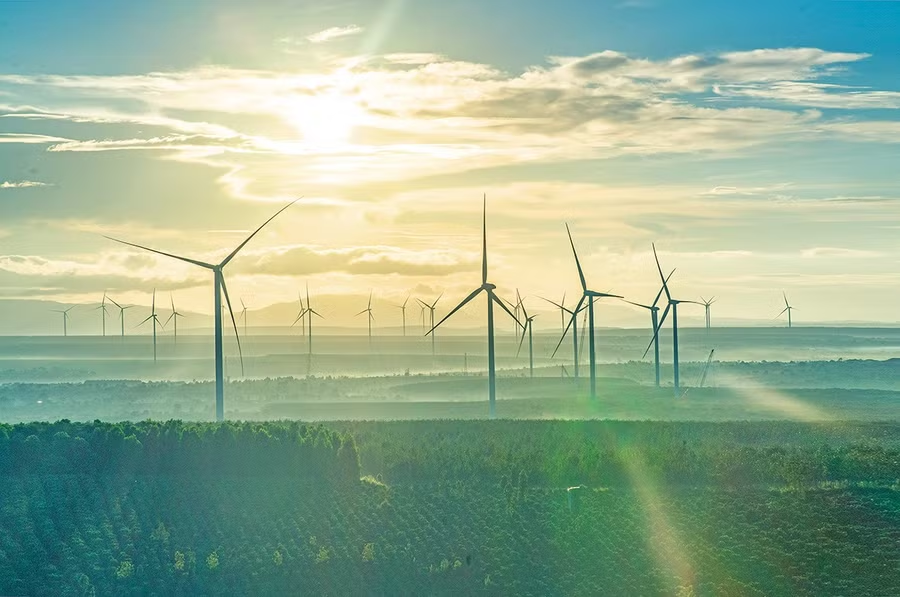
Trần Thúc Kham, Deputy Director of the Department of Industry and Trade, said renewable energy serves both as a growth lever and as a contribution to national energy security, with potential to support double-digit gross regional product growth between 2026 and 2030.
International investors have also signalled interest. Dissescou Cyril Thibaut Ioan, Chief Executive of NEXIF RATCH Energy SE Asia, said the Vân Canh Bình Định Wind Power Plant project, with a capacity of 143 MW and total investment of about VND 5,700 billion (approximately USD 224 million), is expected to begin construction in early 2027 and start commercial operations by mid-2028, generating around 392 million kWh annually.
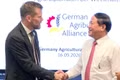
To strengthen the renewable energy ecosystem, the province has called for investment in a Renewable Energy Human Resource Training and Development Center. A consortium of GEO Group (Germany) and O-Door Vietnam Co., Ltd. has had its registration of interest approved, marking a step towards building a skilled workforce for long-term sectoral growth.
Infrastructure and investment pipeline
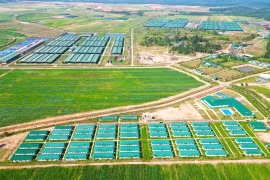
Gia Lai is simultaneously upgrading inter-regional transport, digital infrastructure and logistics to integrate production, processing and export.
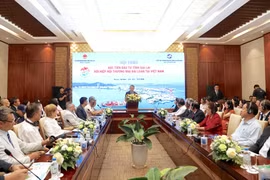
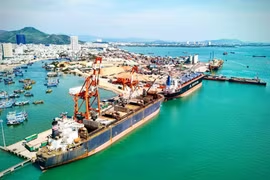
At the August 2025 Gia Lai Investment Promotion Conference, Trần Du Lịch, a member of the National Financial and Monetary Policy Advisory Council, described the province as an emerging market with significant potential. For 2026–2030, Gia Lai is inviting investment in more than 400 projects spanning industrial parks, digital and transport infrastructure, seaports and dry ports, logistics, renewable energy and export-oriented manufacturing.
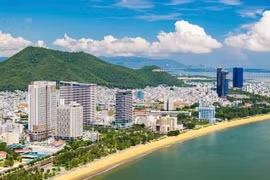
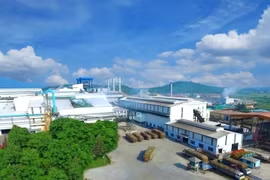
The 1st Congress of the Gia Lai Provincial Party Committee for the 2025–2030 term identified five economic pillars: processing and manufacturing as the backbone industry; tourism as a spearhead sector; high-tech agriculture and sustainable forestry; port and logistics services; and rapid, sustainable urban development linked to industrial and tourism real estate.
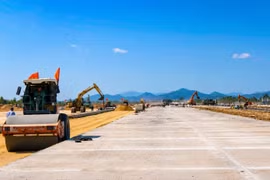
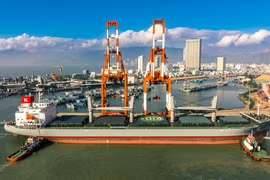
A key strategic project is the Quy Nhơn-Pleiku Expressway, forming an east–west corridor that connects the Central Highlands to seaport systems, enabling agricultural and industrial products to reach international markets more efficiently.
Provincial leaders say that, supported by coherent planning, business commitment and environmental safeguards, Gia Lai is transitioning from a raw material supplier to an integrated node in regional and international green value chains, aiming for sustainable, responsible growth aligned with evolving global standards.