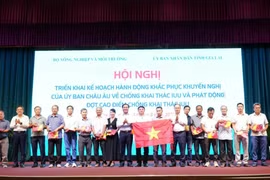
The directive reinforces earlier anti-IUU measures while placing greater responsibility on local leaders, tightening enforcement discipline and accelerating the application of technology in fisheries management. A central requirement is the development of a fisheries database that is “accurate, complete, clean, and live.”
Gia Lai has moved to strengthen its digital fleet management system in line with the directive. By the end of April 2026, the province had 5,765 registered fishing vessels measuring 6 meters or longer, including 3,158 offshore vessels, 1,802 inshore vessels and 805 nearshore vessels, according to the Department of Agriculture and Environment.
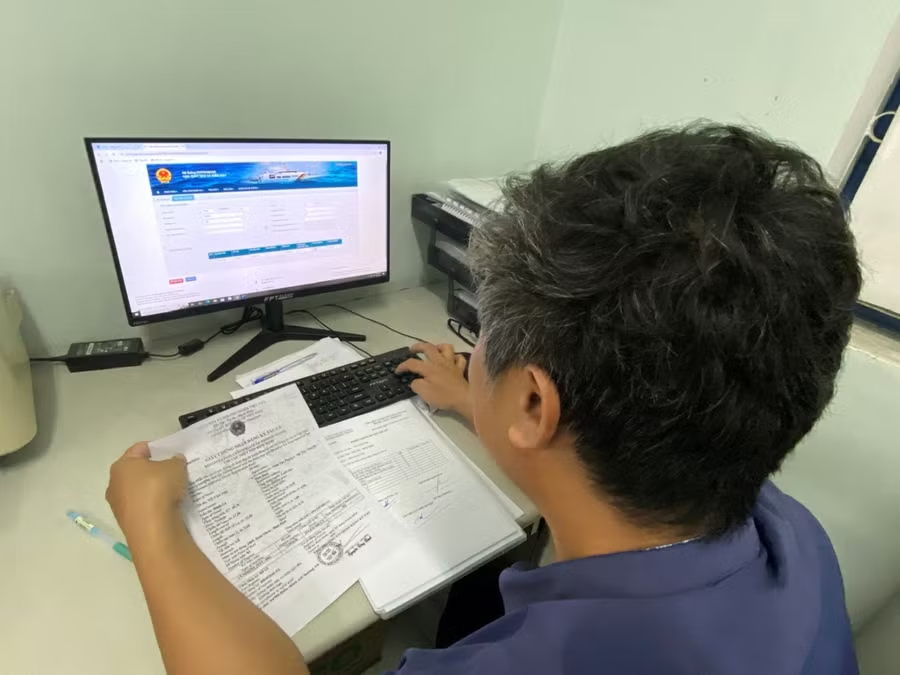
Authorities said all vessel data has been standardized and synchronized with the Vietnam Fisheries Database (VNFishbase) and the National Population Database (VNeID), forming the foundation for licensing management and voyage monitoring systems. Officials said the data-cleaning process also helps eliminate “ghost ships” and supports seafood traceability requirements set by the European Commission (EC).
The province said 100% of active fishing vessels have been licensed for exploitation. Electronic fishing logbooks have also been deployed on 3,257 of the province’s 3,966 vessels measuring 12 meters or longer, replacing manual record-keeping to improve transparency and reduce fraud risks.
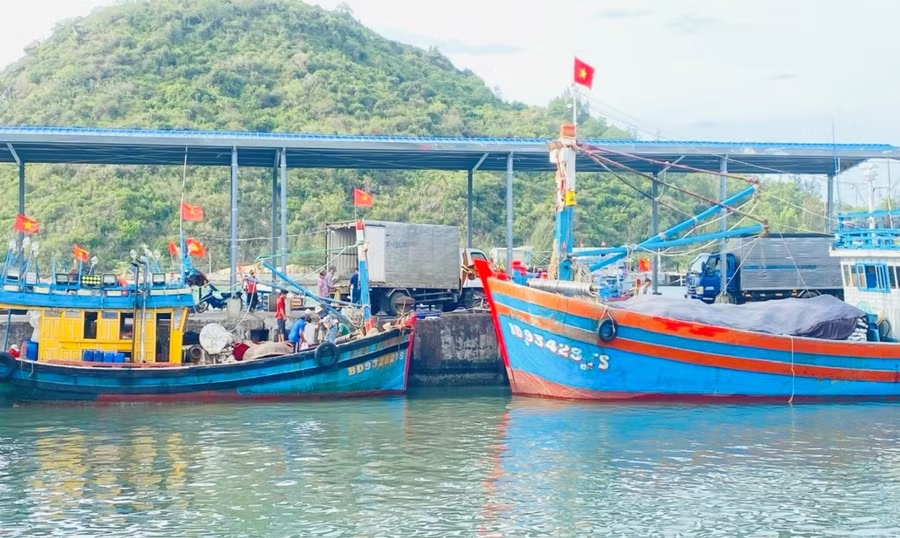
Gia Lai has also become the first locality in Vietnam to install Vessel Monitoring System (VMS) devices on high-risk vessels measuring from 12 to under 15 meters. Under a provincial support policy, fishermen receive subsidies covering 50% of installation costs, capped at 10 million VND (about $385) per device.
Since late 2025, an automated warning system capable of detecting vessels that lose signal connections or cross maritime boundaries has been put into operation, allowing authorities to identify potential violations remotely and at an earlier stage. Provincial officials described the system as a major step toward preventing, rather than only handling, violations.
Law enforcement efforts have also intensified. Since 2024, authorities have detected and handled all 943 vessels found violating VMS connection requirements. Of those, 513 cases resulted in fines totaling more than 15.9 billion VND (about $612,000).
Serious violations, including illegal fishing beyond permitted boundaries, have also been prosecuted. In one case involving a fishing vessel detained by a foreign country, a defendant received a prison sentence of two years and six months. Authorities said enforcement would follow the principle of “no forbidden zones, no exceptions.”
Alongside stricter enforcement, Gia Lai has expanded support policies aimed at reducing pressure on marine resources and helping fishermen transition to alternative livelihoods. Since the beginning of the year, the province has allocated more than 212 billion VND (about $8.15 million) from the local budget to support the decommissioning of more than 800 fishing vessels and assist nearly 950 workers in changing occupations.
During the transition period, fishermen receive support payments of 3 million VND (about $115) per vessel each month and 30 kilograms of rice per person monthly for seven months, from September 2025 to March 2026. Provincial officials described the policy as both an economic and social measure aimed at encouraging sustainable livelihoods.
Despite progress, authorities acknowledged ongoing management challenges, particularly involving vessels operating and anchoring outside the province. Gia Lai has established inter-provincial task forces to coordinate inspections and prevent unqualified vessels from departing for fishing activities.
Cao Thanh Thương, Director of the Department of Agriculture and Environment, said the province has proposed that the government hold localities accountable if they allow unqualified vessels to leave ports for exploitation activities. Gia Lai has also urged the Ministry of Agriculture and Environment to accelerate the integration of fisheries management software into a unified national platform to improve data synchronization and state management efficiency.
According to Cao Thanh Thương, if measures outlined under Directive No. 34/CĐ-TTg are implemented comprehensively, Vietnam could achieve its target of having the EC’s IUU “yellow card” lifted by 2026. He said Gia Lai aims not only to comply with EC requirements but also to build a transparent, responsible and sustainable fisheries sector over the long term.