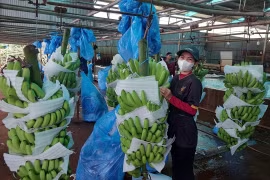
With more than a month remaining before Tet, the seasonal job market has already become active. Factories, shops and supermarkets across Quy Nhơn Ward are advertising vacancies for Tet gift packaging, sales, cashiering, food service and delivery. Daily wages range from 200,000 to 300,000 VND (about USD 8–12).

However, employers say the supply of workers remains tight. Along major streets such as Tăng Bạt Hổ, Mai Xuân Thưởng, Lý Thường Kiệt and Lê Hồng Phong, recruitment notices are widespread, yet many positions remain unfilled.
At a small food-processing facility producing Thai-style dried bananas, potatoes and sweet potatoes, owner Nguyễn Thị Ánh Hải said she needs additional seasonal workers to support Tet production. Her facility processes around 70–80 kg of fresh bananas a day. Seasonal staff are offered 25,000 VND per hour (about USD 1), but recruitment has proved difficult.
“Students are busy with exams, while freelance workers have found more stable jobs,” Hải said. “Even though demand is high, it’s still hard to find people.”

For workers who do take on seasonal roles, Tet jobs can provide a useful income boost. Nguyễn Văn Hảo, from Quy Nhơn Đông Ward, said he earns about 200,000 VND (around USD 8) extra per day working part-time at Hải’s facility in addition to his evening restaurant job, with lunch provided.
Labor shortages are also affecting cooperatives. Phan Kim Nhật Quỳnh, chairwoman of Anvies Mushroom Production Cooperative, said the cooperative is seeking seasonal workers for preparation, processing, drying, packaging and labeling. Continuous short-term availability, however, has been difficult to secure.
Rural areas face similar challenges. Bùi Thị Thu Thắm, owner of a dried noodle and pho facility in Ân Hảo Commune, said she needs around 10 seasonal workers, offering 250,000 VND per day (about USD 10). This year’s heavy rains have increased labor needs as dryers must run continuously.
“Despite the pay, recruitment is difficult because many local workers are focused on rice sowing and acacia planting,” Thắm said.
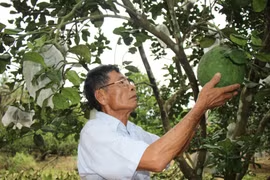
Agricultural work often pays more, with acacia planting and harvesting earning 500,000–800,000 VND per day (roughly USD 20–32 for 8–10 hours), making it hard for food producers to compete during the peak season.
In retail and services, demand is equally strong. According to local job groups on social media, dozens of seasonal recruitment posts appear daily, many offering immediate start dates.

Phạm Ngân, owner of a shoe store on Phan Bội Châu Street, said she needs sales assistants until the 30th day of Tet, offering a salary of 6 million VND per month (about USD 240) for six hours of work per day, plus Tet bonuses during peak days.
“The work is light and meals are provided, but it’s hard to find people willing to stay until just before Tet,” she said, noting that many student workers return home weeks early for the holiday.
Large supermarket chains are also struggling to fill vacancies. Co.opmart, WinMart, Bách Hóa Xanh, GO! Quy Nhơn and GO! An Nhơn are each seeking 10–30 seasonal workers. Nguyễn Văn Minh, head of marketing at Co.opmart Quy Nhơn, said the store is recruiting 20 seasonal staff, offering 5.5–6 million VND per month (about USD 220–240).
“So far, we’ve only filled about half the positions,” Minh said. “We’re still looking to meet the surge in Tet shopping demand.”
Beyond supply and demand, seasonal work carries risks for both sides. Workers face potential recruitment scams on social media, including requests for fees or deposits. Employers, meanwhile, need staff who can adapt quickly and work at high intensity over a short period.
As Tet approaches, the seasonal labor market remains active, but bridging the gap between available jobs and available workers continues to challenge businesses across the province.