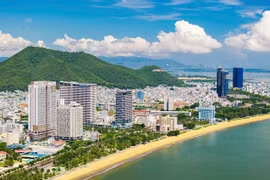
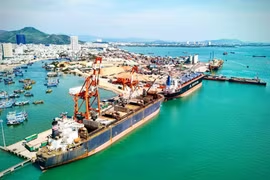
Agricultural products account for a substantial share of exports, led by coffee, bananas, passion fruit, cassava and rice, underscoring the sector’s central role in the local economy.
Gia Lai’s agricultural goods are now present in nearly 60 countries and territories, including high-standard markets such as the European Union, the United States and Japan, reflecting progress in standardized production, processing investment and export-oriented raw material development.
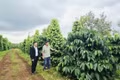
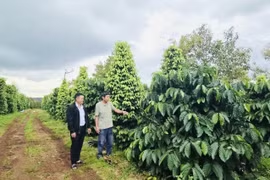
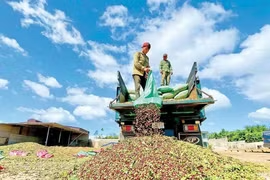
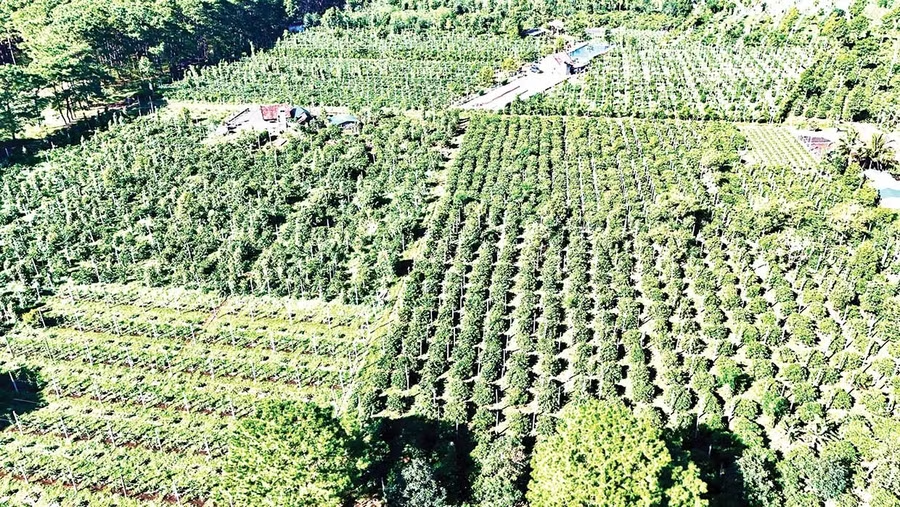
Coffee remains the province’s leading export, with 2025 export turnover estimated at USD 1.5 billion. According to the Vietnam Coffee and Cocoa Association, growth has been supported not only by favourable prices but also by a shift towards higher value-added products.
Local enterprises have restructured raw material areas, invested in processing technology and strengthened branding, enhancing the position of Gia Lai and Vietnamese coffee in global supply chains while supporting the livelihoods of tens of thousands of farming households.
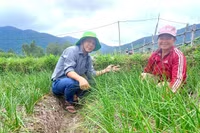
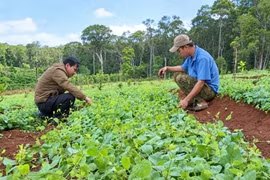
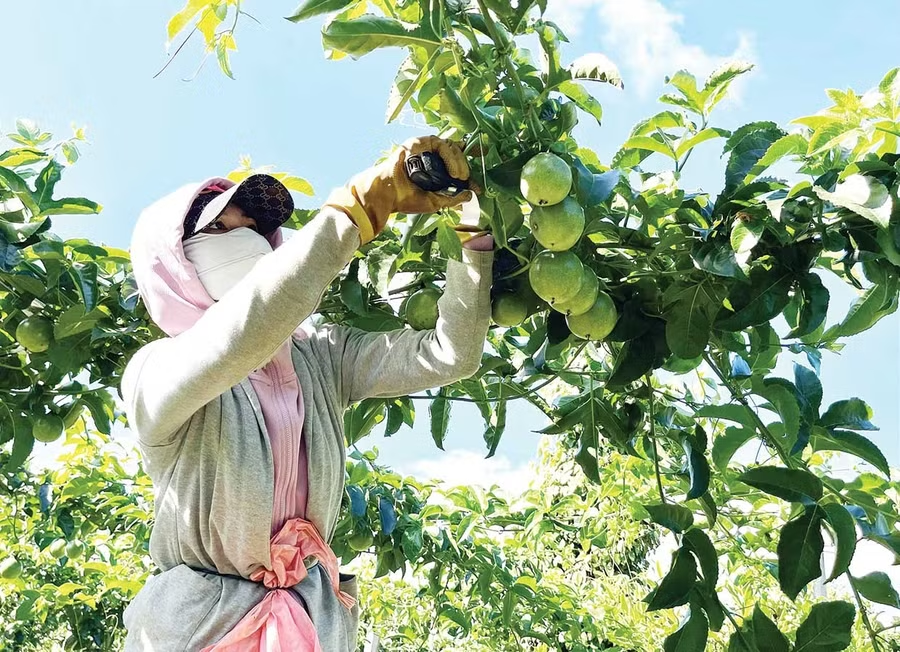
Fresh and processed fruit exports are also gaining momentum. Gia Lai currently leads the Central Highlands in passion fruit cultivation, with around 5,650 hectares and an estimated annual output exceeding 210,000 tonnes.
Major processors, including Nafoods Tay Nguyen, DOVECO and Quicornac Gia Lai, are working closely with cooperatives and farmers to develop concentrated raw material zones, apply planting and packing codes, ensure traceability and meet requirements of key markets such as China, the EU, the US and Japan.
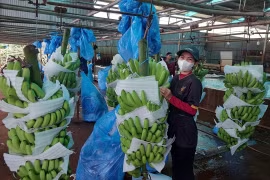
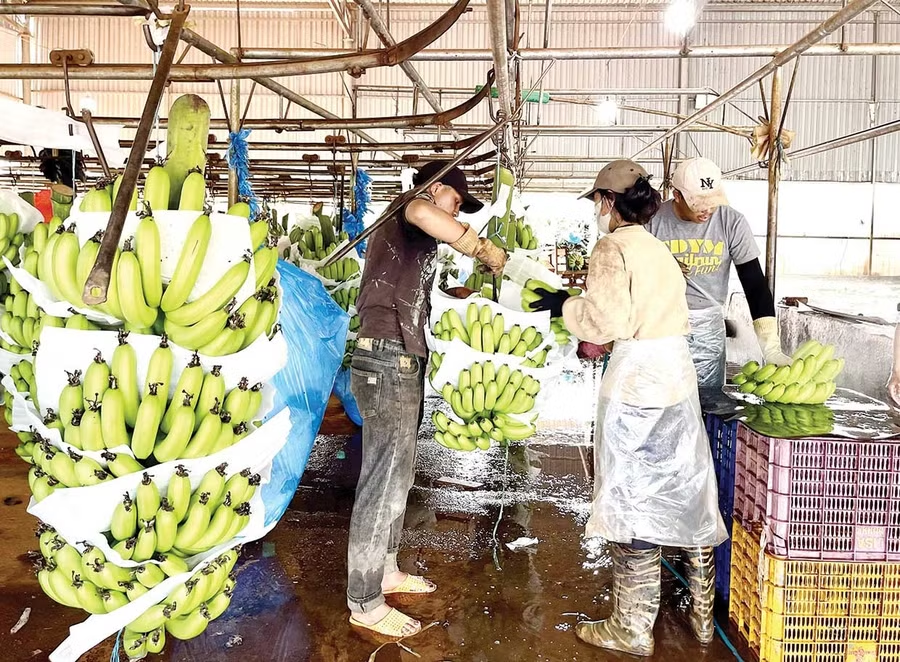
Bananas are emerging as another export pillar. Gia Lai Livestock Joint Stock Company, part of Hoang Anh Gia Lai Group, manages 1,700 hectares of fruit trees, including 1,380 hectares of GlobalGAP-certified bananas.
In 2025, the company exported about 62,000 tonnes to Japan, South Korea and China. Looking ahead, Hung Son High-Tech Agriculture Joint Stock Company plans to export around 20,000 tonnes of bananas in 2026, while exploring area expansion to serve markets including Singapore, Malaysia and the Middle East.
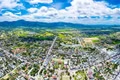
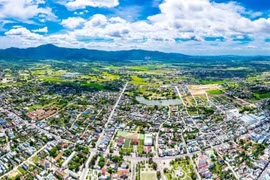
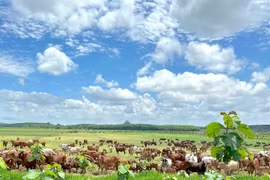
Provincial officials say Gia Lai’s key advantage lies in its large, diverse and highly standardisable agricultural land base. The province has about 977,000 hectares of agricultural land, with an annual cultivated area of 777,000 hectares.
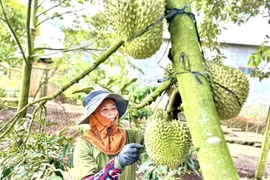
Major crops include coffee (107,400 ha; about 333,250 tonnes), bananas (7,850 ha; about 316,220 tonnes), passion fruit (5,650 ha) and durian (8,500 ha; about 57,700 tonnes), alongside coconut, chilli, sweet potato, watermelon, dragon fruit and avocado. Around 50% of crop areas are produced under VietGAP, GlobalGAP or organic standards.
Aligning production with standards has helped strengthen linkages across the value chain, from cultivation and harvesting to processing and export. With prices for key products such as coffee, pepper and passion fruit remaining high, farmers, cooperatives and businesses are further incentivised to invest in quality improvements.
Industry representatives note growing international demand for Vietnamese passion fruit, particularly as traditional producing regions face climate and disease pressures. At Quicornac, around 90% of output is already exported to demanding markets in Europe and North America, signalling further growth potential.
The provincial Department of Industry and Trade said export enterprises are expanding in both number and processing depth, forming agricultural value chains aligned with traceability and green standards, and increasing access to high-requirement markets.
With continued strength in coffee, expanded processing capacity and positive signals from fresh fruit, Gia Lai’s agricultural exports are expected to achieve further breakthroughs in 2026, authorities said.