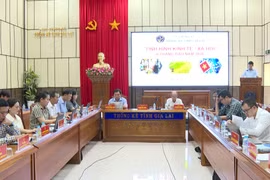
Authorities say the shift in mindset among enterprises, cooperatives and farmers is improving product quality, traceability and competitiveness, laying the groundwork for sustainable export growth.
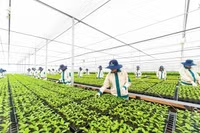
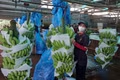
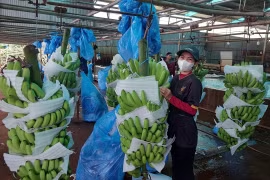
In Ia Băng commune, Hung Son High-Tech Agriculture Joint Stock Company is leading efforts to standardise banana production for export.
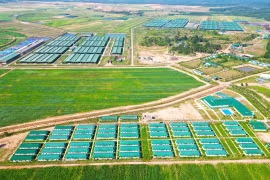
The company has established seven plantation codes covering more than 400 hectares and secured three packing facility codes. Annual output reaches 20,000–25,000 tonnes of bananas, generating revenues of USD 12–15 million.
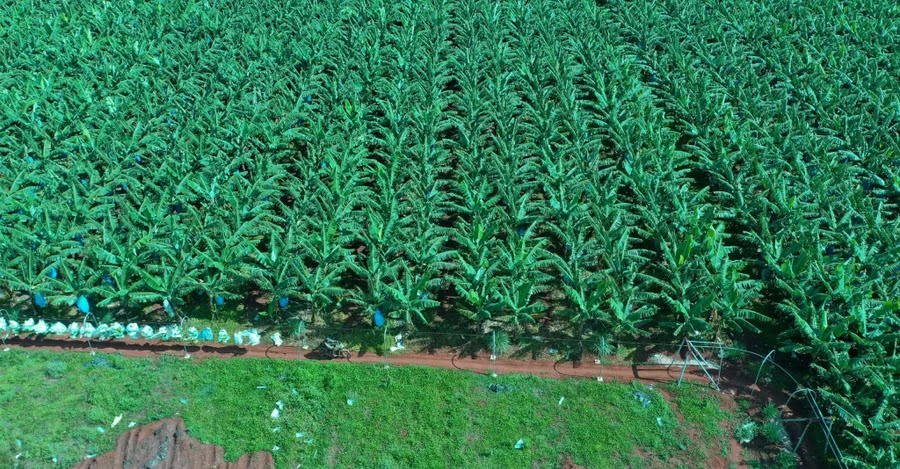
Le Hoang Linh, director of the company’s high-tech banana project, said Cavendish bananas grown under GlobalGAP standards yield more than 50 tonnes per hectare.
“With plantation codes, our products can be easily exported to Japan, South Korea, China and other markets, with values rising by 20–30%,” he said. “Without them, bananas can only be sold domestically or through unofficial export channels, which are highly unstable. Plantation codes are our passport to stable markets and brand building.”
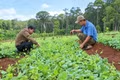
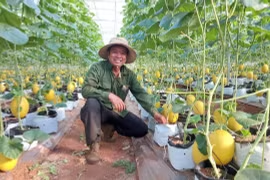
The transition to international standards has also gained traction among cooperatives. Hung Thom Gia Lai Agricultural and Service Cooperative in Hra commune has been granted seven plantation codes covering 126.4 hectares of passion fruit. Working with farmers under GlobalGAP standards, the cooperative achieves yields of 45–50 tonnes per hectare.
Director Do Thi My Thom said plantation codes have enabled cooperation with exporters targeting Europe and China. “Selling prices in Europe are at least 30% higher, and in China 10% higher than domestic prices,” she said. “Farmers earn profits of 100–200 million VND per hectare per crop (about USD 4,000–8,000). Most importantly, the market is stable and no longer subject to price manipulation.”
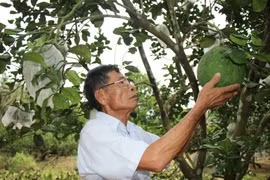
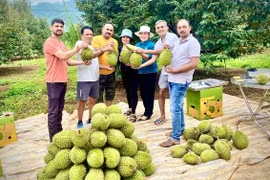
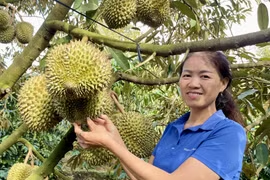
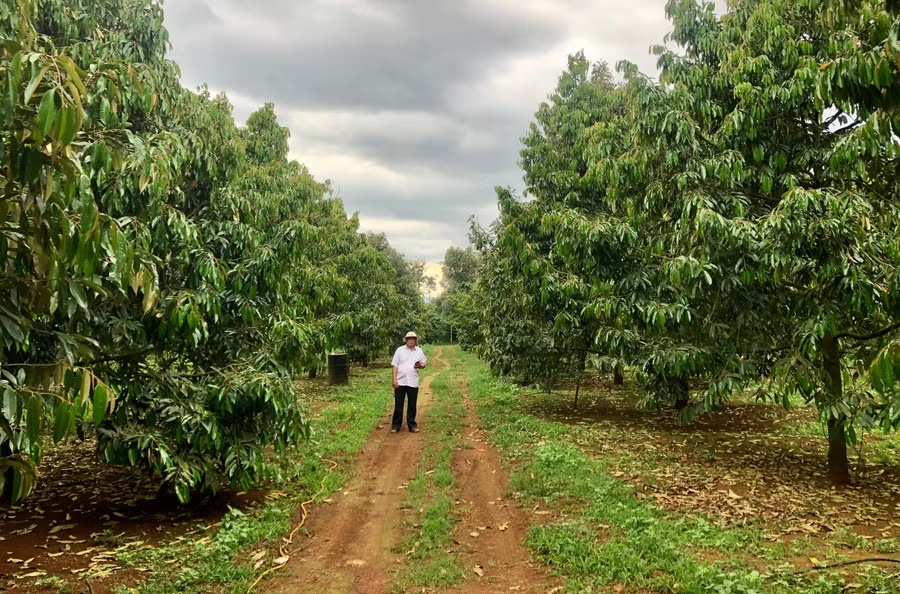
Similarly, the Ia Mo Nong Agricultural Production–Trade–Service–Tourism Cooperative in Ia Ly commune has received three plantation codes for 124 hectares of durian. Its entire annual output of nearly 2,000 tonnes is now exported to China.
Cooperative director Le Van Thanh said farmers were initially hesitant due to the complexity of standardised production. “Once they saw their products entering major markets at high and stable prices, their mindset changed,” he said.
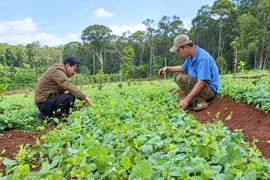
Under regulations, plantation codes function as identifiers to control production activities, quality and traceability. Coded plantations may only use approved plant protection chemicals and must comply with the standards of importing countries, compelling producers to adopt safer and more sustainable practices. Any violation by a participating household can result in the revocation of the code for the entire area.
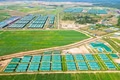
According to the Sub-Department of Crop Production and Plant Protection, Gia Lai currently has 255 export plantation codes covering more than 10,246 hectares. These include 67 codes for durian (1,539 ha), 48 for passion fruit (1,153 ha), 38 for sweet potato (929 ha), 38 for banana (3,257 ha), 10 for jackfruit (1,285 ha) and 10 for watermelon (765 ha), along with several for mango, dragon fruit, chilli and coconut.
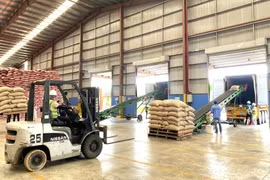
The province also has 40 packing facility codes with a combined capacity of 1,620–1,800 tonnes of fruit per day, as well as 52 domestic plantation codes for coffee, vegetables, avocado, pepper and rice. Authorities are finalising applications for an additional 109 export plantation codes covering 2,164 hectares and 51 domestic codes covering 459 hectares.
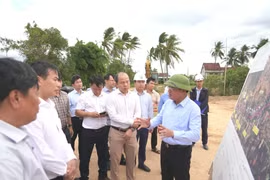
Tran Xuan Khai, head of the Sub-Department of Crop Production and Plant Protection, said the agency regularly guides enterprises and cooperatives through the process, conducts field inspections and completes dossiers for submission to the Department of Crop Production and Plant Protection.
Looking ahead to the 2026–2030 period, Gia Lai plans to restructure its crop sector towards concentration and specialisation, develop raw material zones for deep processing and export, standardise production to international benchmarks, promote high-tech and organic agriculture, accelerate digital transformation and attract investment in processing and logistics infrastructure.