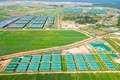
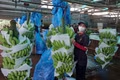
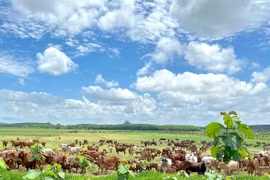
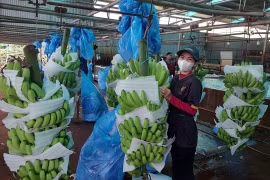
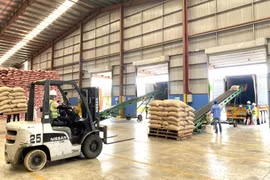
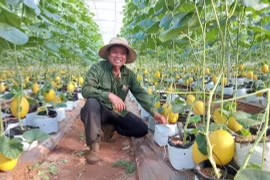
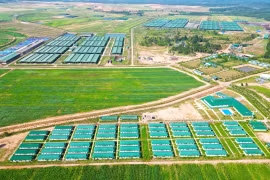
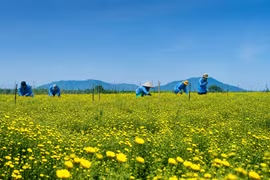
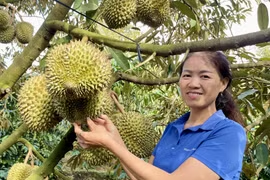
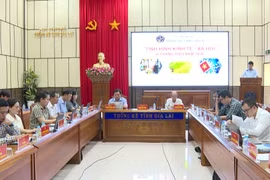
The cooperative has developed a raw-material area spanning about 105 hectares, including 2 hectares certified under VietGAP standards and large cultivation zones of pineapple (50 ha) and Nam Mỹ Cavendish banana (50 ha). All production areas use advanced, water-saving irrigation systems to ensure stable productivity and quality.
Since 2019, the cooperative has invested in greenhouses, machinery, and modern equipment to produce high-quality vegetable and fruit varieties, reducing farmers’ dependence on seed supplies from other provinces.
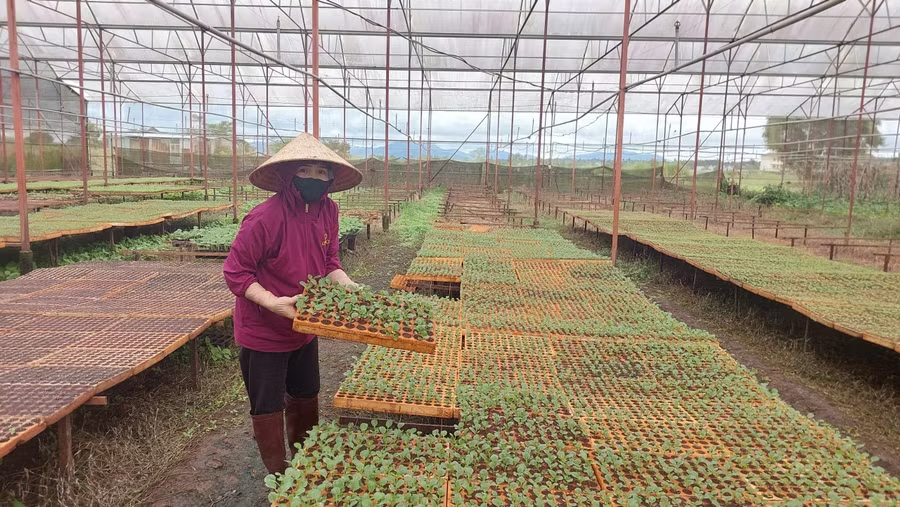
Monthly, the cooperative supplies 100,000-200,000 disease-free Nam Mỹ Cavendish banana seedlings produced from tissue-culture sources developed in partnership with research institutes. The seedlings are distributed across Gia Lai, Đắk Lắk, Lâm Đồng, and Đồng Nai.
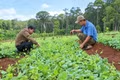
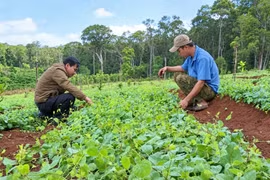
Local farmers, many of whom have at least 0.5 sào (around 180 sq. meters) of land, have long benefited from producing off-season crops that help mitigate price volatility. VietGAP adoption has introduced stricter processes, including soil sterilization, detailed record-keeping, and systematic crop management for vegetables such as bok choy, mustard greens, chrysanthemum greens, malabar spinach, bitter melon, cucumber, tomato, and green onion.
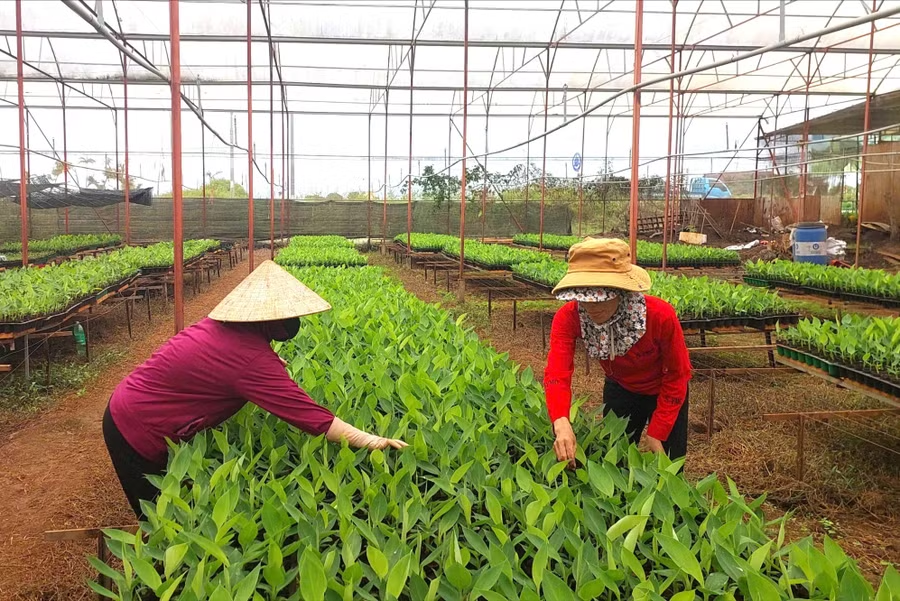
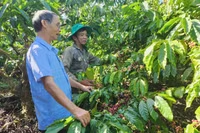
The cooperative is also expanding collaboration to propagate high-quality varieties including bananas, coffee, passion fruit, and MD2 pineapples. Members contribute funds, labor, and technical expertise, and profits are shared after deducting production costs. This model aims to maximize member capacity while maintaining long-term cooperative growth.
An Phú, once a key rice-growing area, shifted toward fruit and vegetable cultivation following upstream transitions to coffee and pepper that caused water shortages. Infrastructure built in previous years has supported the cooperative’s expansion into VietGAP-certified production for schools, businesses, and local enterprises.
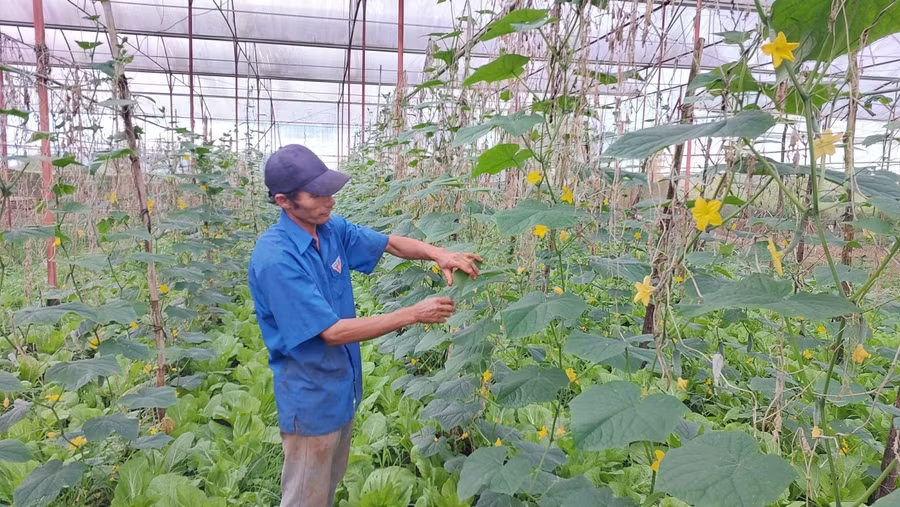
Currently, the cooperative supplies VietGAP-certified produce grown across 2 hectares approved by the TQC CGLOBAL Testing and Certification Center. It aims to strengthen its role as a supplier for schools, restaurants, and corporate kitchens within the province.
For 2025, the cooperative forecasts revenue of around 5 billion VND (approx. USD 200,000), creating stable employment for 10 full-time workers and numerous seasonal laborers.
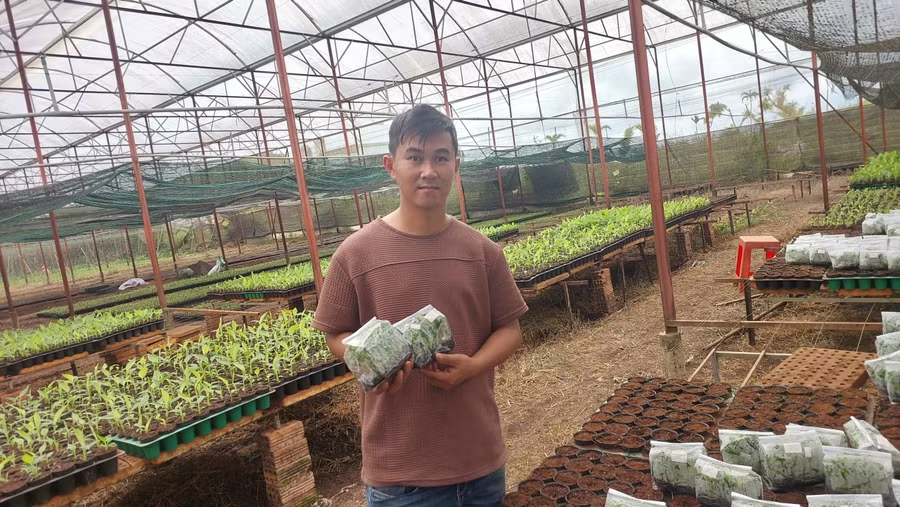
Director Trần Công Quang said the cooperative’s strategy focuses on producing safe, high-quality fruits and vegetables under VietGAP standards while collaborating with businesses to expand plant-variety propagation.
The goal is to establish a breakthrough high-tech production zone that enhances land value and unlocks the broader potential of An Phú’s traditional farming area.