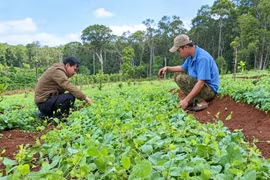
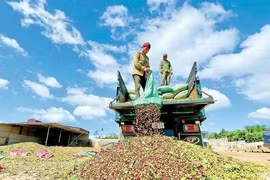
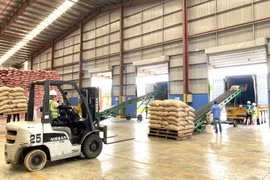
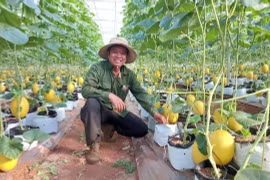
Local authorities say the strategy has helped change production mindsets, enabling many families to stabilize livelihoods, exit poverty sustainably and pursue long-term prosperity.
According to Huynh Ba Ngoc, Standing Vice Chairman of the Tay Son Commune People’s Committee, sustainable poverty reduction depends less on material aid than on transforming awareness and fostering self-reliance.
As a result, the commune has prioritized continuous communication on poverty reduction policies through village meetings, grassroots channels and local radio.
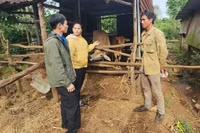
Residents are regularly informed about preferential credit, livelihood support and vocational training. Commune officials and mass organizations also work directly with poor and near-poor households to identify production models suited to each family’s conditions.
Credit and training drive self-reliance
Preferential loan programs for poor and near-poor households have encouraged residents to invest proactively in production rather than depend on aid. Many households have gradually increased incomes and improved living standards.
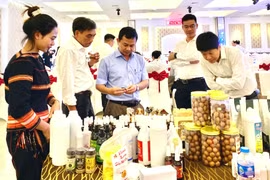
Vo Thi Bach Nguyet, Vice Chairwoman of the Commune Women’s Union, said Tay Son has 7,450 members. In 2025, three livestock training courses were organized for 150 participants, while 53 members joined vocational classes in food processing and mushroom cultivation.
To support women’s economic activities, the Tay Son branch of the Vietnam Bank for Social Policies provided loans to 2,035 households, with outstanding credit exceeding 106 billion VND (about USD 4.3 million), using entrusted lending and credit guarantees.
Local models deliver results
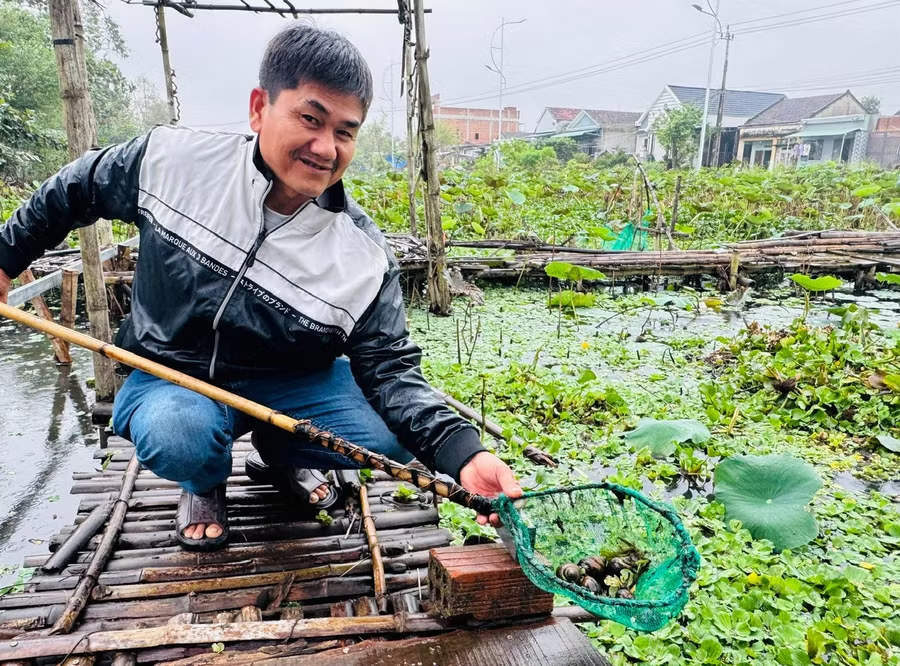
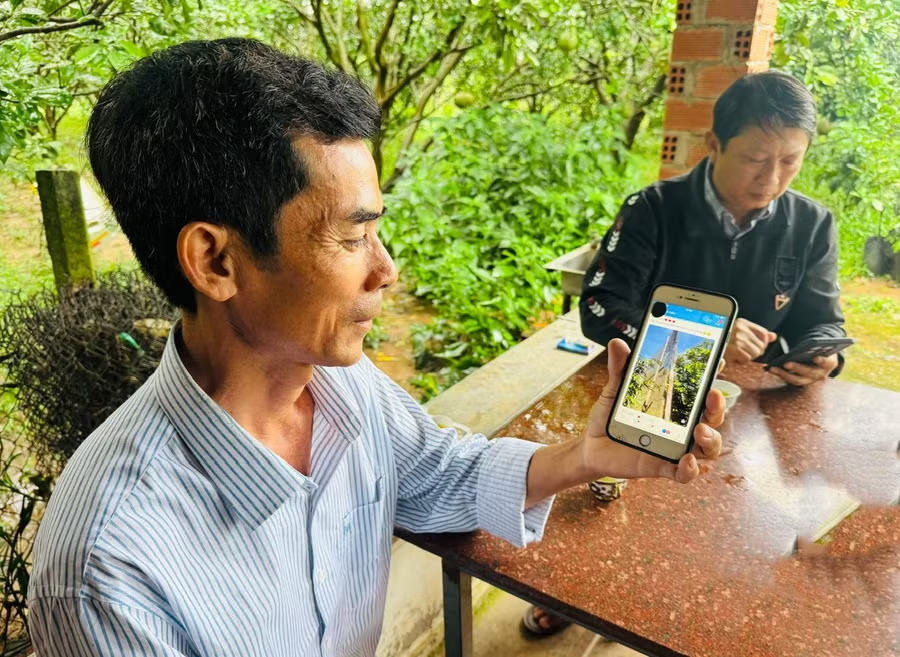
One beneficiary is Tran Thanh Hung, head of Farmers’ Association Branch 4, whose family previously relied on unstable farm work and seasonal labor. Despite owning more than 10 sào (about 3,600 square meters) of swampy land unsuitable for rice, the family lacked a viable livelihood.
Seven years ago, after visiting the Mekong Delta, Hung converted the land to lotus and water hyacinth cultivation and began raising black apple snails. By crossbreeding snails from different regions and applying proper techniques, his family now sells around 35 kg of snails per week, earning a stable income. He has also opened a farm-based restaurant using local products.
Inspired by the model, other households followed. Nguyen Van Anh, for example, used 3 sào of land to grow lotus and raise snails, earning about 350,000 VND per day (around USD 14).
Huynh Ba Ngoc said identifying suitable production models is a prerequisite for sustainable poverty reduction, but support must be tailored. “We avoid indiscriminate assistance and focus on feasible models linked to local realities and household responsibility,” he said.
From poverty reduction to wealth creation
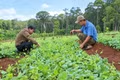
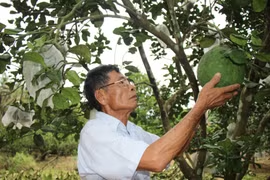
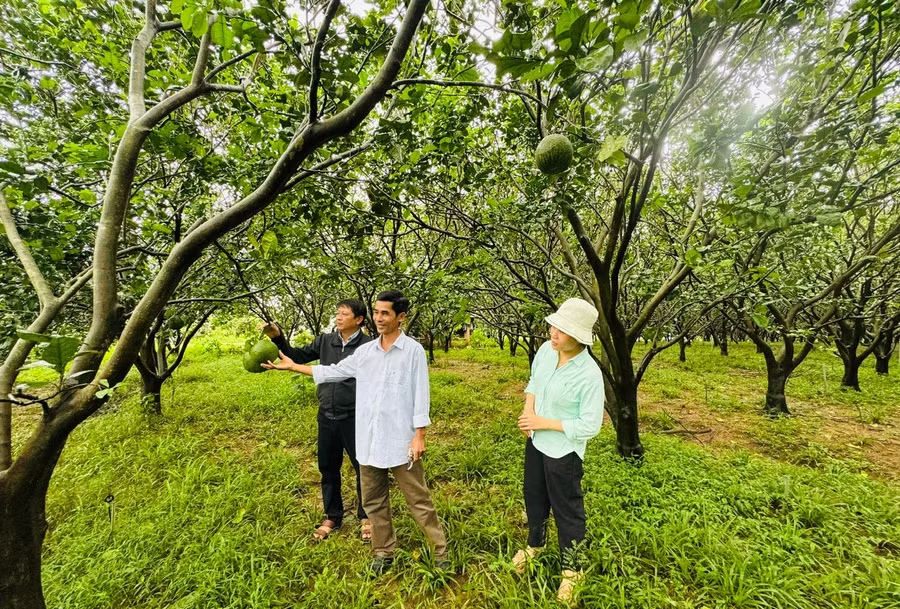
Beyond poverty alleviation, Tay Son has seen the rise of legitimate wealth-building models. Ho Ngoc Dung, from Dong Sim hamlet, has expanded a diversified farm from 5 to 9 hectares since 2015. His operation includes thousands of citrus and fruit trees, free-range chickens and hybrid wild boars.
By applying scientific and intensive farming methods, his green-skinned pomelo, sugar tangerine and guava products achieved OCOP certification, generating annual net profits of about 400 million VND (roughly USD 16,200). He provides regular jobs for six local workers earning 7 million VND per month (about USD 285) and seasonal work for around 20 others.
Dung has also invested in mechanization, irrigation systems and equipment innovation, while supporting disadvantaged households with capital, seedlings and livestock. For his contributions, he received certificates of merit from provincial authorities for 2020–2025 and from the Prime Minister in 2024.
Targeted support lifts near-poor households
Nguyen Thi Thu, from Thuan Nghia quarter, was among four near-poor households in her area. With five family members and no stable employment, her household struggled until receiving support in 2023, including a 40 million VND policy loan (about USD 1,620) and 7 million VND (about USD 285) from the commune’s “For the Poor” Fund to rent land and trade fruit. Her family has since exited near-poor status.
“Preferential loans gave us the chance to develop our economy and stabilize our lives,” Thu said, adding that health insurance and other assistance were also crucial.
Measured progress
Tay Son commune currently has 12,930 households and 43,770 residents. By the end of 2025, the number of poor households had fallen by 27 and near-poor households by 84.
The commune continues to strengthen communication to change mindsets, expand access to basic social services and mobilize support from businesses and philanthropists. Training for poverty reduction staff and diversified outreach via radio, online portals and social media are also being expanded.
Local officials say the coordinated approach is expected to deliver further gains, as residents receive targeted support and motivation to pursue sustainable prosperity.