Once promoted as a “get-rich-quick” crop, passion fruit is now being pushed back to its fundamentals: market orientation, consistent quality and tighter supply-chain linkages.
For growers in what is often dubbed Vietnam’s “passion fruit capital,” the central challenge is no longer how much to plant, but how to secure stable incomes and long-term viability.
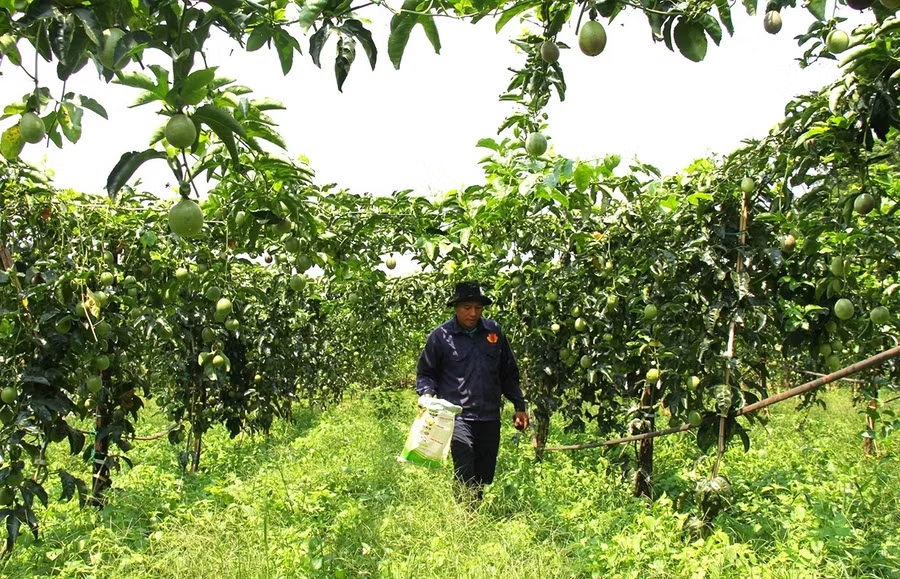
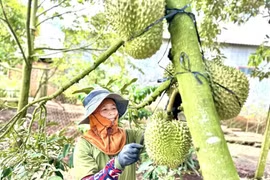
Passion fruit has emerged as one of the fastest-growing segments in Vietnam’s fruit and vegetable sector, with strong export potential. The Central Highlands, benefiting from a cool climate and wide day–night temperature variations, accounts for more than 88% of the country’s total passion fruit area.
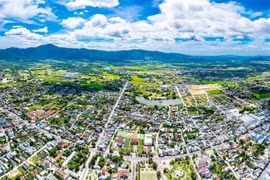
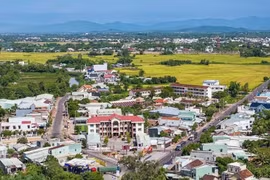
Gia Lai plays a pivotal role, serving as the largest growing region and a key node in the value chain, from seedling production to processing and export.
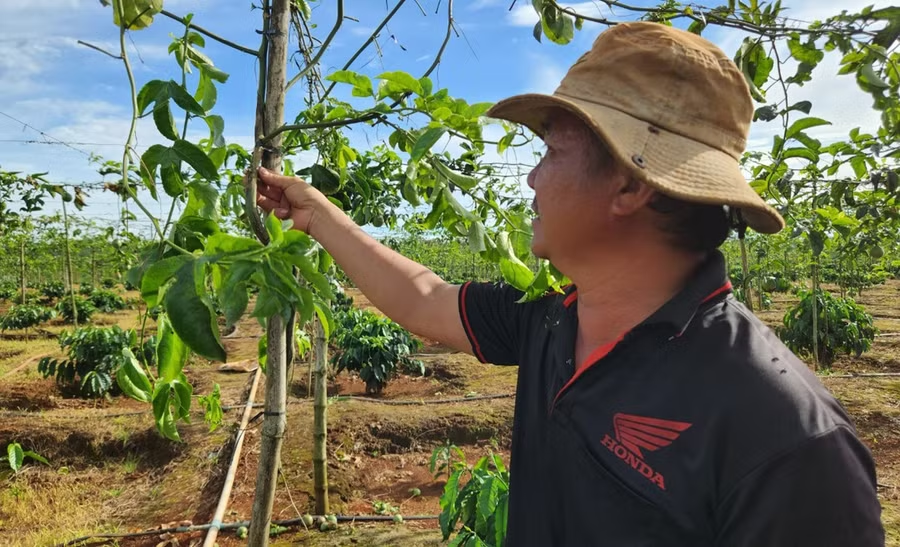
Vietnam currently has more than 12,600 hectares of passion fruit, producing nearly 180,000 tonnes annually and ranking among the world’s top 10 suppliers. Gia Lai alone accounts for about 5,650 hectares, almost 19 times the area recorded in 2015, with average yields of 40–45 tonnes per hectare, nearly double the national average and among the highest in Asia.
The crop was first trialed in Gia Lai around 2012 on a limited scale. During 2016–2017, soaring prices and expanding markets triggered rapid acreage growth. That expansion soon exposed structural weaknesses. In 2018, oversupply sent prices plunging, forcing many farmers to cut losses or switch back to other crops.
Another boom followed in 2023, driven by surging prices and the launch of new processing plants. Passion fruit was widely hailed as a “million-dollar crop,” briefly outperforming coffee and pepper, long-standing staples of the Central Highlands. Farmers rushed to expand, and local authorities set targets to lift national passion fruit acreage to more than 25,000 hectares by 2025.
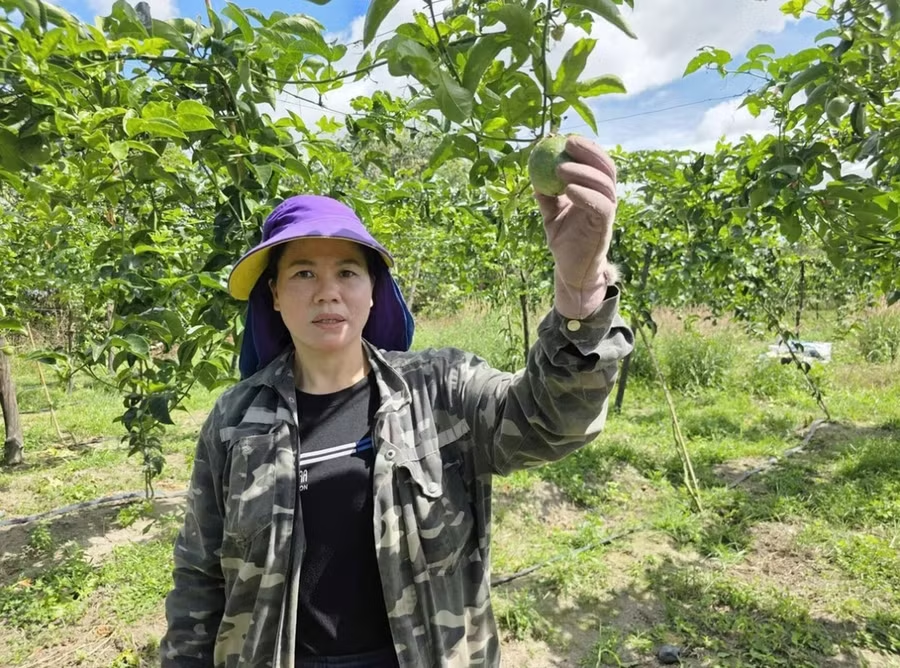
The optimism proved short-lived. Within months, prices collapsed from about 17,000 VND per kg (around USD 0.71) to just 3,000–5,000 VND (USD 0.13–0.21), leaving many growers exposed. “When prices were high, everyone thought passion fruit was an easy way to make money,” said farmer Lê Quý in Bàu Cạn commune. “When prices crashed, many households suffered heavy losses and had to cut down their orchards to return to coffee and pepper.”
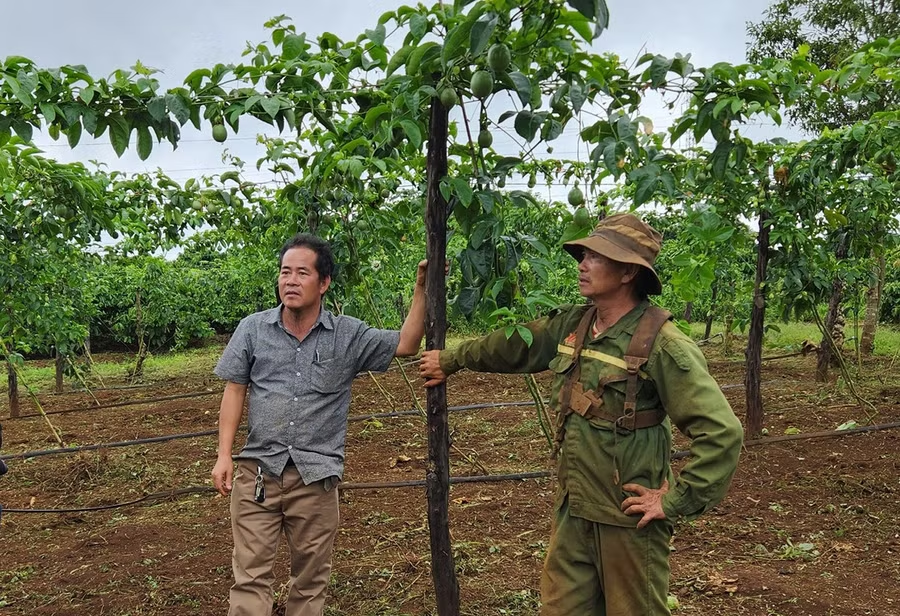
After nearly two years of volatility, the market has shown signs of stabilization. Farmgate prices now hover around 19,000-20,000 VND per kg (USD 0.79–0.83), while top-grade export fruit bound for Europe can fetch about 52,000 VND (USD 2.17) per kg. Growers have also become more cautious, increasingly intercropping passion fruit with coffee and pepper to spread risk.
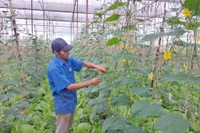
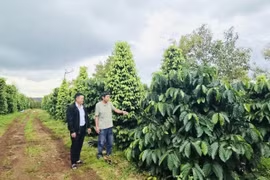
Despite the recovery, production risks remain high. Many orchards appear healthy but fail to flower or set fruit, resulting in yields far below expectations. Erratic weather, prolonged rains, high humidity, strong winds and unseasonal cold spells, has disrupted flowering and pollination. More troubling for farmers, however, is inconsistent seedling quality.
“My family planted two well-known varieties using proper techniques, but one barely produced fruit and the other yielded very little”, said Nguyễn Văn Tài, a farmer in Ia Phí commune. “Not knowing the cause is very worrying”.
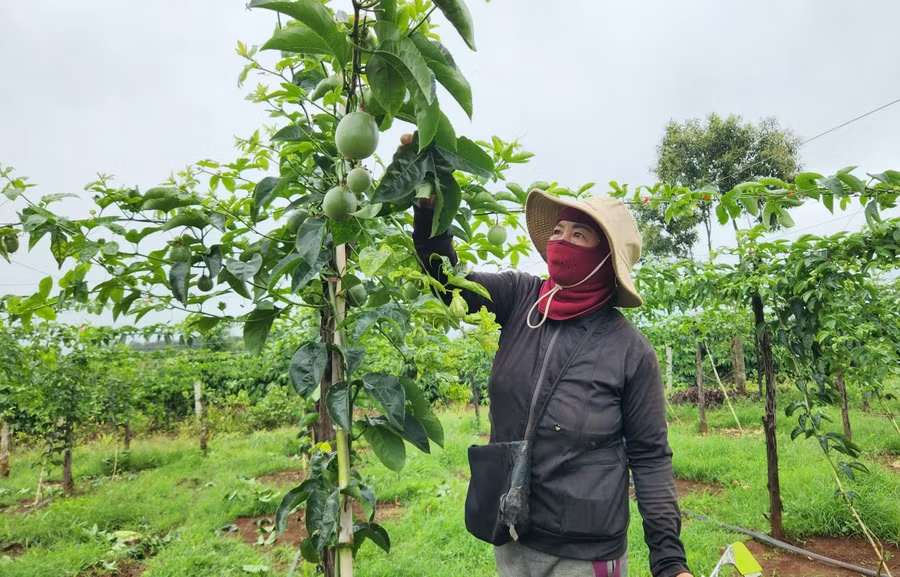
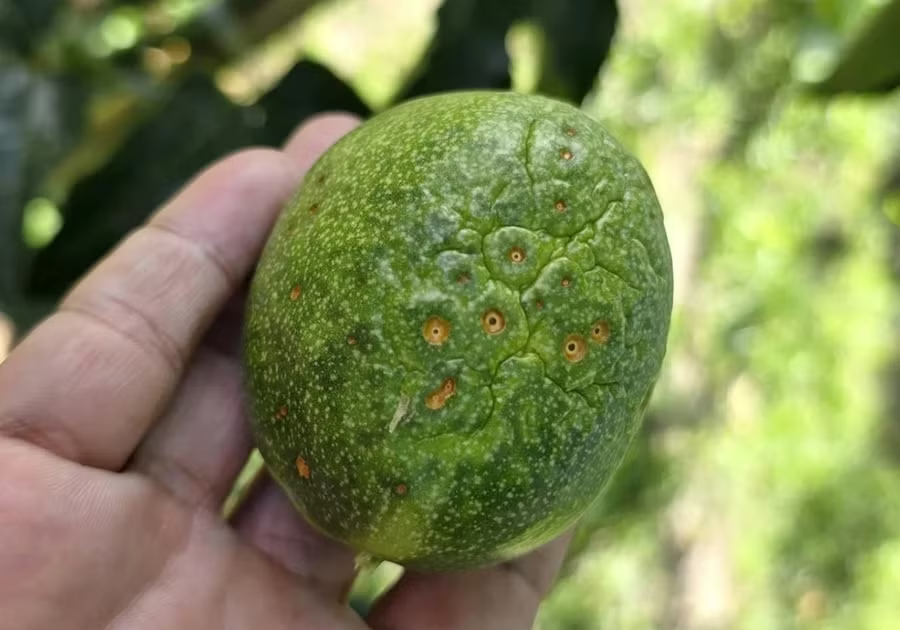
Disease pressure has also intensified. While powdery mildew, anthracnose and leaf spot were previously common, brown spot disease has emerged as the most serious threat. It spreads rapidly, attacking leaves and fruit, weakening plants and causing premature fruit drop and, in severe cases, total crop loss. “Brown spot disease has wiped out much of my nearly two hectares of fruit-bearing plants”, said Hoàng Thị Hiên in Ia Hrung commune. “Despite continuous spraying, we will definitely lose more than half the yield”.
According to Nguyễn Thế Minh, director of Nghĩa Hòa Agricultural Services Cooperative, poor seedling quality is a key driver of severe disease outbreaks. “If seedlings are not disease-free from the start, brown spot can appear early and spread quickly. Without stricter seedling management, the risk remains very high”, he said.
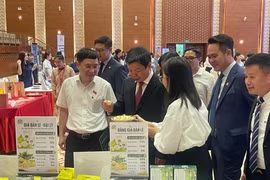
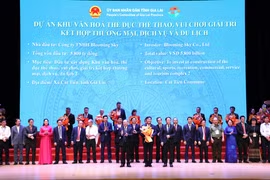
Amid these challenges, integrated supply-chain models are gaining traction. A notable example is the production - consumption linkage developed by Nafoods Group in Gia Lai. The company has invested across the chain, from high-tech seedling production and quality control to technology transfer, cultivation management and guaranteed offtake.
Nafoods currently partners with around 50 cooperatives and more than 5,000 farming households, managing over 5,000 hectares of raw material areas, with plans to expand to more than 10,000 hectares in the Central Highlands by 2030. “Sustainable exports require control from seedlings to pesticide residues”, said Nafoods General Director Nguyễn Mạnh Hùng. “Businesses must work with farmers, share risks and ensure stable markets”.
Provincial authorities say long-term development hinges on closer coordination between government, businesses and farmers. Priorities include zoning production based on market demand, tightening seedling controls, standardizing cultivation practices, strengthening supply-chain linkages and promoting deep processing to raise added value.
“The province will not chase trends”, said Trần Xuân Khải, head of Gia Lai’s Crop Production and Plant Protection Sub-Department. “Instead of expanding acreage, we will reorganize production, control seedling quality and deepen partnerships with businesses to ensure stable market access”.
Gia Lai also plans to support investment in preliminary processing, storage and deep-processing facilities in concentrated growing areas, while accelerating the issuance of cultivation area codes to meet stricter export requirements.
As climate change squeezes supply in South America, the world’s largest passion fruit-producing region, Vietnamese passion fruit, and Gia Lai’s in particular, still has room to expand its market share. Industry players caution, however, that only by abandoning trend-driven expansion and prioritizing quality and supply-chain integration can the “passion fruit capital” achieve long-term stability.