Authorities are rushing to clear debris, salvage remaining harvests, and resume production, with estimated agricultural losses exceeding VND 31 billion (US$1.22 million).
In Ia Rsai commune, where more than 1,379 hectares of sugarcane, cassava, rice, and corn were affected, local authorities have requested VND 12.4 billion (US$487,000) in emergency aid to help farmers restart production. “The fallen cane has driven up harvesting costs and sharply reduced yields,” said farmer Thái Hữu Lự.
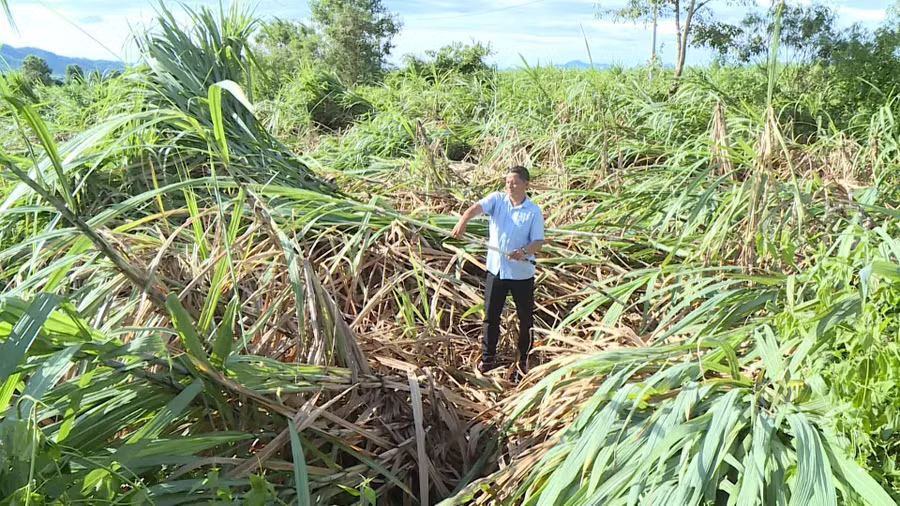
Neighboring Phú Túc commune reported damage to over 2,700 hectares of crops, mostly sugarcane and cassava. “My family’s 15 hectares of sugarcane were flattened after the storm. The losses are enormous”, said Nguyễn Trọng Dương, a resident. The commune has mobilized local forces, including youth and police units, to assist in clearing damaged fields and ensuring timely harvests.
Chairman Đặng Hoài Châu said Phú Túc authorities are coordinating with businesses to purchase fallen sugarcane and advising farmers to harvest cassava early to prevent rot. Infrastructure repairs are underway to help residents return to their fields.
In Kông Bơ La commune, floods swept away dozens of hectares of crops. Farmer Võ Duy Trinh said his 2.5 hectares of corn and squash were completely destroyed. “Now, all we can do is plow and replant, hoping for better weather next season”, he said.
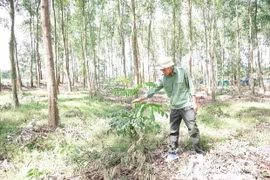
Further damage was recorded in Hoài Ân commune, where winds toppled more than 55 hectares of fruit trees and 155 hectares of acacia. Local authorities have urged businesses to buy fallen acacia to prevent price manipulation, while advising farmers on soil mounding, branch pruning, and replanting to speed recovery.
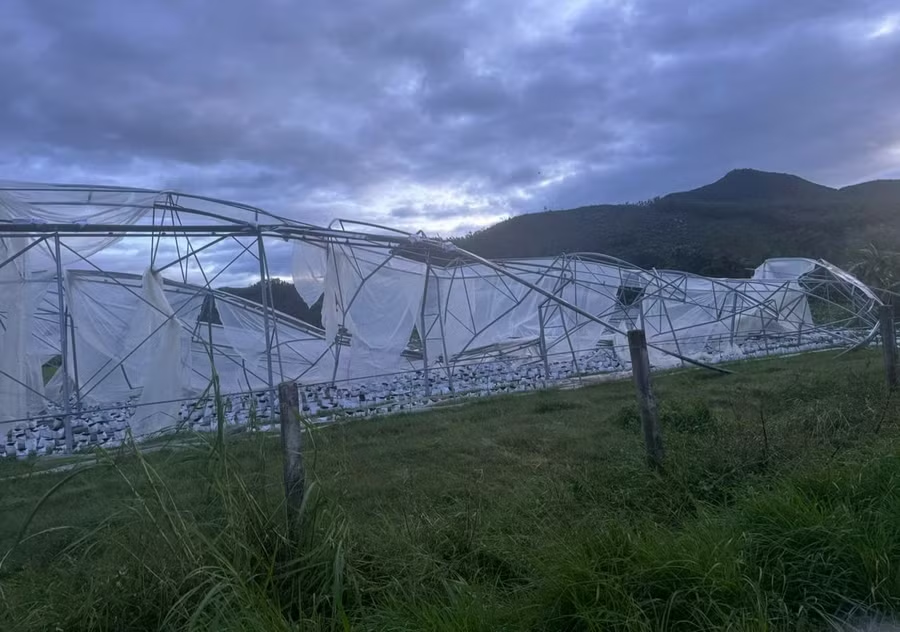
Even cooperatives suffered heavy losses. At the Phước Hiệp Agricultural Cooperative in Tuy Phước Bắc commune, 7.5 hectares of vegetables and greenhouse structures were destroyed. Director Phạm Long Thăng said members are now clearing fields and replanting short-term crops to meet the expected rise in vegetable demand ahead of the Lunar New Year 2026.
According to statistics from the Sub-Department of Crop Production and Plant Protection, the entire province has 11,861 hectares of crops inundated or flattened due to the impact of Storm No. 13 and prolonged rains and floods. Of this, annual crops account for more than 11,812 hectares, mainly rice, corn, cassava, and sugarcane. Perennial crops suffered nearly 49 hectares of damage, including pepper, coffee, banana, and passion fruit. The total estimated agricultural losses across the province amount to hundreds of billions of dong.
The Department of Agriculture and Environment has deployed technical teams from the Agricultural Extension Center and the Sub-Department of Crop Production and Plant Protection to guide recovery efforts.
Head Trần Xuân Khải said farmers are advised to harvest ripe rice fields quickly, dredge ditches for vegetables, prune broken branches, and use lime or copper-based fungicides to treat wounds on fruit trees. Severely damaged plants should be replaced with high-quality varieties suited to local conditions.
Deputy Director Nguyễn Thị Tố Trân stressed that this is a critical phase for restoring food production: “Solutions must be comprehensive and timely, combining material and technical support to ensure stable food supplies before, during, and after the Lunar New Year”.
Across storm-hit regions, the sounds of pumps, tools, and farmers rebuilding fields now echo under the recovering skies—a testament to the resilience and determination of Vietnam’s agricultural communities.