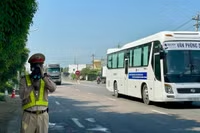
Facing a backlog of nearly 50,000 trainees who had completed training but not yet taken exams, amid incomplete facilities, technology and procedures, the Traffic Police Department proactively coordinated with relevant agencies to resolve obstacles and rapidly meet conditions for organising driving tests and issuing licences.
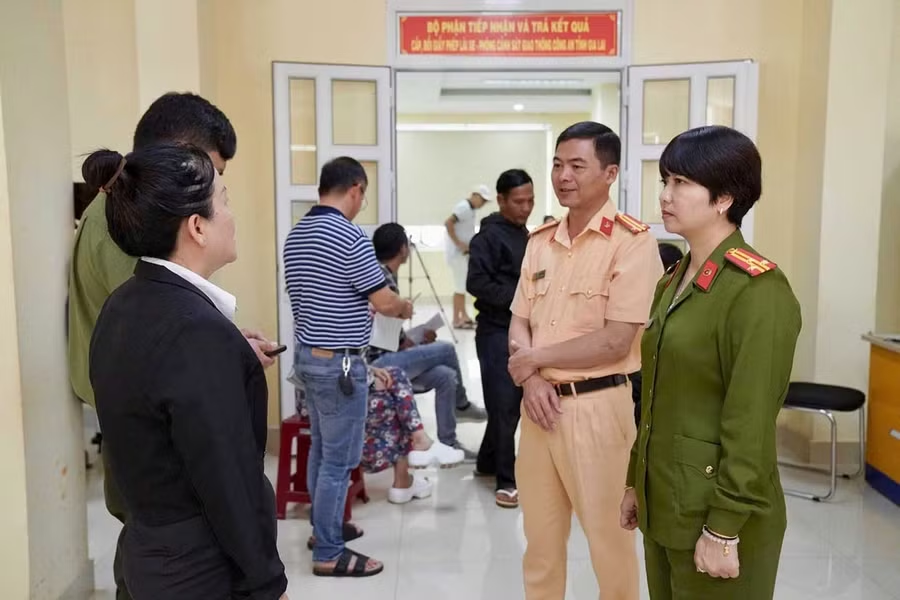
With new regulations on category C driving licence exams taking effect from July 1, 2025, requiring testing centres to suspend operations for upgrades, the department organised continuous exams, including weekends, prioritising category C candidates to clear the backlog before the rules change. The approach has positioned the province as a national frontrunner in focusing on category C testing.
Lieutenant Colonel Lương Thị Thu Quỳnh, Head of the Traffic Police Department, said delays would directly affect citizens’ rights, prompting the decision to run uninterrupted exams while refining procedures and technical conditions to ensure compliance and smooth operations.
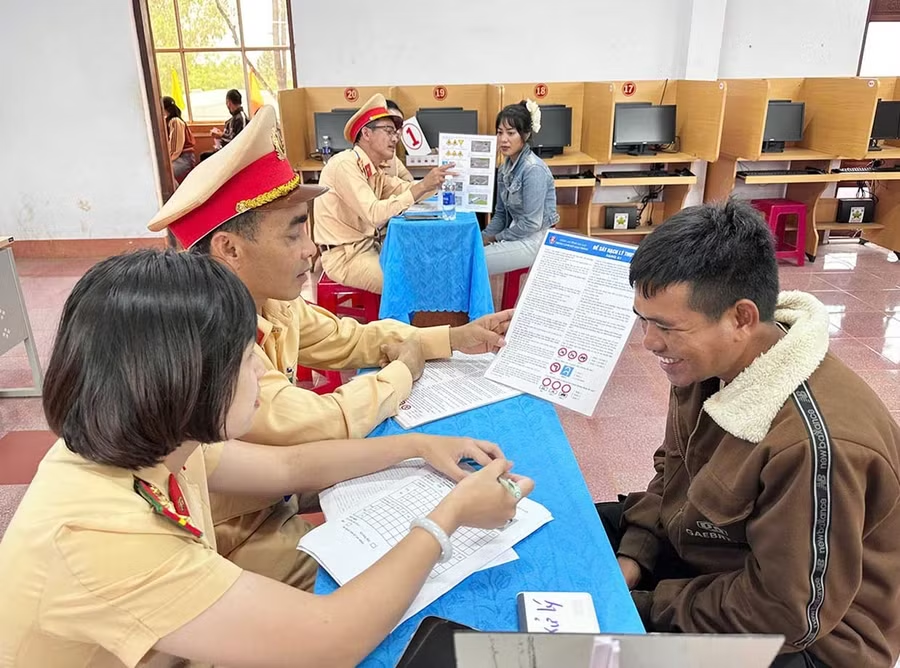
The department has also pioneered free support programmes for disadvantaged groups, including the poor, near-poor and ethnic minorities in remote areas. Since September 2025, it has coordinated with police in Ia O, Ia Ko, Bờ Ngoong and Nhơn Châu communes to hold four free testing sessions for more than 600 residents. These included on-site theory lessons, practical guidance, health checks and transport to exam venues.
Digital transformation has been identified as central to improving efficiency. An automated system now searches and compiles test results, cutting processing time and manual work. Within two hours of an exam, data on successful candidates is synchronised to the system and integrated into the VNeID application, supporting licence management.
The department is also working with driving schools to incorporate common violations and accident-prone scenarios observed during patrols into training curricula. Candidates must sign commitments to comply with traffic safety regulations at each exam session, reinforcing public awareness.
Looking ahead, the Traffic Police Department aims to establish a unified and effective management mechanism by coordinating with the Department of Construction and other agencies on inter-agency regulations covering trainees, training records and test results. Plans include developing a shared database to ensure fast, accurate and synchronised information exchange, reduce errors and save time.
Procedures for testing and licensing will be further standardised to ensure transparency, legal compliance and clear accountability at every stage. Weekly and monthly exam plans will expand the number of testing days, including weekends, to meet demand, while technology will be used to enhance objectivity and prevent malpractice.
Regular inspections, both scheduled and ad hoc, will continue at training centres and testing facilities. Units found violating regulations or engaging in misconduct will face suspension and potential licence revocation, officials said.
Lieutenant Colonel Ksor H’Bơ Khắp, Deputy Director of the Provincial Police, said testing must be carried out decisively and synchronously, with clear responsibilities, timelines and results, to prevent fraud and protect the integrity of the law and the force.