The official emphasised moving from passive administration to an enabling model that supports residents and businesses.
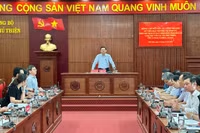
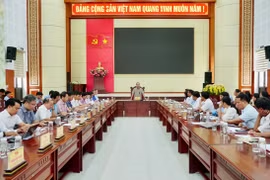
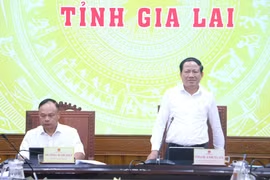
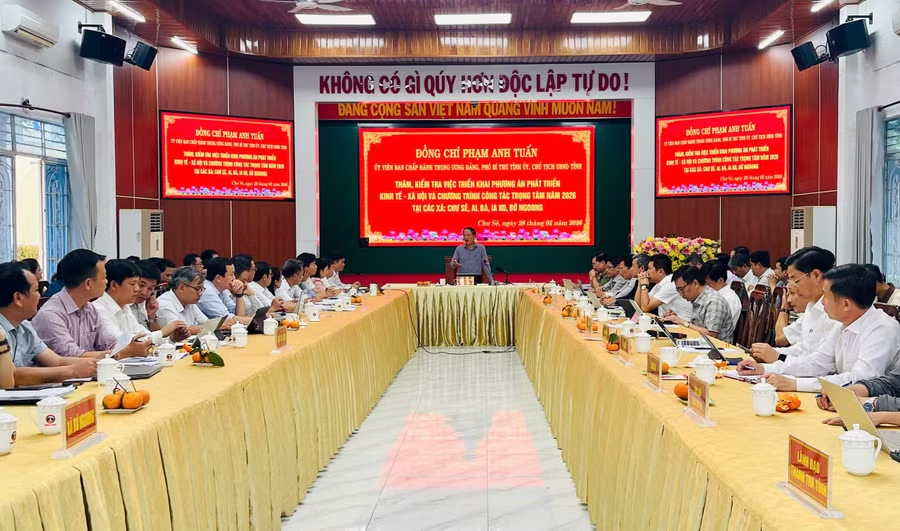
Attending the working session were representatives from provincial departments, Finance, Construction, Agriculture and Environment, Industry and Trade, Culture-Sports-Tourism, Ethnic and Religious Affairs, Home Affairs, the Provincial Police, Inspectorate, and the Office of the Provincial People’s Committee, along with commune authorities and local enterprises.
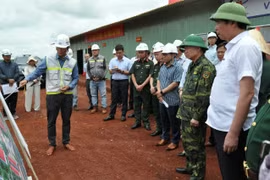
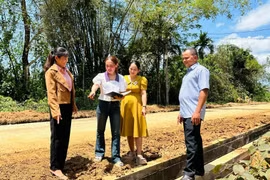
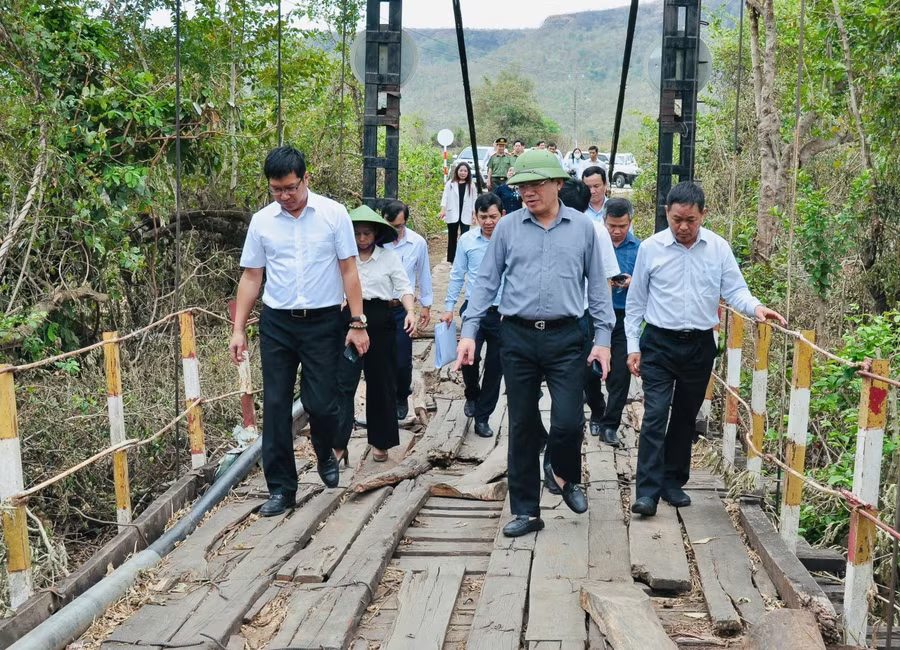
During the field inspection, the chairman reviewed planned locations for administrative centres, urban and residential zones, cultural and social facilities, and projects aligned with 2026 development plans. Local leaders later reported progress, obstacles, and proposals requiring provincial intervention.
Chư Sê: Strong early-year growth, calls for investment support
In the first months of 2026, Chư Sê recorded value-added growth of 7.7%, outperforming the provincial target of 7.18%. State budget revenue reached VND 105.685 billion (approx. USD 4.23 million), or 152% of the province’s plan.
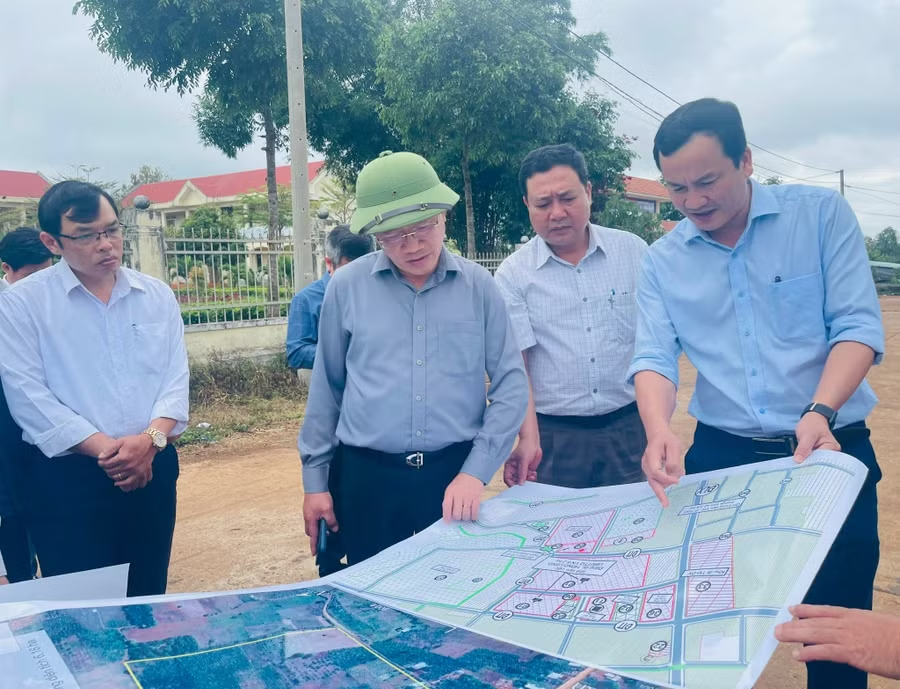
The commune asked the province to help attract investors to the Chư Sê Industrial Cluster, allow investors to advance compensation and site-clearance funds, and provide advance financing for construction of the central market. Chư Sê also sought provincial action to remedy the Ia Ring reservoir project and support households affected by flood discharge.
Ia Ko: Poor roads, limited facilities constrain development
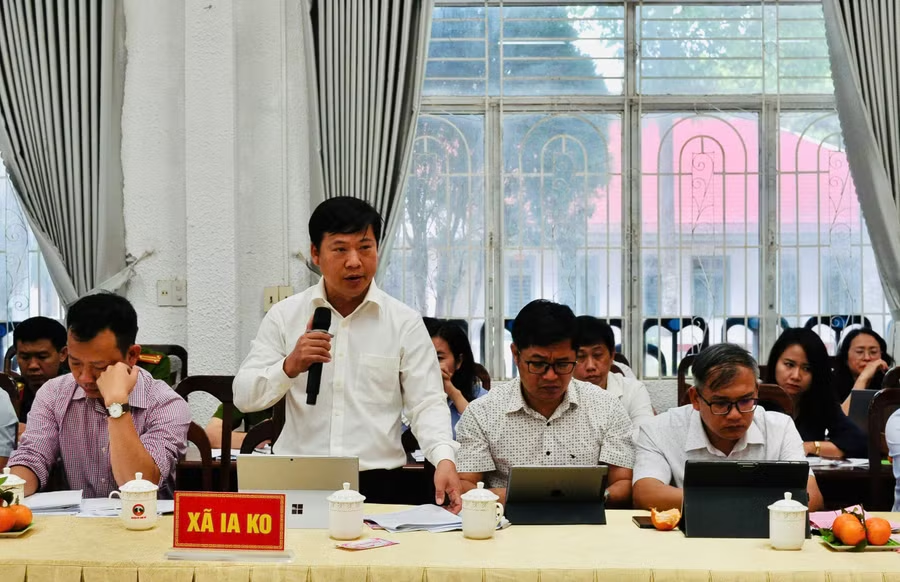
Ia Ko Commune Chairman Võ Công Hòa reported deteriorating transport infrastructure, narrow roads that hinder agricultural transport, inadequate working facilities, and an under-resourced civil service workforce.
With extensive industrial crop areas and renewable-energy potential, the commune requested support for irrigation cluster planning, road expansion, and investment in agricultural processing. Proposals included constructing a new administrative centre and upgrading the inter-commune route linking Chư Sê, Ia Ko, and National Highway 14.
Bờ Ngoong: Transport upgrades and agricultural market linkages needed
Bờ Ngoong asked the province to repair severely degraded inter-commune roads. Commune Chairman Nguyễn Hữu Tỵ urged support for businesses purchasing and processing local agricultural produce, particularly fruit, once the Nam Pleiku Industrial Park attracts secondary investors.
The commune also requested provincial guidance on updating outdated land databases to facilitate issuance of land-use certificates.
Al Bá: Agricultural potential high but fragmented
As a Region III commune with substantial arable land, Al Bá reported fragmented production, low value-added output, and limited enterprise linkages. Commune Chairman Ngô Xuân Hiếu proposed building a concrete bridge over the Ayun River, replacing a suspension bridge connecting Keo riverside to the village centre, and upgrading an iron bridge linking Al Bá and Chư Sê.
The commune also sought provincial investment to upgrade the 10.5-km Al Bá - Chư Sê - Bờ Ngoong inter-commune road.
Businesses call for stronger production linkages
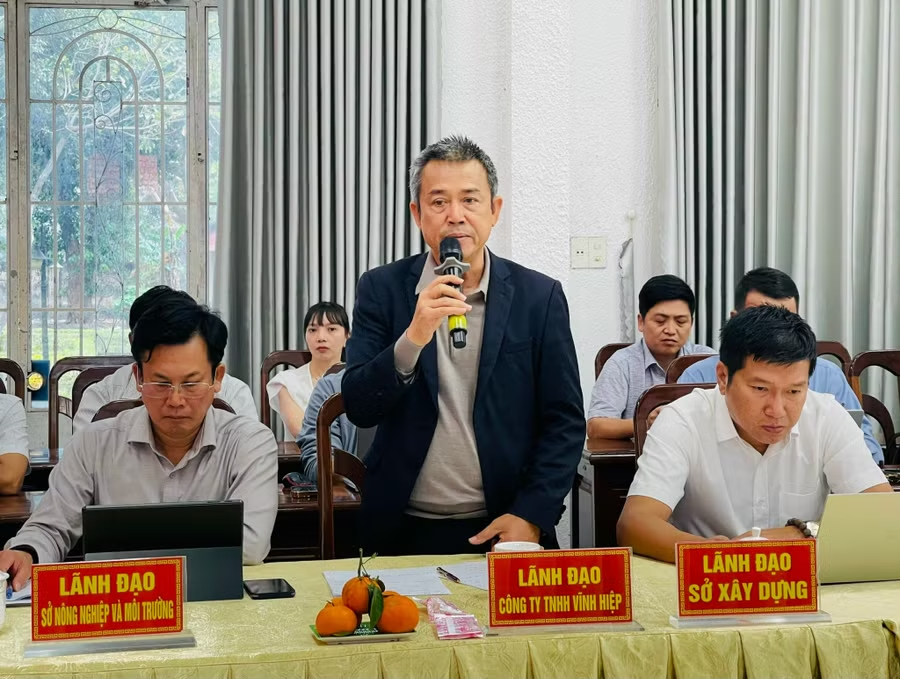
Enterprises present at the meeting outlined their development plans. Vĩnh Hiệp Co., Ltd. General Director Thái Như Hiệp said the company was ready to cooperate with communes that have strengths in coffee cultivation and asked for support in developing organic raw-material areas for deep processing and export.
Relevant provincial departments clarified concerns, including outdated land databases, a widespread problem across the province. The Department of Agriculture and Environment said it had advised a plan to re-survey 135 communes and wards to improve land-management data.
Chairman urges mindset shift, coordinated planning
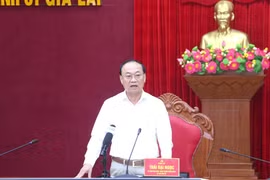
Concluding the meeting, Chairman Phạm Anh Tuấn stressed that while localities possess strong agricultural and renewable-energy potential, production remains small-scale and lacks technological application. He urged a comprehensive change in mindset, grassroots-level engagement, and unified action across political systems, calling each commune a “miniature province”.
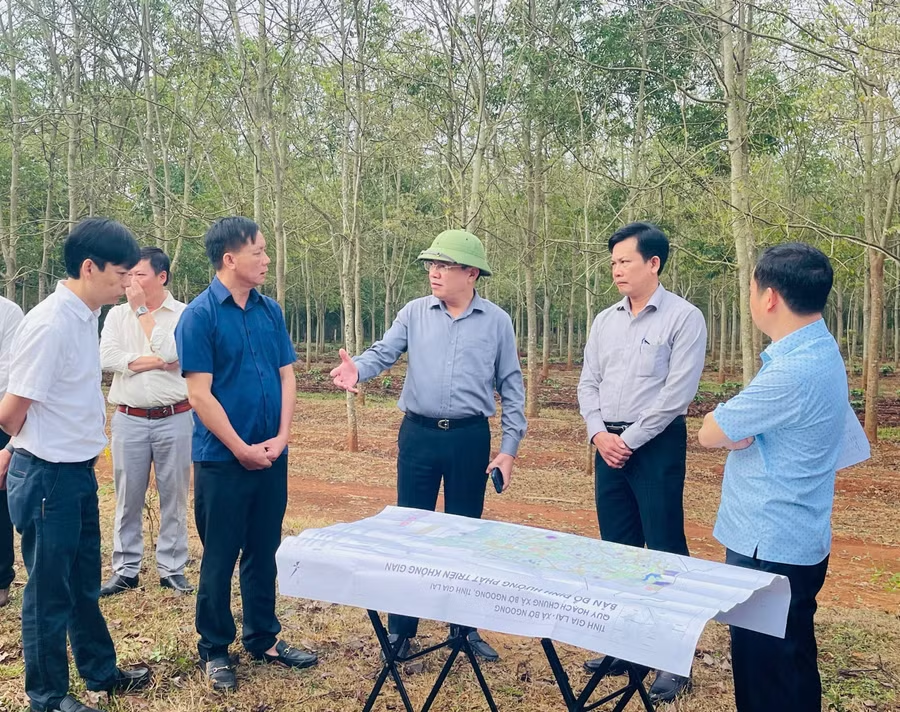
He directed localities to finalise planning based on their real strengths and to prioritise high-tech agriculture, business-farmer linkages, and renewable-energy development. Localities were also instructed to tighten land and environmental management, strengthen waste-treatment planning, and focus on vocational training, job creation, and poverty reduction.
The chairman assigned the Department of Agriculture and Environment to form a working group to standardise coffee-growing areas and later expand to durian and pepper.
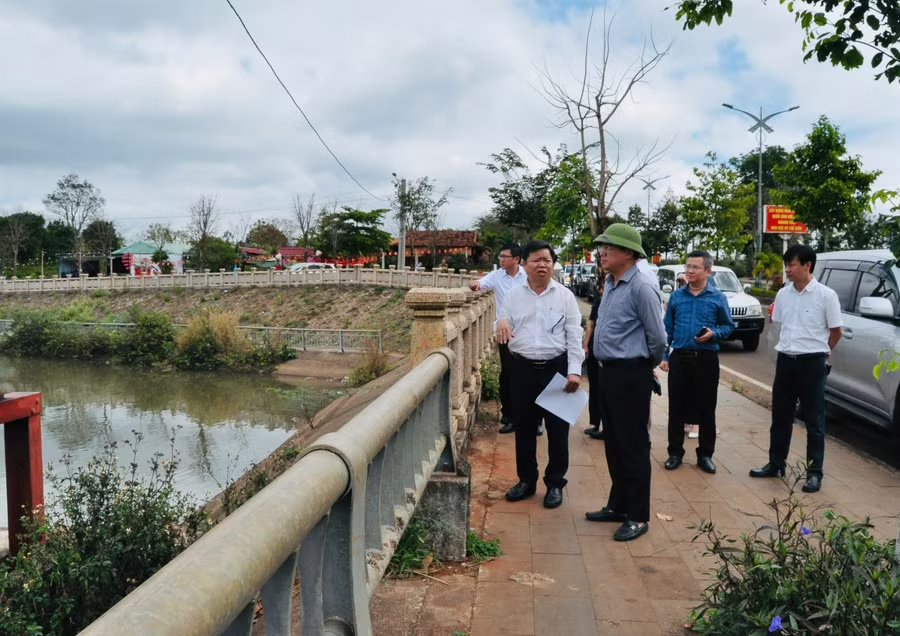
The Department of Construction was tasked with advising on resource allocation for administrative centres, roads, bridges, and irrigation systems. Rubber companies were asked to submit detailed reports on intercropping within plantations, while Vĩnh Hiệp Co., Ltd. was encouraged to coordinate with communes to build stable raw-material zones.