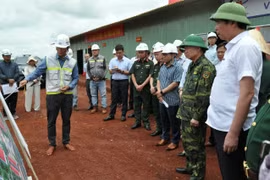
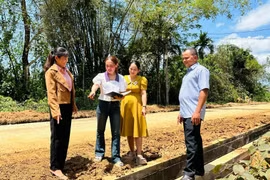
Officials have prioritised compensation and site clearance as critical components of the project’s timeline, with local Party committees, authorities and mass organisations deploying “clever mass mobilisation” strategies to engage directly with affected residents. These efforts have enabled several localities to hand over land on schedule.
In Binh Hiep Commune, where 5.79 km of the expressway passes through, 442 households and two organisations are affected, with 47.2 hectares of land subject to acquisition. Authorities reported that 77.9% of the required area, equivalent to 36.77 hectares, has been approved under compensation plans. So far, 4.5 km of cleared land, or 25.88 hectares, has been handed over to contractors, with full clearance targeted by the end of March 2026.
Initial resistance from residents concerned about livelihoods, housing and compensation was addressed through direct engagement. Mobilisation teams visited households to explain the project’s significance and policies, gradually building trust and shifting public opinion.
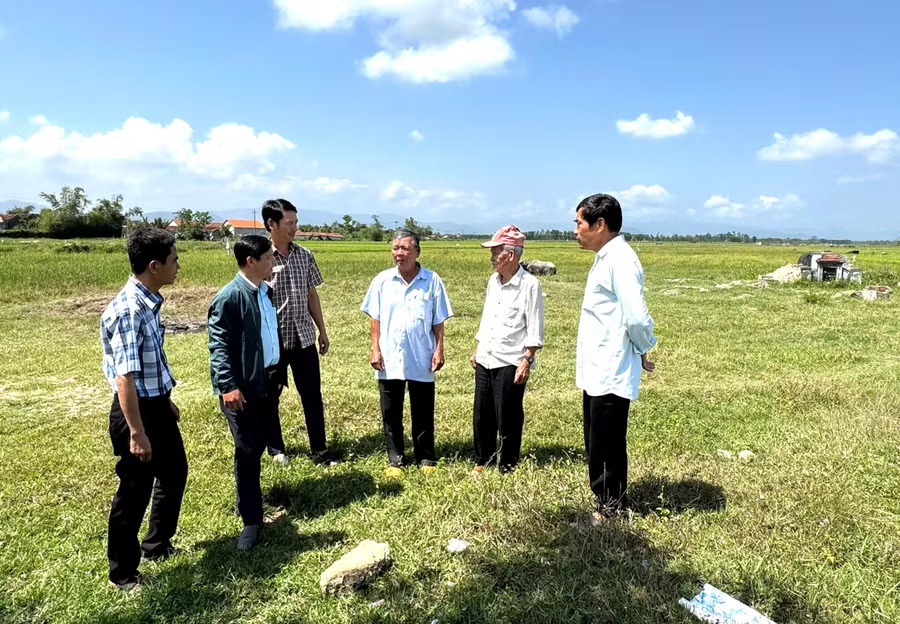
“Once the significance of the new road was understood, local officials, Party members and residents actively supported the project,” said Le Minh Luc, Secretary of the Binh Hiep Commune Party Committee.
Similar progress has been recorded in An Nhon Ward, where 99% of affected households have undergone land surveys. Authorities have handed over more than 92% of the required land area, equivalent to 30.3 out of 32.92 hectares and aim to complete clearance by the end of March.
The Quy Nhon - Pleiku Expressway project spans approximately 125 km, passing through 16 communes and wards. It features four lanes, a roadbed width of 24.75 meters, and a design speed of 100 km/h.
The route includes two tunnels, interchanges, lighting systems, and various auxiliary works.
Total investment is about VND 43,734 billion; land acquisition covers approximately 1,024.67 hectares; and compensation, support, and resettlement costs are around VND 4,715 billion.
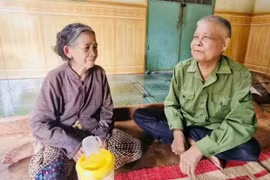
The growing consensus is reflected in the willingness of residents to comply. Pham Huu, an 84-year-old resident of Tra Son Village, handed over 1,500 square metres of rice land after local officials explained the project’s broader benefits. Another resident, Truong Thanh Du, accepted compensation of VND 132 million (approximately USD 5,280) for over 200 square metres of agricultural land and expressed support for the project’s completion.
Local officials say 170 households in Tra Son Village alone have completed land handover, underscoring the effectiveness of sustained, community-focused engagement.
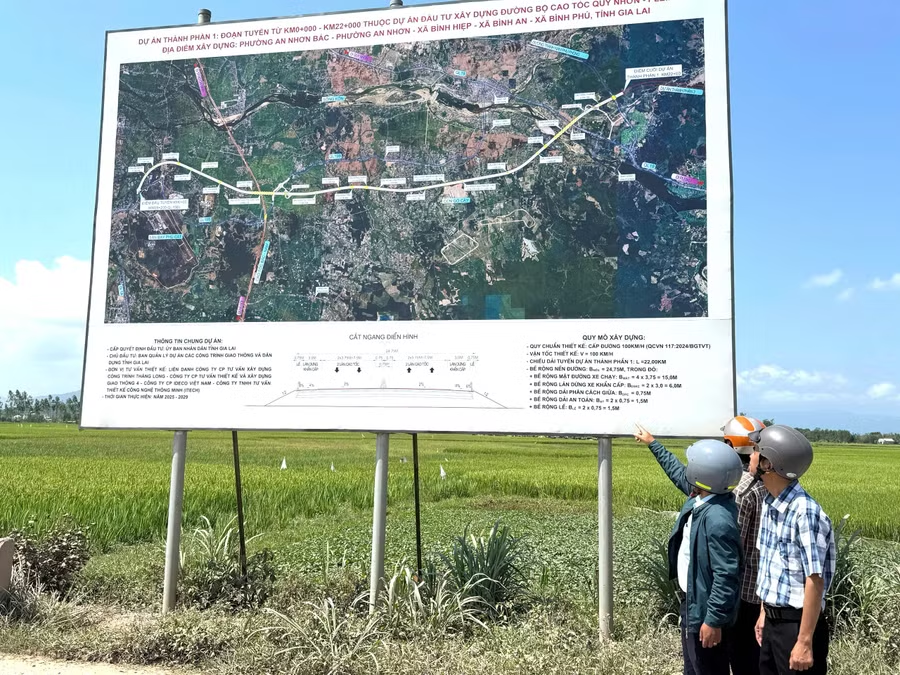
Nguyen Thi Phong Vu, Head of the Provincial Party Committee’s Propaganda and Mass Mobilisation Commission, said the approach has been implemented consistently from provincial to grassroots levels. In cases of disagreement, authorities have adopted a gradual and persistent persuasion strategy, tailored to individual household circumstances.
She noted that flexibility and persistence in mobilisation have helped resolve bottlenecks, with many households voluntarily accepting compensation and handing over land, creating favourable conditions for the project to proceed on schedule.