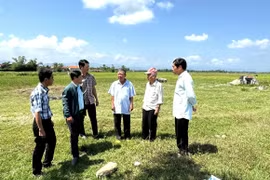
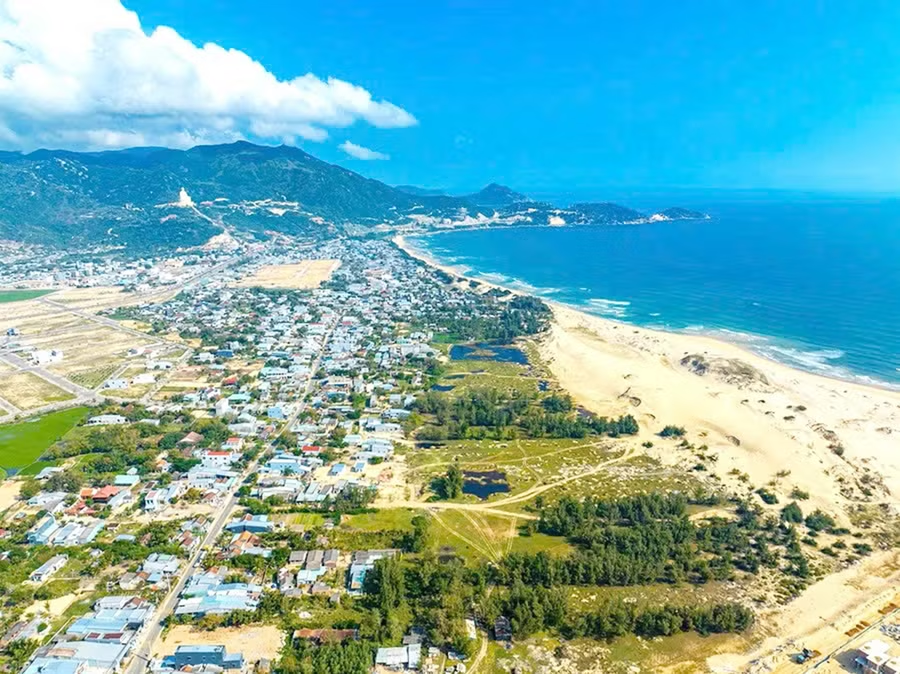
Located in the former Ba Mountain base area, spanning present-day Cát Tiến township and the communes of Cát Hải and Cát Thành, the region played a pivotal role in wartime strategy. The mountainous terrain, comprising 66 peaks interwoven with forests and streams, provided both defensive strength and logistical advantages for revolutionary forces.
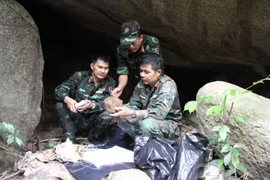
From this base, provincial leaders directed resistance operations, trained armed forces, and developed grassroots networks. Despite repeated large-scale assaults by U.S. and South Vietnamese forces, local troops and residents maintained control through coordinated political and military strategies, including the 1964 Eastern Uprising. The area later served as a key launch point for major campaigns, notably the 1968 Tet Offensive and the 1975 Spring Offensive.
Recognized for its historical significance, Ba Mountain was designated a national historical and scenic site in 1994, with a victory monument erected in 2010–2011 to honor fallen soldiers and preserve patriotic traditions.
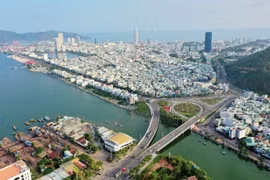
More than 50 years after the war, Cát Tiến has seen significant socio-economic progress. Coastal roads, including routes linking to National Highway 19B and the Nhơn Hội Economic Zone, have improved regional connectivity, supporting trade, logistics, and tourism.
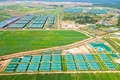
Previously barren sand dunes have given way to residential developments, commercial centers, and tourism destinations such as Linh Phong Zen Monastery and Trung Lương picnic area. Local residents report improved living standards and increased business opportunities, particularly in hospitality and seafood services.
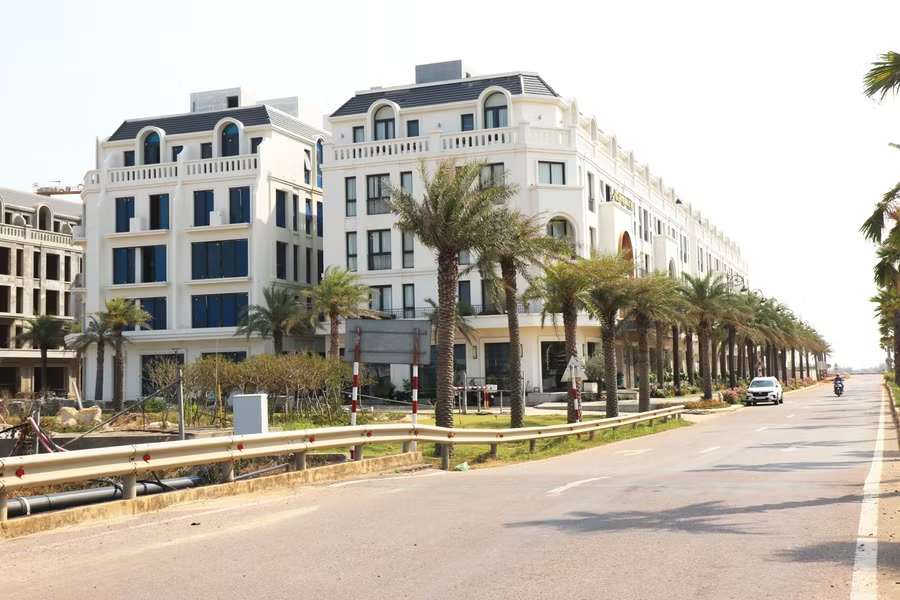
Economic indicators reflect this growth. Between 2020 and 2025, the locality recorded an average annual production growth rate of 14.6%, with per capita income approaching 65 million VND (approximately $2,550). In the first quarter of 2026, total production value exceeded 436 billion VND (about $17.1 million), while budget revenue surpassed 85 billion VND (around $3.3 million).
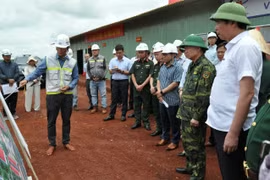
Positioned as a strategic link to the Nhơn Hội Economic Zone, Cát Tiến continues to attract investment through projects in urban tourism, high-end resorts, and commercial infrastructure. Local authorities plan to further enhance digital governance, infrastructure, and high-tech agriculture to sustain long-term growth.
From a war-scarred landscape to a rising economic center, Cát Tiến’s transformation reflects both its historical legacy and its ambitions for a prosperous future.