Speaking at a Politburo conference reviewing 18 months of implementing Resolution No. 57-NQ/TW, General Secretary and President Tô Lâm said the resolution had produced positive changes in awareness, policymaking and implementation across the political system, while stressing that stronger and more practical results were now required.
The conference, chaired by Tô Lâm in his capacity as head of the Central Steering Committee for the Development of Science, Technology, Innovation and Digital Transformation, was attended by Prime Minister Lê Minh Hưng, National Assembly Chairman Trần Thanh Mẫn, Standing Member of the Party Central Committee Secretariat Trần Cẩm Tú, senior Party leaders and officials from central ministries and agencies.
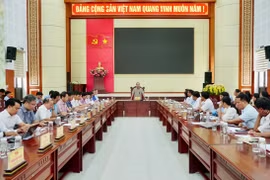
Held in a hybrid format, the meeting connected 3,662 locations nationwide, with more than 568,380 participants joining in person and online.
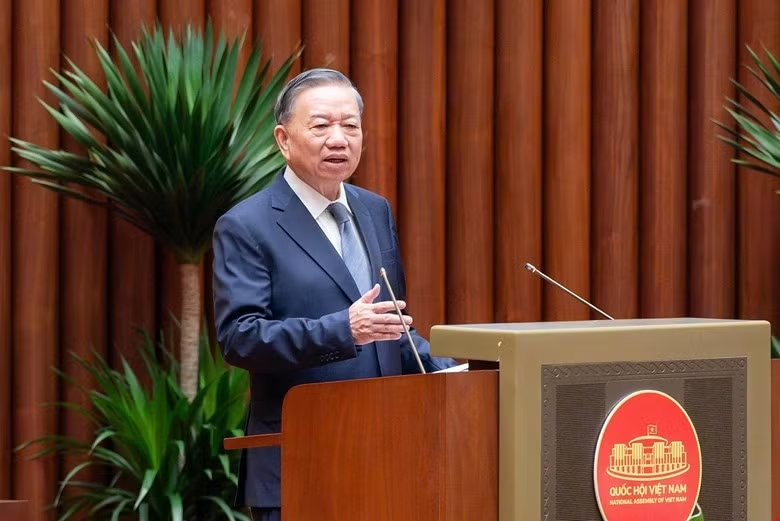
According to a report presented at the conference, implementation of Resolution No. 57 has led to significant changes in political determination, governance and institutional development over the past 18 months.
Authorities have established a more centralized leadership and coordination mechanism linking leadership accountability to measurable outcomes, while management policies have increasingly emphasized autonomy, controlled risk-taking, commercialization and greater mobilization of social resources.
More than 400 legal and regulatory documents, including 30 laws, have been prepared and submitted under the resolution. State budget spending on science, technology, innovation and digital transformation has reached 3% of total government expenditure, the highest level in the past decade. Authorities have also shifted management practices from controlling inputs and procedures toward evaluating objectives and final results.
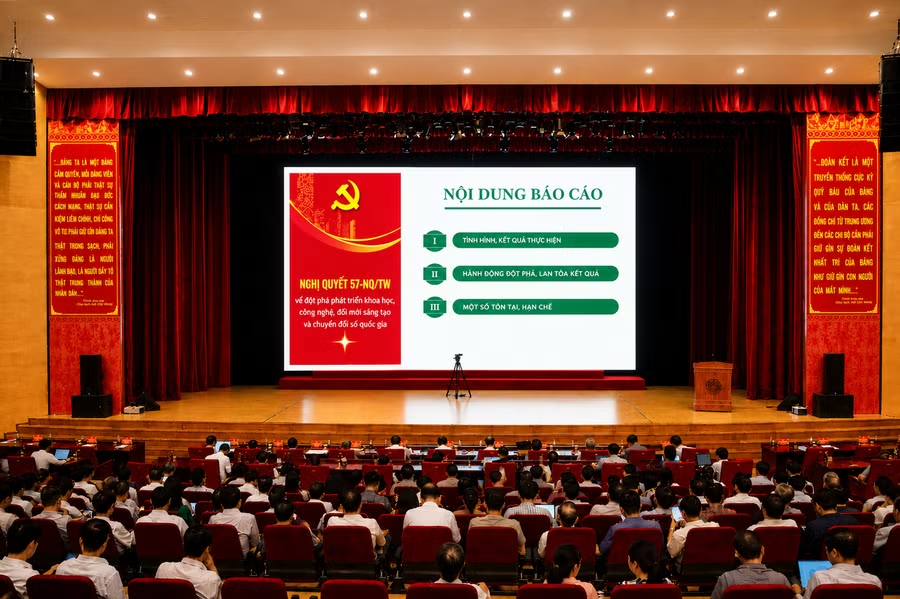
The report highlighted notable progress in digital transformation, with 5G services covering approximately 91.9% of the population and more than 71 million electronic identification accounts activated. The proportion of administrative procedures processed online at the local level has reached 93.54%, helping reduce costs for citizens, businesses and the State.
Authorities have also identified ten strategic technology groups, thirty priority product groups and twenty major national challenges to guide future development. However, the report acknowledged that relatively few technologies have been fully mastered or commercialized, while many projects remain at the planning, investment preparation or pilot stage.
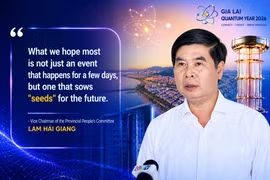
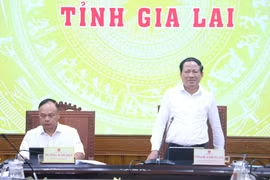
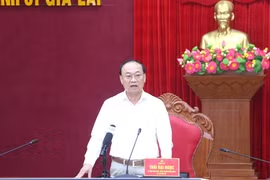
At the Gia Lai provincial venue, senior provincial leaders participated in the conference and reviewed local implementation of the resolution.
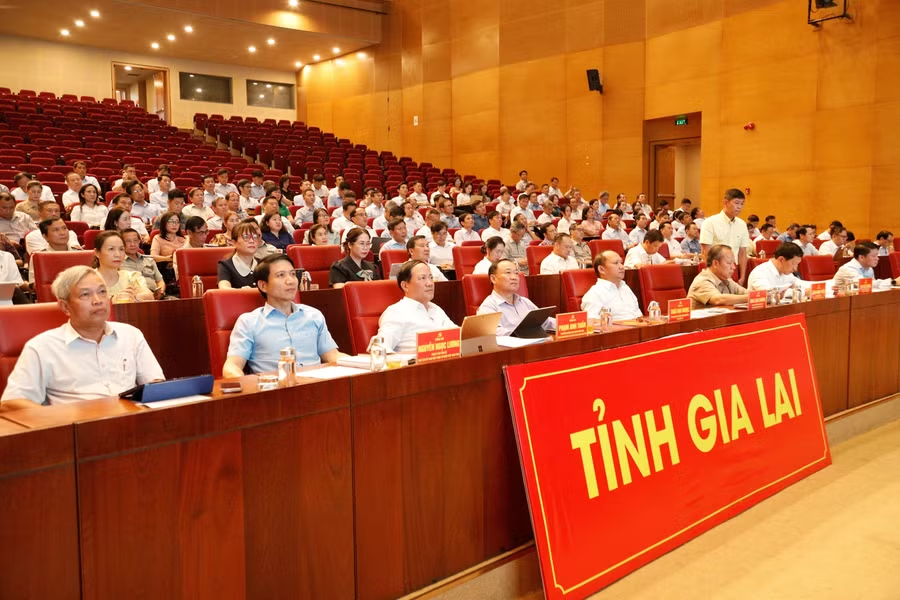
According to the provincial report, Gia Lai has made progress in developing science and technology, innovation and digital transformation by establishing new platforms, development models and institutional capacity to support socio-economic growth and improve state governance.
The province has completed four strategic projects covering the development of the digital technology industry, artificial intelligence, the semiconductor industry and high-quality human resources. It aims to train at least 7,500 workers for the semiconductor, artificial intelligence and cybersecurity sectors by 2030.
Gia Lai has also established two dedicated digital technology zones, TMA Innovation Park and the FPT Software Quy Nhơn Digital Technology Zone, which employ around 1,200 people and form the foundation of the province's digital technology ecosystem.
In his closing remarks, Tô Lâm said institutions, mechanisms and policies had continued to improve during the implementation of Resolution No. 57, with many longstanding obstacles removed and new frameworks gradually taking shape to support science, technology, innovation and digital transformation.
He called for continued implementation of the resolution alongside preparations for the 14th National Party Congress Resolution, describing Resolution No. 57 as one of the key drivers for achieving the country's long-term development vision.
Tô Lâm urged ministries, agencies and local governments to generate tangible technological products, foster technology enterprises and create new development opportunities that would strengthen labour productivity, expand the digital and data economies, develop strategic and high-tech industries and create new sources of economic growth.
He also instructed authorities to continue reviewing and improving legal documents, administrative procedures, technical standards and regulatory frameworks to ensure greater consistency and more effective implementation nationwide.
Emphasizing the need to move beyond simply completing assigned tasks, Tô Lâm said leadership, supervision and evaluation methods should be fundamentally reformed, with clearly defined objectives, responsibilities, deadlines and performance indicators. He said the ultimate measure of success should be the value created for citizens, businesses and the country.