Below are three resolutions.
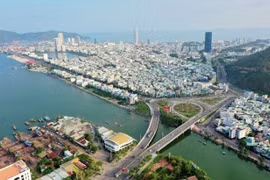
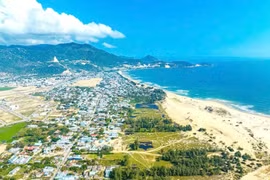
The adjustment of the Gia Lai's master plan for the period 2021-2030, with a vision to 2050, recently approved by the Provincial People's Council, marks a significant milestone following the administrative reorganization and the merging of development spaces between Gia Lai and the former Binh Dinh provinces.
This master plan not only establishes a new development vision for the province but also opens up opportunities to effectively leverage its potential and advantages, laying the foundation for rapid and sustainable growth in the coming period.
The plan sets out the goal of fast and sustainable development based on maximizing the advantages of the new development space; leveraging science and technology, innovation, digital transformation, and green transition as growth drivers; linking economic development with national defense and security, and aiming for double-digit growth in the 2026-2030 period.
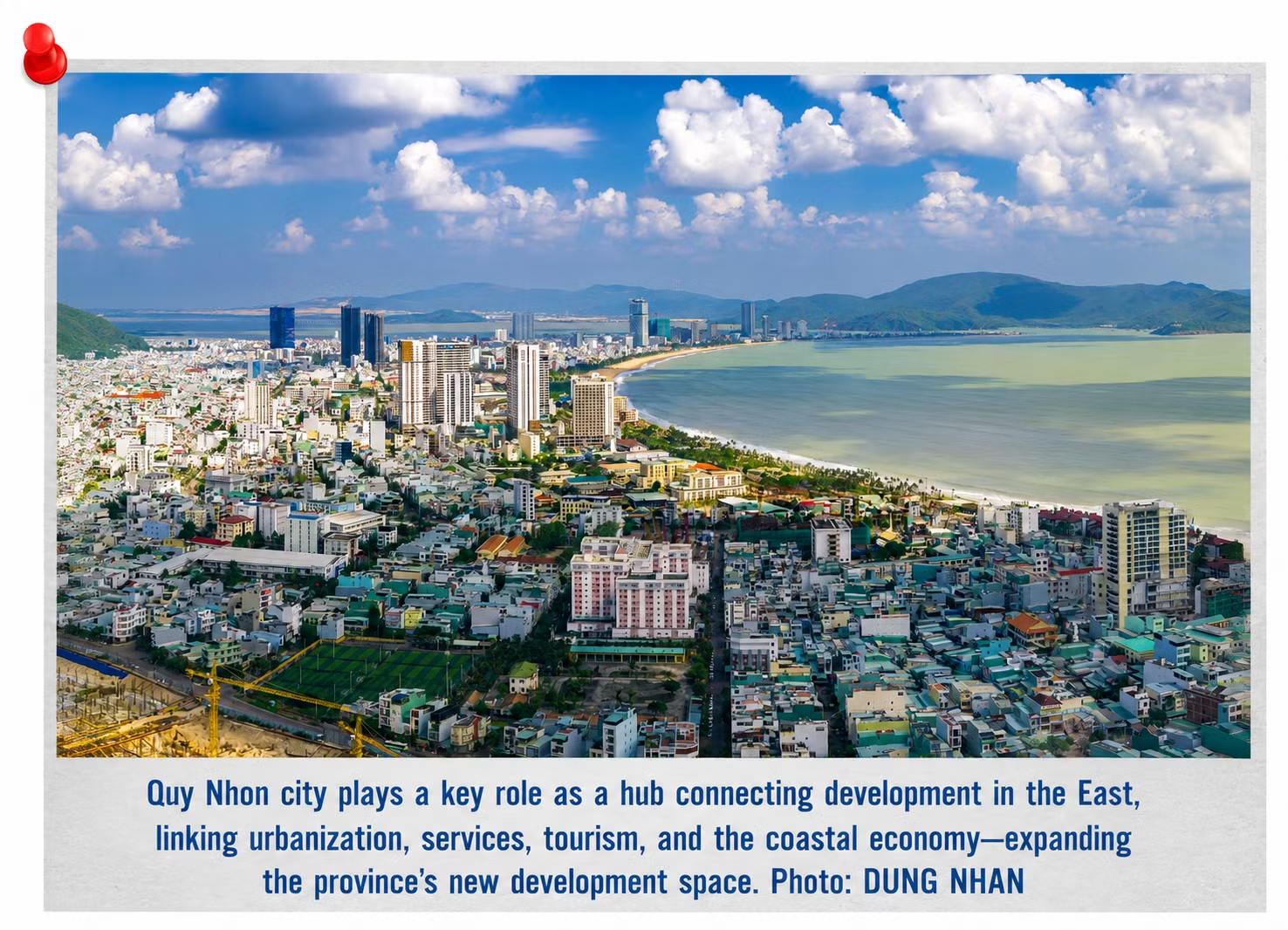
By 2030, Gia Lai aims to become a regional and national center for processing and manufacturing industries, renewable energy, high-tech agriculture, sea and highlands related tourism, semiconductor chips, and artificial intelligence; striving to become a relatively developed province.
Key targets include: an average annual GRDP growth rate of about 10.5%; per capita GRDP reaching 5,900-6,000 USD; budget revenue exceeding 41 trillion VND; export turnover for the 2026-2030 period surpassing 17 billion USD; the digital economy accounting for about 30% of GRDP, the marine economy about 20%; welcoming 18.5 million tourist arrivals, including 1.1 million international visitors; and an urbanization rate above 45%.
Looking ahead to 2050, Gia Lai aspires to become a prosperous, livable province and a major marine economic center of the country.
A highlight of the master plan is the organization of development space following the model of "Three dynamic corridors - Two economic zones – Three dynamic areas – Four economic regions".
The three dynamic corridors include the East-West corridor along National Highway 19 and the Quy Nhon - Pleiku Expressway; the eastern coastal economic corridor; and the western corridor along National Highways 14 and 25.
The two economic zones are Nhon Hoi Economic Zone and Le Thanh International Border Gate Economic Zone. The three dynamic areas comprise the eastern area, the northern coastal area, and the western area.
The four economic regions are oriented for development based on their strengths in industry, services, tourism, border gate economy, high-tech agriculture, and heritage conservation, creating a balanced and sustainable development foundation for the new era.
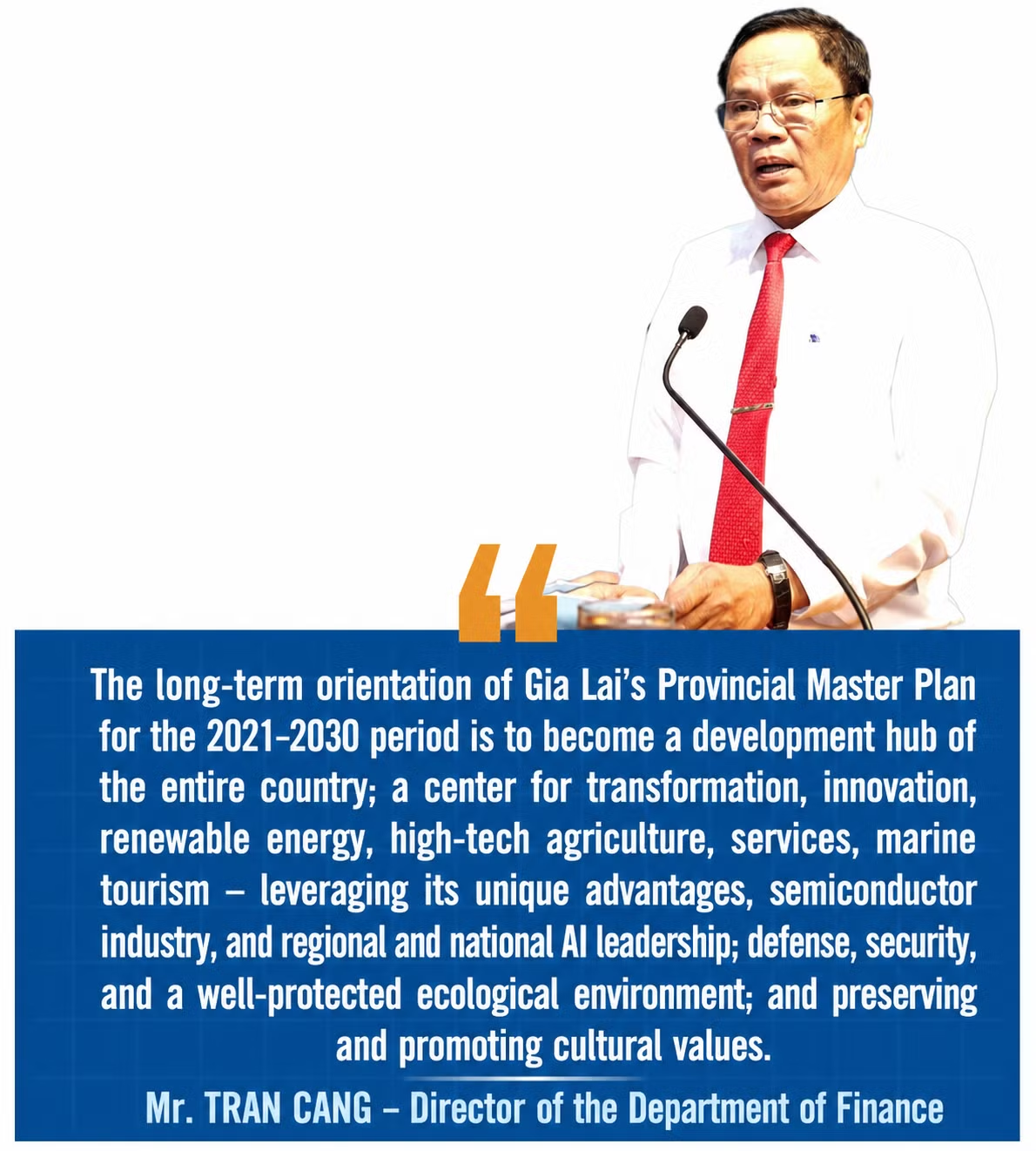
▪ Mr. Trần Cang - Director of the Department of Finance:
A master plan for breakthrough development
Prior to the implementation of the policy to reorganize provincial-level administrative units, both Binh Dinh and the former Gia Lai provinces had their respective master plans for the 2021-2030 period, with a vision to 2050, approved by the Prime Minister.
These plans were designed to leverage the strengths and potential of each province within their own development spaces. The merger of the two provinces into the new Gia Lai has created a new development space.
It is necessary to adjust the master plan to not only capitalize on the potential and advantages of each former province but also to harness the synergy between East and West in the new space, with renewed political determination, to make Gia Lai a relatively developed province in the region with double-digit GRDP growth. This is the rationale for adjusting the provincial master plan for the 2021-2030 period, with a vision to 2050.
After the provincial People's Council approved the resolution to adjust the Gia Lai Provincial Master Plan for 2021-2030, with a vision to 2050, there remains much work to be done.
The immediate priority is to complete the necessary documentation for submission to the competent authorities for approval, announce the plan, and promote it so that all levels and sectors understand the development orientations and key solutions.
At the same time, an implementation plan must be issued to organize the rollout of the master plan starting in 2026 and in subsequent years.
To achieve this, a high level of political determination is required from the entire political system, agencies, sectors, and all levels of government, with a focus on implementing breakthrough solutions.
These include: institutional reform and building an enabling government; breakthrough investment in infrastructure (transportation, irrigation, ports, logistics, digital infrastructure); promoting science and technology, digital transformation; and developing high-quality human resources.
All resources from society must be mobilized, domestic and foreign, from central and provincial governments, localities, international financial institutions, domestic and foreign investment groups, businesses, and the people. In this, state resources will play a leading role, focusing on strategic and essential infrastructure to guide the province's overall development.
It must be emphasized that only with high political will, dynamism, creativity, and a willingness to think and act for the common good can this master plan be successfully implemented. Passivity, reliance, or working perfunctorily will make it difficult to realize the plan's objectives.
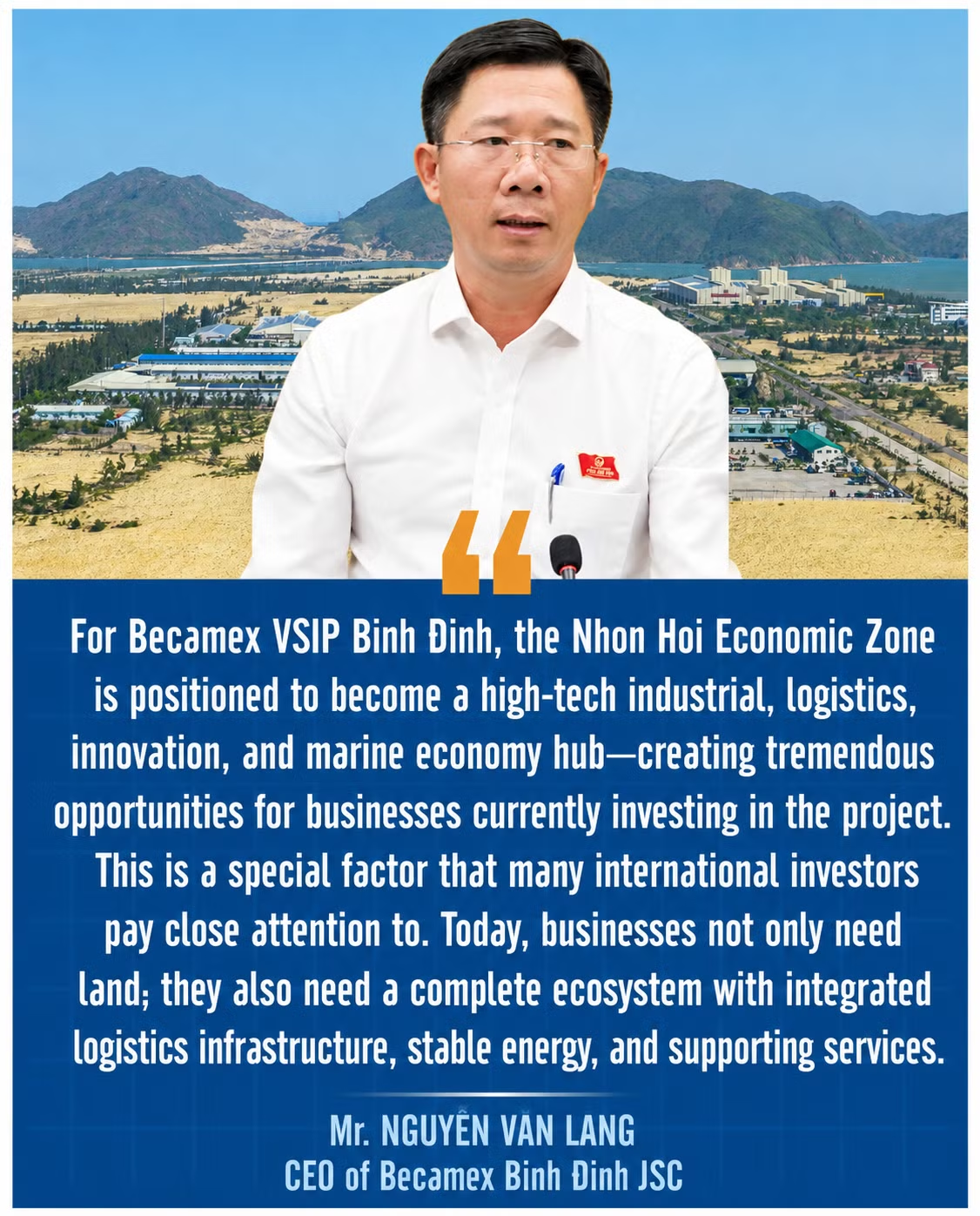
▪ Mr. Nguyễn Văn Lăng - General Director, Becamex Bình Định JSC:
Laying the foundation for high-quality investment attraction
We expect the master plan to create synergy between infrastructure, urban development, logistics, and energy, thereby enhancing the competitiveness of industrial zones and facilitating the attraction of high-quality projects.
The breakthrough of this master plan lies not only in its growth targets but also in the way it organizes development space with the "Three dynamic corridors – Two economic zones – Three dynamic areas – Four economic regions" model. This is a crucial foundation for forming value chains and linkages, rather than developing each locality in isolation.
To realize the master plan, we hope the province will continue to prioritize investment in strategic infrastructure, especially in transport connectivity, seaports, logistics, and stable energy sources.
At the same time, it is necessary to study the investment in a Quy Nhon - Pleiku railway line running parallel to the expressway to reduce transportation costs and enhance connectivity between the sea and the Central Highlands.
Developing dry ports in industrial parks and clusters will complete the logistics network, effectively connecting with Quy Nhon and Phu My ports, contributing to making Gia Lai a regional center for industry, logistics, and innovation.
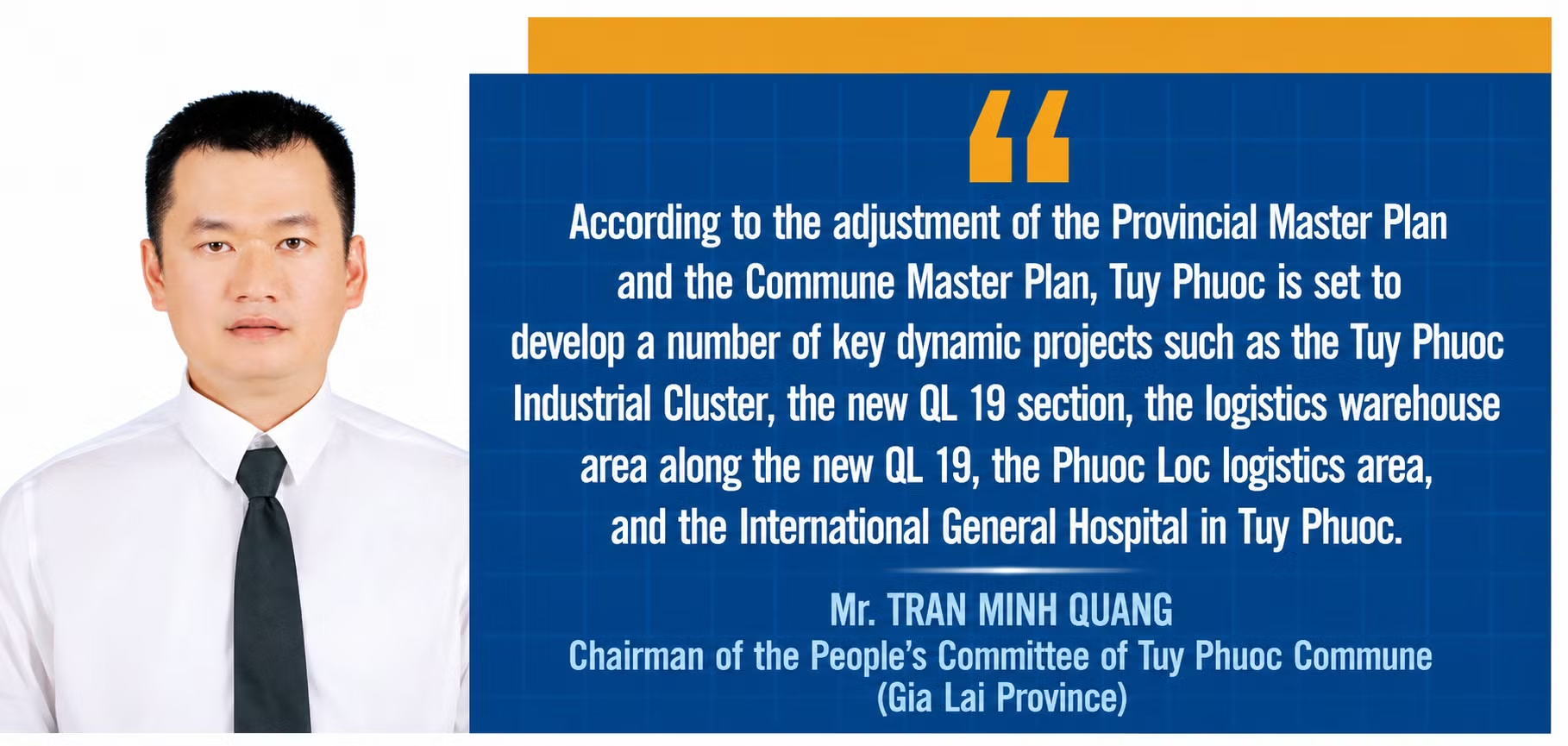
▪ Mr. Trần Minh Quang - Chairman, Tuy Phước Commune People's Committee:
Expanding development opportunities for localities
Localities expect the new master plan to lay the foundation for the synchronized development of socio-economic infrastructure, prioritizing inter-regional transport, urban, industrial, logistics, energy, and digital infrastructure.
For the 2026-2030 period, the commune is oriented towards developing urban areas, commerce, services, tourism, logistics, and industry, while preserving and promoting traditional cultural values and the Thi Nai lagoon ecosystem, striving to meet the standards of a ward.
The commune has announced its general master plan and made information publicly available for residents and businesses to easily access.
It has also issued an implementation plan and will soon develop detailed plans for functional areas, invest in technical and social infrastructure, and intensify investment attraction, contributing to realizing the development goals set out in the new master plan.