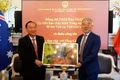
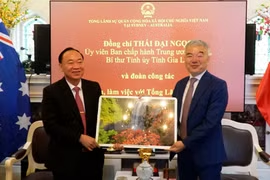
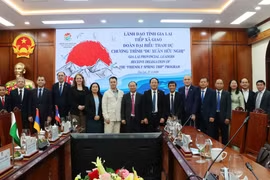
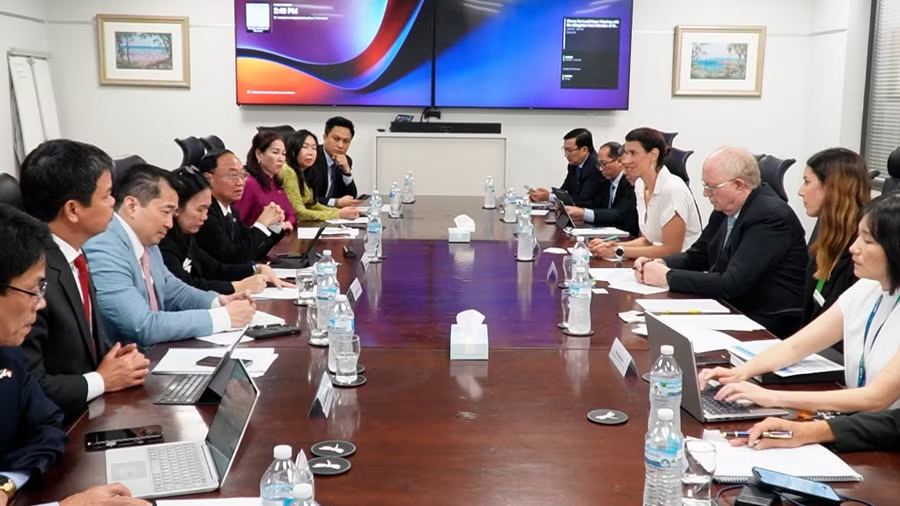
The Gia Lai delegation, led by provincial Party Secretary Thai Dai Ngoc, met Darwin Mayor Peter Styles and officials at the city’s administration centre. Both sides agreed to continue discussions on a suitable framework for cooperation.
Mr. Thai Dai Ngoc proposed establishing a friendly partnership between the two localities, expanding education and innovation links, developing human resources, and strengthening trade, investment and business connections.
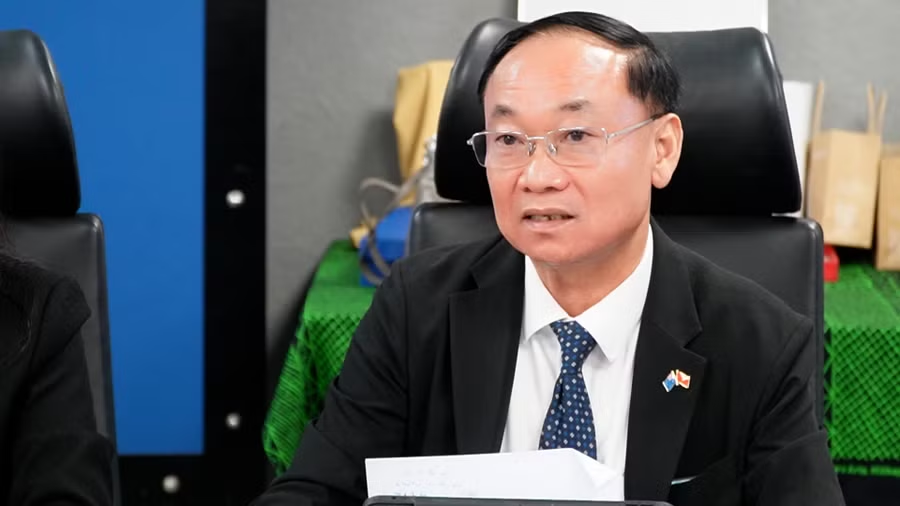
He sought closer business cooperation in agriculture, fishing and aquaculture, as well as support for Gia Lai companies seeking access to the Australian market and opportunities to participate in supply chains. Seaports, logistics and freight transport were also identified as potential areas for collaboration.
Gia Lai proposed exploring charter flights from Darwin once the runway upgrade at Phu Cat Airport is completed, paving the way for international services.
In tourism and culture, the two sides aim to expand community and cultural exchanges and develop ecotourism, resort tourism and tourism combining travel with healthcare for older people.
The province also asked Darwin authorities to help connect educational institutions, research organisations and businesses, including Charles Darwin University, to support training, research, skills development and workforce needs.
Mr. Thai Dai Ngoc, who is also a member of Vietnam’s Party Central Committee, said positive developments in Vietnam-Australia relations provided a foundation for closer ties between localities.
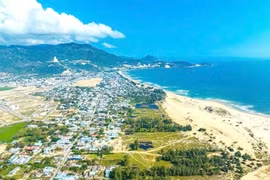
Following administrative reorganisation, Gia Lai connects the Central Highlands with lowland and coastal areas and international transport routes.
Mr. Thai Dai Ngoc highlighted the province’s strengths in agriculture, processing industries, renewable energy, the marine economy and tourism.
Darwin officials outlined the city’s development potential and strategic priorities. As the Northern Territory’s capital, Darwin benefits from seaport and aviation connections and its proximity to Asia. Its economy spans services, construction, tourism, mining, tropical agriculture and marine activities.
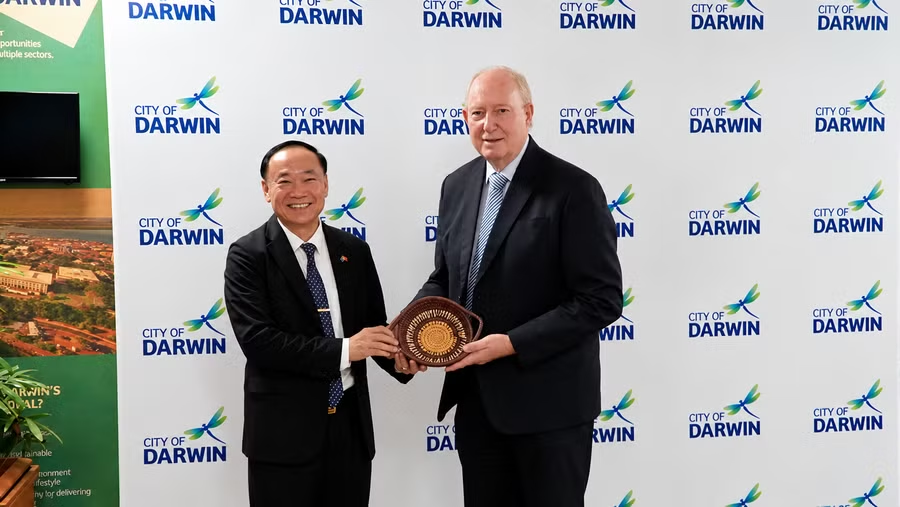
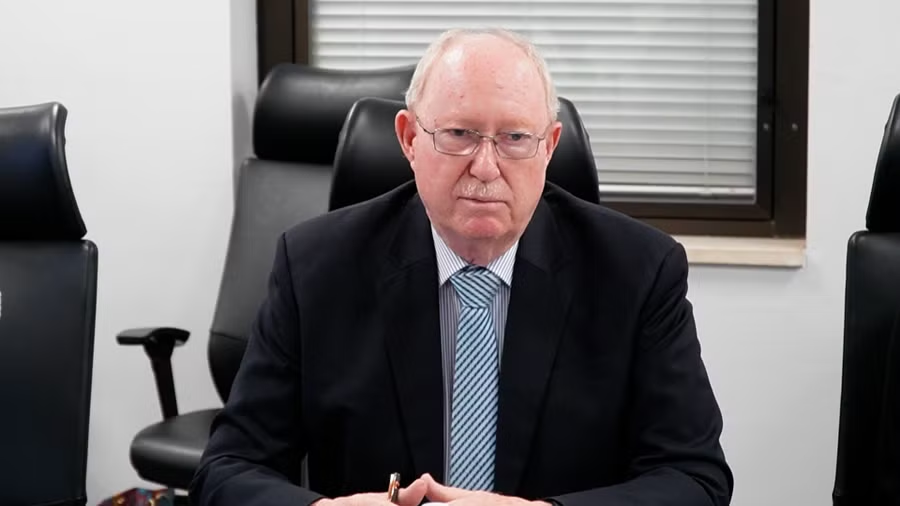
Styles said the proposed areas offered significant scope for cooperation. Darwin authorities would help businesses from both localities explore markets, exchange information and find suitable partners.
He also offered support in connecting Gia Lai with agencies, universities, businesses and organisations in Darwin and the Northern Territory.
Styles said developing the relationship would take time and require practical activities, with designated contact points and agreed priorities providing the first steps.
On the same day, the Gia Lai delegation visited and worked with Darwin Port to learn about its operational capacity, cargo development, logistics services, and to discuss the potential for connection with Phù Mỹ Port.
During the meeting, Darwin Port representatives introduced the port’s location, infrastructure, operational capacity, and transport connectivity. Situated at the gateway to northern Australia and close to Asian markets, Darwin Port is linked by road and rail to Australia’s inland regions.
In discussions with Darwin Port representatives, Secretary Thái Đại Ngọc stated that the province is gradually developing a logistics chain connecting raw material areas and industrial zones with seaports, airports, and international border gates.
Notably, Gia Lai is preparing to invest in Phù Mỹ Port—a deep-water port capable of receiving vessels over 150,000 tons—envisioned as a development hub linked to industrial parks, cargo consolidation centers, cold storage, and logistics services.
This provides a basis for the province to learn from Darwin Port’s experience in operations, cargo development, and connecting businesses and shipping lines with markets.
The Secretary proposed that both sides continue to exchange information on two-way cargo flows, market demand, technical requirements, quarantine, cold chain, containerization, as well as transport time and costs, in order to assess the feasibility of establishing suitable trade connections.
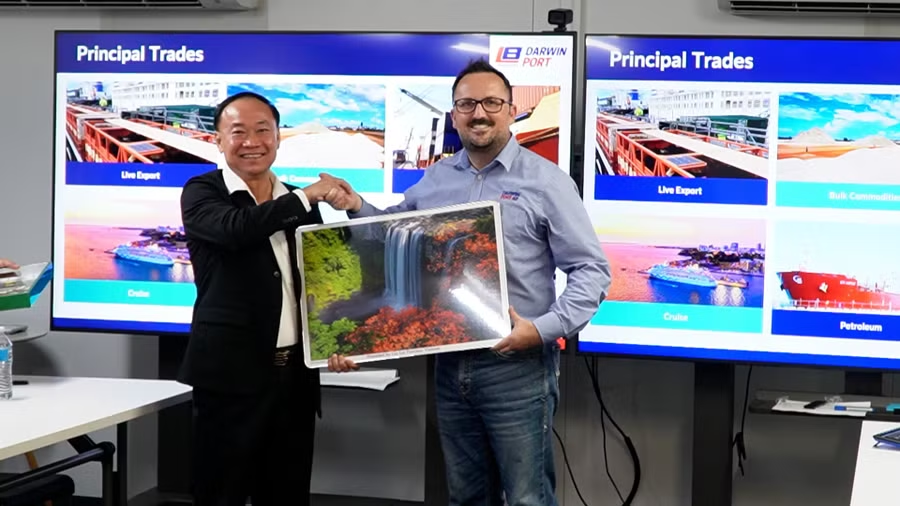
In addition to cargo connectivity, the parties are interested in exchanging experience in port operations and supply chain management, including data integration among shippers, ports, shipping lines, and logistics companies to reduce storage time, transshipment, post-harvest losses, improve energy efficiency, and ensure safety and environmental protection.