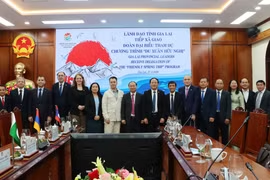
Along Vietnam’s western border, the villages of Triêl in Ia Pnôn Commune and Kloong in Ia O Commune have emerged as stable and thriving communities where most residents trace their origins to Cambodia.
Once formed by families fleeing violence and upheaval under the Khmer Rouge regime, the villages today reflect decades of integration, development and resilience.
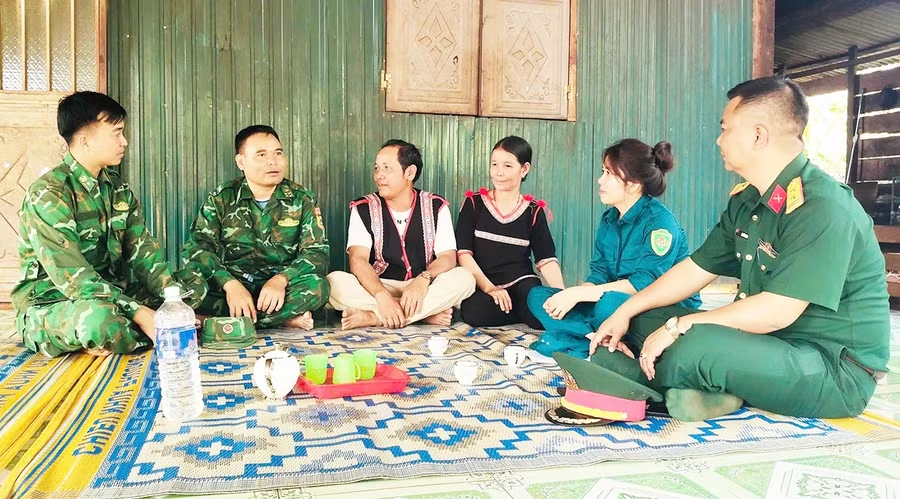
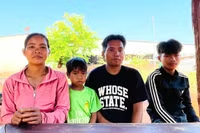
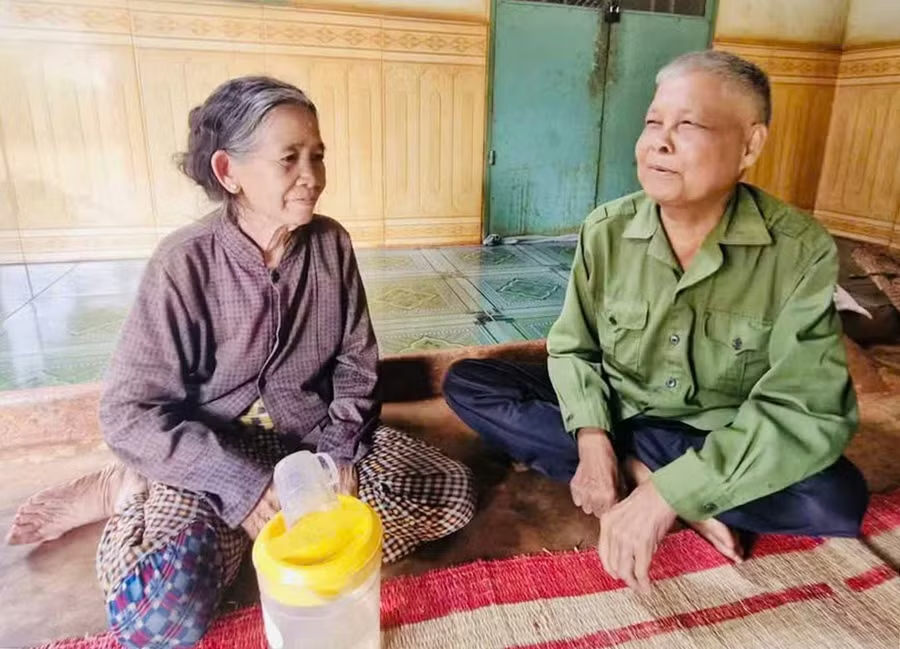
About half a century ago, as the Pol Pot genocide engulfed Cambodia, many families from Pó Nhầy Commune in Oyadav District, Ratanakiri Province, crossed forests and streams to seek refuge in Vietnam. Village elder Rơ Mah Blơih recalled that the group “only knew to move as quickly as possible”, with danger constantly behind them. After arriving in what is now Triêl village, they erected temporary shelters and began rebuilding their lives with support from local authorities, soldiers and nearby residents.
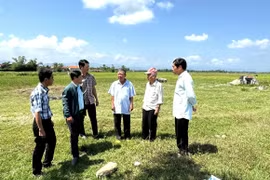
From small plots of cleared land, villagers gradually learned to cultivate rice and cassava before expanding into perennial crops such as cashew, coffee and rubber. Over time, livelihoods stabilized and the communities grew stronger with each farming season.
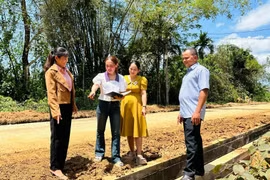
Triêl village now has paved roads, hardened routes to farming areas, electricity and clean water systems, along with other essential infrastructure. All households have access to electricity, clean water and hygienic sanitation facilities.
In 2024, the village was officially recognized as meeting Vietnam’s new rural development standards, according to Ksor Bíu, Secretary of the village Party Cell and village head. The village is home to 96 households and 436 residents, with only three households remaining below the poverty line.
Economic conditions have improved markedly for many families. Rơ Châm Nek, who initially farmed only about 3,200 square meters of land, expanded production with technical support and savings from stable harvests. His family now cultivates nearly four hectares of cashew, coffee and rice, generating annual income of nearly 100 million VND (about $3,900).
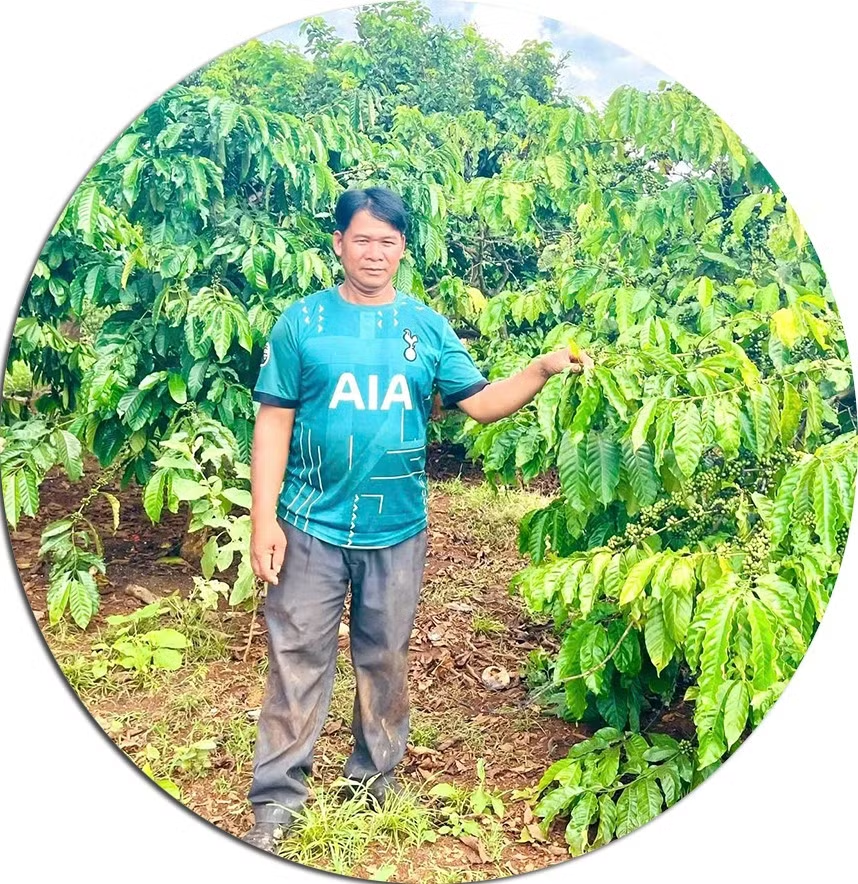
Support programs continue to assist vulnerable households. Rơ Châm Vân received guidance from the Ia Pnôn Border Guard Station on caring for 400 coffee trees, while his daughter benefited from the “Stepping to School” program, combining livelihood support with educational assistance.
Infrastructure development has also improved daily life and security. At the end of March 2026, the Ia Pnôn Border Guard Station coordinated with local authorities and benefactors to install a 1.5-kilometer lighting system under the “Lighting up the Border” project. The project included 25 streetlights and cost more than 75 million VND (about $2,900). Major Nguyễn Thành Nhơn, Political Commissar of the station, said the project aimed to strengthen security while improving the spiritual and social life of border residents.
For elder Blơih, the illuminated roads symbolize a profound transformation. “In the past, traveling at night was very difficult, but now with electric lights, people feel more secure, and the village atmosphere is livelier”, he said.
In neighboring Kloong village, memories of fleeing the Khmer Rouge remain vivid among older residents. Village elder Rơ Châm HLoăk said the community would not have survived without assistance from Vietnamese soldiers and local people. From only a few dozen households in its early years, Kloong has grown into a settlement of 294 households with around 1,200 residents. Over the decades, marriages between families on both sides of the border have strengthened social ties and deepened the sense of belonging in what many now consider their second homeland.
Government support programs have contributed significantly to improving living standards. Preferential loans, vocational training, technology transfer and housing assistance have enabled villagers to expand production and stabilize incomes. Residents currently cultivate more than 50 hectares of smallholder rubber, nearly 30 hectares of coffee, around 350 hectares of cashew, as well as large areas of cassava and rice. Nearly 30 households also have members employed as rubber latex harvesters for units under Corps 15, creating additional stable income sources.
Educational opportunities have expanded alongside economic development. All children in the villages attend school, with many continuing to high school. Elder HLoăk said families consistently encourage younger generations to pursue education as a path toward a better future.
Despite the progress, challenges remain. Kloong village still has 15 poor households and 25 near-poor households, according to Phan Thị Sen, Secretary of the village Party Cell. The local economy remains heavily dependent on cashew and cassava cultivation, leaving many residents vulnerable to fluctuations in weather and agricultural markets.
To address these difficulties, local authorities and mass organizations continue to support residents through targeted assistance, technical training and access to loans. Phan Đình Thắm, Chairman of the Ia O Commune People’s Committee, said authorities remain committed to sustainable poverty reduction linked with new rural development, while encouraging residents to play a central role in improving their own livelihoods.
Today, Triêl and Kloong stand as enduring examples of recovery and integration along Vietnam’s borderlands. Their transformation from refugee settlements into cohesive and developing communities reflects decades of support from local authorities, border forces and residents, combined with the determination of the villagers themselves to adapt, work and build a future on new land.